Sign in. It’s quick, free and it’s up to you.
An account is an optional way to support the work we do. Find out more.
Sign in. It’s quick, free and it’s up to you.
An account is an optional way to support the work we do. Find out more.
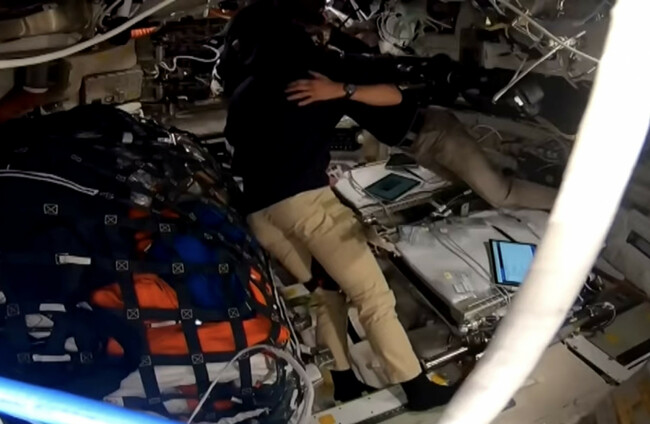
THE CREW OF Artemis II grew emotional as they radioed their Nasa base to say they were naming a moon crater, described as a “bright spot on the moon”, Carroll after the late wife of the mission’s commander.
Reid Wiseman’s wife and mother of his two children Carroll Taylor Wiseman died at the age of 46 in 2020 after a battle with cancer.
The 50-year-old astronaut is among the team of four that have now travelled the furthest distance from earth to the dark side of the moon.
Radioing Nasa’s mission control room after a 40-minute communications blackout, crew member Jeremy Hansen said, “Especially meaningful for this crew is a number of years ago we started this journey in our close-knit astronaut family, and we lost a loved one.
“There’s a feature in a really neat place on the moon. It is on a nearside/far-side boundary – in fact it’s just on the nearside of that boundary.”
At certain times it will be able to be seen from earth, he said.
“So we lost a loved one. Her name was Carroll. The spouse of Reid, the mother of Katie and Ellie.” The feature, a moon crater, is a “bright spot on the moon”.
“And we would like to call it Carroll,” he said, spelling her name out.
The Artemis II crew captured this image showing the rings of the Orientale basin during their lunar flyby on April 6.
— NASA Artemis (@NASAArtemis) April 7, 2026
At the 10 o’clock position of the Orientale basin, the two smaller craters – which the Artemis II crew has suggested be named Integrity & Carroll – are visible. pic.twitter.com/na5yOROl1z
The astronauts, unbound by gravity, drifted to hug one another in the spacecraft.
Carroll Wiseman was a nurse in a newborn intensive care unit. The Nasa biography for her husband Reid says: “Despite a long list of professional accolades, Reid considers his time as an only parent as his greatest challenge and the most rewarding phase of his life.”
The crew of Artemis II performed a more than six-hour lunar observation period, documenting features of the Moon’s surface that were previously mostly known via photographs taken by robots. They are to continue to journey back to earth today.

To embed this post, copy the code below on your site















have your say