We need your help now

Support from readers like you keeps The Journal open.

You are visiting us because we have something you value. Independent, unbiased news that tells the truth. Advertising revenue goes some way to support our mission, but this year it has not been enough.

If you've seen value in our reporting, please contribute what you can, so we can continue to produce accurate and meaningful journalism. For everyone who needs it.

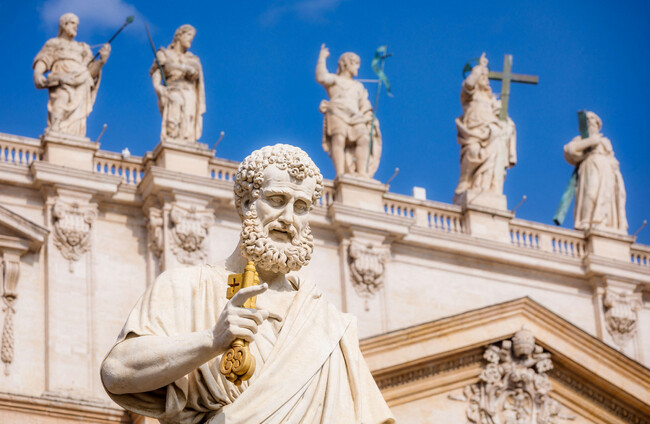
The report said baptising polygamists would be “unfair” to those “who have abandoned polygamy” to be baptised. Alamy Stock Photo

'Thorny issue': Catholic Church in Africa says it would be 'unfair' to baptise polygamists

The report called for polygamists who wish to be baptised to ‘free themselves from certain cultural constraints’ and ‘commit to monogamous marriage’.

THE CATHOLIC CHURCH in Africa has said it will not baptise people in polygamous relationships and that polygamists will have to “commit to monogamous marriage before receiving baptism”.

At the historic Synod that was convened by the late Pope Francis, many hot button issues, such as the place of LGBTQ+ people within the Church and whether women should be ordained, were discussed openly.

But another issue that was raised at the Synod and later sent out to a study group was that of polygamy.

While the Church defines marriage as a lifelong union between one man and one woman, Catholic bishops in Africa have noted that polygamy is a “prevalent reality in many African countries” and poses a “significant pastoral challenge”.

“This challenge arises both from individuals who were already in polygamous relationships before embracing the faith, as well as baptised members who enter into polygamy after their conversion,” read a statement arising from discussions at the Synod.

‘Thorny issue’

A team of 12 experts from across Africa have been at work on the topic of polygamy and yesterday published its final report.

While the report said polygamy is not “unique to Africa,” it added that the practice is “most visible on the African continent”.

The report notes that in the Old Testament, polygamy is “attested and legally tolerated”, with Biblical patriarchs such as Abraham and Jacob, and royal figures like David and Solomon, living in polygamous relationships.

However, it adds that “monogamy is exalted” and that in the New Testament, Jesus states that “marriage, as willed by God, is monogamous”.

The report meanwhile acknowledges that the “issue of the ‘pastoral care of polygamists’ is not new” and has been a “thorny issue for missionaries”.

To deal with this, some varying pastoral practices were born in relation to the treatment by the Church in Africa to those in polygamous relationships.

Several dioceses requested that polygamists, whether baptised or not, “choose one of his spouses as his first wife” while also providing for the spouses who were not chosen and their children.

Another pastoral practice to accommodate people in polygamous relationships included the status of a “permanent catechumen”.

This meant someone could participate in Church life though not in the sacraments and could not be baptised, though their children could be baptised.

Another practice involved allowing women who were the “victims” of polygamy to be baptised.

These women are said to be “victims” of a polygamous relationship in the event that the man marries a second or several wives without the consent of the first.

These women were not required to withdraw from the marriage to be baptised.

However, the report said that “baptising a polygamist who will continue to remain so would give every appearance of legitimising this irregularity and could distort or even devalue baptism”.

It adds that “most polygamists are baptised, so the question arises rather in terms of the regularisation of their situation and the baptism of their children”.

It said those in polygamous relationships are “welcomed, listened to and accompanied” but that those not baptised are called to “prepare themselves for a new life that involves the choice of abandoning polygamy”.

The report said baptising polygamists would be “unfair” to those “thousands who have abandoned polygamy” in order to be baptised.

It called for polygamists who wish to be baptised to “free themselves from certain cultural constraints” and “commit to monogamous marriage”.

The report added: “The Church will not baptise a polygamist on the basis of a promise or who will continue to be so, even after receiving this sacrament.

“Ultimately, there is no anticipation of the sacrament of baptism for polygamists, but a need for support in the perspective of a pastoral care of inculturation, which opens paths to a pastoral care of polygamy.”

Readers like you are keeping these stories free for everyone...
A mix of advertising and supporting contributions helps keep paywalls away from valuable information like this article. Over 5,000 readers like you have already stepped up and support us with a monthly payment or a once-off donation.

Close
4 Comments
This is YOUR comments community. Stay civil, stay constructive, stay on topic. Please familiarise yourself with our comments policy here before taking part.
Leave a Comment
    Submit a report
    Please help us understand how this comment violates our community guidelines.
    Thank you for the feedback
    Your feedback has been sent to our team for review.

    Leave a commentcancel

     
    JournalTv
    News in 60 seconds