Sign in. It’s quick, free and it’s up to you.
An account is an optional way to support the work we do. Find out more.
Sign in. It’s quick, free and it’s up to you.
An account is an optional way to support the work we do. Find out more.
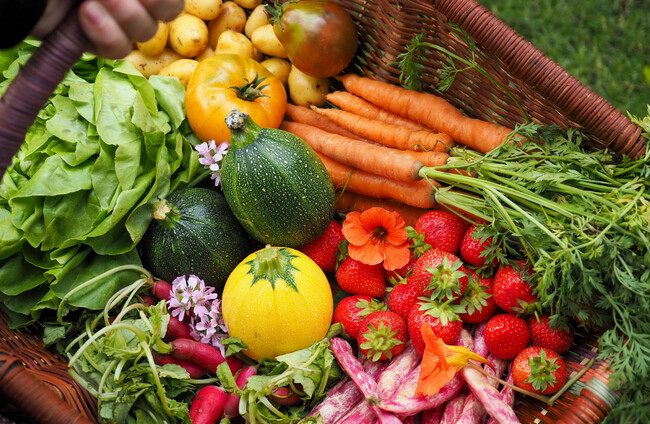
IRELAND’S RELIANCE ON importing fruits and vegetables means we are vulnerable to climate change causing crops abroad to fail, the State’s climate watchdog has warned.
The impacts of the climate crisis overseas on crops pose a risk to Ireland’s food system, which relies heavily on imports for fruit and vegetables, a new report details.
The Climate Change Advisory Council has published its annual review of the agriculture and land use sector, tracking progress made on climate action and identifying threats and problems for the sector thrown up by climate change.
Currently, around 83% of the fruit and vegetables eaten in Ireland are imported, the report outlines.
If crops fail elsewhere due to impacts of the world’s escalating climate crisis (such as heatwave, drought or flooding), Ireland could be left trying to cope with the sudden disruption.
The amount of domestic food producers has declined significantly in recent years due to factors like lower prices, retail pressures, high start-up costs, labour shortages and international competition.
There are now fewer than 70 commercial vegetable growers in Ireland compared with more than 600 in the 1990s.
The Climate Change Advisory Council is recommending that the government reviews the potential for horticulture production in Ireland to reduce the risk to our food security from climate-change events abroad.
“A resilient food system is essential in the context of climate change, as it ensures a stable and secure supply of food despite increasing environmental pressures,” the report says.
“Climate impacts such as extreme weather events, shifting growing conditions and supply chain disruptions can threaten food production and availability.”
The agriculture sector has a major problem: its emissions fell by only 0.2% last year.
Ireland has national and international legally binding obligations to reduce its greenhouse gas emissions. The government divided out the reductions between sectors – but the agriculture sector is lagging far behind its target.
By now, agriculture emissions should have been reduced by 10% compared with what they were in 2018. However, they have only been cut by 4.7%.
The Climate Change Advisory Council says that the sector could still reach its 2030 target of a 25% reduction, but only if additional climate action measures are brought into play and fully implemented.
The council says the government should create a plan for how it’s going to accelerate emissions-reduction measures on farms that is “informed by structured dialogue with farmers, rural communities and workers”.
Additionally, the forestry sector is a “particular concern”.
The country is not on track to meet its annual afforestation target of 8,000 hectares, which leaves us “substantially” off-track for our goal or 18% forest cover by the middle of the century.
The council is concerned about how farmers are being affected by Ireland’s changing climate.
Alex White, chairperson of the Climate Change Advisory Council, said that farmers are “increasingly having to manage extremes – this year we have seen too much water at one time of year and too little at another”.
“We cannot keep treating every prolonged wet period or drought as an isolated crisis. Climate change is challenging some of the established practices involved in agriculture and land management,” said White, who was Ireland’s minister for energy between 2014 and 2016 whilst he was a Labour TD in the Dáil.
He added that providing practical support to farmers will be essential, like making land and farms more resilient, adapting existing practices, or pursuing viable opportunities for diversification, such as forestry, carbon farming and renewable energy.
“The transition has to be shaped in collaboration with rural communities and farmers, and not simply designed for them. Policy will be more effective if it reflects the practical realities, costs and opportunities on the ground, while delivering the emissions reductions Ireland needs,” he said.

To embed this post, copy the code below on your site











have your say