Sign in. It’s quick, free and it’s up to you.
An account is an optional way to support the work we do. Find out more.
Sign in. It’s quick, free and it’s up to you.
An account is an optional way to support the work we do. Find out more.
LAST UPDATE | 9 Sep
THE LAW SOCIETY has asked the minister for justice to consider appointing an independent mediator to resolve the criminal legal aid dispute.
The president of the Law Society told Jim O’Callaghan she was “hugely concerned” at the impact of the ongoing dispute on victims, those accused of crime, the public and all court users.
Speaking at government buildings today, Taoiseach Micheál Martin was asked if he believed appointing a mediator is the most effective way to resolve the ongoing dispute.
“No, I think direct engagement is always the best,” Martin responded.
He pointed to meetings between O’Callaghan and the Law Society, stating that the minister had “always indicated his readiness to engage”.
Martin also stressed the government’s responsibility to introduce and implement reforms, saying it must ensure public resources are used “in the best and most efficient” way.
“The public expect that of us, in terms of the best and the most efficient use of resources. And we can’t lose sight of that requirement and obligation of government”, he added.
Tánaiste Simon Harris said there is “clearly a difference of views” in how reform of criminal legal aid should happen.
He said it was not for him to “decide what the best process to put in place is”, but added: “It’s clear that any dispute or disagreement ends in engagement, and I think it’s in everybody’s interest.
“I know the minister shared this view that the dispute is brought to an end as quickly as possible.”
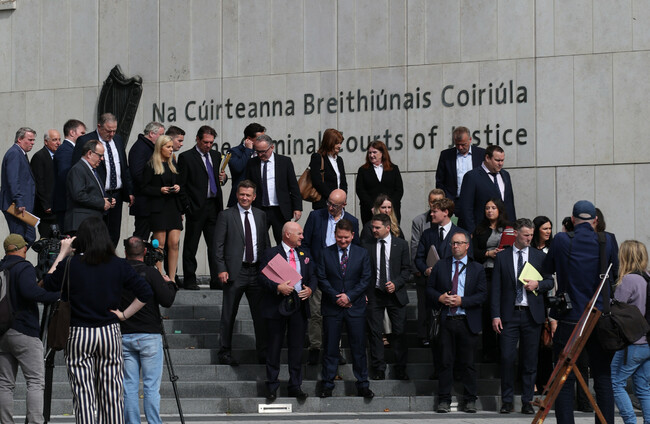
A large number of solicitors on the criminal legal aid panel have withdrawn their services amid the dispute, leading to disruption in the district courts.
In a letter on Tuesday seen by the Press Association, Rosemarie Loftus cited Court Service figures which show a 93% reduction in the granting of legal aid certificates in July 2026 compared to the same month last year.
She described this as a “deeply worrying” collapse, as she told the minister she was “particularly disappointed” his recent moves on the dispute had not “in any way” altered the “fundamental issues that remain at the heart of the current dispute”.
In July, O’Callaghan introduced a single flat fee for solicitors taking on legal aid cases – replacing a system where they had been paid per appearance.
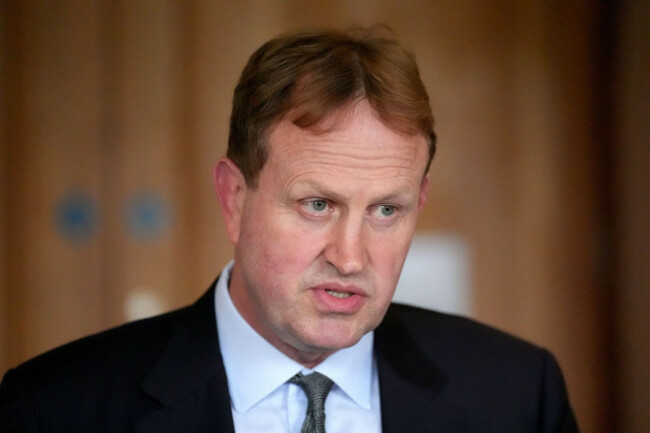
The Law Society said it “remains committed to engaging constructively” in seeking a “sustainable criminal legal aid system”.
Loftus said “the current impasse is having a profound impact on the administration of justice” across the country.
She said she was “surprised” to hear O’Callaghan say last week that the criminal courts were running “effectively”.
In the letter, she said: “In fact, I am hugely concerned at the impact the current dispute is having on victims of crime, those accused of crime, the general public and all courts users.
“I met with a number of victim support groups in recent weeks and committed to doing whatever I could do to expedite finding a solution to the current impasse.”
Loftus said she believes there is “merit in considering the appointment of an independent mediator” to assist parties in finding a resolution.
An experienced independent mediator could help bridge the gap between your policy objectives and the practical realities experienced by practitioners on the ground.
Loftus said the two main outstanding issues relate to the treatment of separate and distinct criminal cases as a single matter where they happen to come before the court on the same day; and the absence of a practical mechanism to deal with exceptional cases that often concern children and those with mental health issues, which can involve unusually high numbers of court appearances over an extended period
She said the current arrangements appear to treat multiple separate matters involving the same defendant as a single case for purposes of Legal Aid just because they come before the court on the same day, while saying these are frequently separate and distinct complex criminal cases which require separate instructions, preparation and consultations.
She suggested: “It seems that a clearer and mutual understanding of the definition of a case and of intended practical procedures may assist considerably in resolving this issue.”
On the second matter, the Law Society also said “a limited and carefully constructed mechanism” for exceptional cases is both “reasonable and necessary”.
In closing, Loftus urged the minister to “avoid a repeat of what has happened” under the Civil Legal Aid scheme “where a similar model was introduced.”
She said “the number of solicitors working under the District Court Family Law panel has fallen by more than 60% over the past decade” and added: “It is critical that the Criminal Legal Aid Scheme does not go the same way.”

To embed this post, copy the code below on your site













have your say