Sign in. It’s quick, free and it’s up to you.
An account is an optional way to support the work we do. Find out more.
Sign in. It’s quick, free and it’s up to you.
An account is an optional way to support the work we do. Find out more.
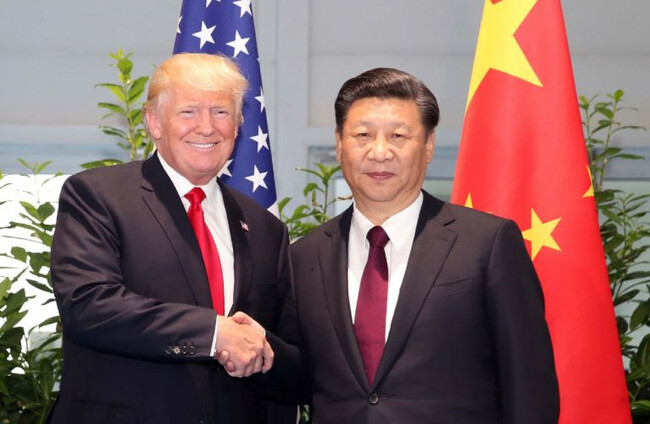
CHINA IS SET to overtake the US as the world’s largest economy by 2032, according to the 2019 edition of the World Economic League Table (Welt).
Last year the Welt predicted that China would become the largest economy in 2030 but the US is currently on track to retain the top spot for two years longer than previously expected, despite an increasing public debt burden.
The analysis has predicted that Brexit disruption will depress UK growth in 2019, helping France to overtake the UK to claim sixth place in the rankings.
As the dust settles after Brexit, the UK is expected to reclaim sixth spot from France in 2020 and even if Brexit leads to Scotland and Northern Ireland leaving the UK, the rest of the UK is still forecast to be a larger economy than France by 2026.
India is expected to move past the UK and France, probably in 2019 but, if not then, in 2020. Ireland is placed 34th next year, but expected to drop to 45th by 2033.
The Welt is produced by international economic forecasters at the London-based Centre for Economics and Business Research (Cebr).
The 2019 edition is Cebr’s 10th annual world economic outlook report. It tracks the size of different economies across the globe and projects changes over the next 15 years, up to 2033.
This year, “the ‘feel-good factor’ in the global economy has largely dispersed and is replaced by renewed volatility and uncertainty”, the authors note. Trade tensions have come to the fore, with the US and China imposing substantial tariffs on each other’s export sectors.
US v China
So far, the US economy seems undeterred and 2018 has been another year of strong growth. This is in part due to the tax reform package passed in 2017, which has brought forward growth.
However, it leaves a serious budget deficit problem that is likely to balloon over time, the authors state. This means that in the case of an economic downturn, the US will have less fiscal headroom to use in order to avoid a recession.
“China, on the other hand, has had more problems as the trade conflict weighs on an economy already under strain. In 2018, China finally seemed to be making progress in weening its economy off the large volumes of debt that had been used to prop up growth after the financial crisis,” the authors note.
US President Donald Trump has announced that the US will impose tariffs on ever large volumes of Chinese goods. At the time of writing, the US had subjected US$200 billion (about €175 billion) worth of Chinese imports to a 10% tariff. China retaliated by levying tariffs on US$60 billion (€52.5 billion) worth of US imports, representing almost all of America’s exports to China.
“The trade war has impacted the Chinese manufacturing sector and the economy has slowed sharply. This is best seen in the data for exports to China from its trading partners – Australia’s exports to China, which grew by 21.8% in 2017, plateaued around the same level from April to August 2018,” the authors state.
Brexit
“The outcome of the Brexit negotiations still remains uncertain and all three possibilities (leaving without a deal, a soft Brexit or not leaving at all) seem possible,” the report’s authors note.
While a no-deal Brexit would do the most economic damage in the short-term, we expect the UK economy to suffer some disruption in 2019 in any case due to lower inward and business investment.
“This will give France (as well as India) the chance to overtake the UK in the ranking for 2019. But France has not really come to terms with reducing its bloated public sector and resulting high taxes.”
Other key findings in the 2019 Welt are as follows:
Speaking about the findings, Cebr Deputy Chairman Douglas McWilliams stated: “In 2003, the world’s five largest economies were the US, Japan and three European countries.
30 years later three out of the top five economies will be Asian (India third and Japan fourth) and only one will be European (Germany). This is one reason why, even though Brexit will be disruptive in the short-term, long-term it is unlikely to do much damage to the UK economy and might, on some assumptions, boost it.
“The Asian economies, led by China, are still poised to catch up with – and in many cases indeed overtake – Western countries. But due to weaker currencies and the slowdown in China, which looks set to worsen in 2019, the rise of the Asian economies will be delayed.”

To embed this post, copy the code below on your site

















have your say