Sign in. It’s quick, free and it’s up to you.
An account is an optional way to support the work we do. Find out more.
Sign in. It’s quick, free and it’s up to you.
An account is an optional way to support the work we do. Find out more.
LAST UPDATE | 15 May
MEDIA MINISTER PATRICK O’Donovan has voiced his anger at only being informed on Thursday about yet another salary issue at RTÉ.
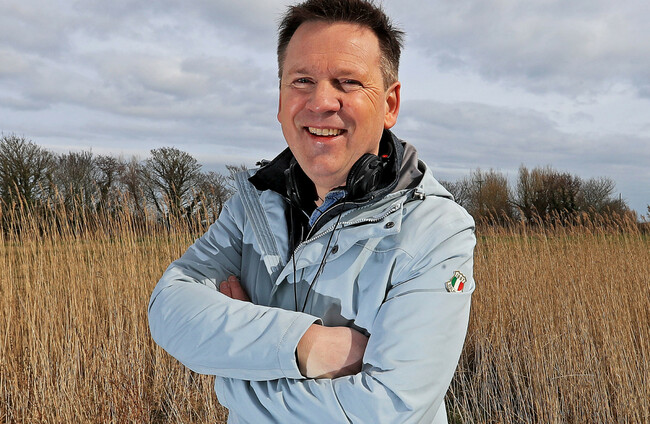
RTÉ issued a statement yesterday to say its top-earning presenters list of 2024 to include Derek Mooney as he was not included in the original list due to being classified as a producer.
Mooney now appears eighth on the 2024 list with a salary of €197,151.
Publishing its results for 2025, RTÉ said it revised the list after it “reconsidered what constitutes a “presenter” for the purposes of compiling the Top Ten Table for 2025″.
RTÉ’s Director General Kevin Bakhurst has said that a previous decision to classify Derek Mooney as a producer was “justifiable” but that he now takes a “different view”.
RTÉ also released Mooney’s full earnings for the period of 2020 to 2023 today, figures which include salaries, employer pension contribution and related benefits, according to RTÉ.
The figures show Mooney would have been included in ninth place on the top-earners list for the period of 2020 to 2023 inclusive, if he had been classified as a presenter.
Mooney earned €195,079 in 2020, €187,854 in 2021, €188,885 in 2022 and €192,592 in 2023.
“We think transparency is really important,” said Bakhurst, “and most people know Derek as a presenter, and I think we’d expect him to be classified as presenter, even if the majority of his work is as an executive producer.”
“He currently undertakes some presenting duties as part of his dual role as producer/presenter and, as such, is included in the Top Ten table,” added RTÉ.
RTÉ said that in 2020, and up to and including 2024, Mooney was designated as a producer, and not as a presenter, in line with his contract of employment.
Asked about the controversy this afternoon, the minister said “it’s here we go again”, stating that he was astonished that Mooney had not been deemed a presenter.
“I think a very logical question that I asked the chairman [of RTÉ] last night is, how could Derek Mooney have been regarded as anything other than a presenter? He was a presenter, he is a presenter, he’s always been a presenter. It’s like a duck, if it walks and quacks like a duck, it’s a duck, but for some reason, unbeknownst to the current chairman, he was recategorised,” said O’Donovan.

The minister went on to state that he only heard about the matter yesterday when RTÉ Prime Time sought comment from his department on the issue.
O’Donovan said he immediately acted and convened a meeting for the Director General and the chairman, but he said this is another issue that will damage public confidence in the national broadcaster.
He added:
“We have to have confidence in a public service broadcaster, but it is a bit like Groundhog Day.”
Speaking on RTÉ’s Morning Ireland, Bakhurst said Mooney had been on a “radio producer and then executive producer contract for a couple of decades”.
He added that when the Top Ten Table was being compiled for 2020, RTÉ’s executive team took the view that he should be classified as a producer.
However, Bakhurst noted that Mooney is “best known as presenter” and it’s now been decided that “people in hybrid roles, where they’re producing and presenting, if they qualify for the Top Ten, should be included as a presenter”.
He said the 2020 decision was made “some time ago by people not there anymore”.
Bakhurst said no one was aware of this situation “until we looked into it when it arose in the last few weeks”.
He said RTÉ sought legal advice on reclassifying Mooney as a producer and was informed that the decision was “perfectly justifiable”.
“The legal advice is that it was a perfectly rational decision to take at the time.
“We take a different view, because we want maximum transparency for the audience who pay for RTÉ.”
Meanwhile, it was noted during Bakhurst’s interview on Morning Ireland that 2020 was the year when a number of presenters were asked to take a 15% pay cut.
Bakhurst said it is his understanding Mooney wasn’t subject to a pay cut.
“All I can say is, his contract, and I’ve seen his contract, is as a producer, and I’m sure that is at the root of it.”
He added that it was “very unfair” to portray the reclassification as a producer as an attempt to get around the 15% pay cut.
“I think the rationale was, he fell out of the top 10 presenters in the few years up to 2020.
“As I understand it, in 2020, he would have been back in to the Top Ten, and they would have had to take a decision whether he was working the majority of the time as a presenter or as a producer.
“Clearly, they looked at the balance of his work and the majority of it is producing.
“That was a rational decision to take, we just have taken a very different decision, because we want a higher degree of transparency.”
Bakhurst added that it was “only in the last few weeks, someone raised the question of Derek Mooney” as part of work for the end-of-year accounts.
Bakhurst said he hasn’t spoken to Mooney since the news emerged and added: “It’s important to say Derek played no role in this at all.
“We told him this was happening, and he agreed that that was our decision, but he’s played no role in this at all, he’s just carrying on with his work.”
The minister has said there should be an audit of payments to RTÉ presenters since 2020, stating that the issue of Mooney’s salary is a “side issue” and that the “greater issue here is payments in their entirety across the organisation”.
He added: “I also don’t want to know monies without total packages, I think we’ve moved on way too far from that.
“And that’s why this morning I asked my officials to make it known to RTÉ that not going back to 2020 is not an option – and by the way, that does not just focus in on Derek Mooney.”
O’Donovan said he has called a meeting in his Department on Tuesday involving himself, his officials and representatives of RTÉ – including the chair and director general.
In addition, the minister said he wanted to “flesh out” more information on how RTÉ paid Claire Byrne and Ray D’Arcy almost €100,000 euro after they left Radio One.
It emerged that RTÉ continued to pay both Byrne and D’Arcy after they stopped working for the broadcaster.
Byrne was paid around €47,000 while D’Arcy received around €50,000.
Bakhurst said this was “totally the right decision”.
“Presenters, although they are paid a lot of money, they also have contracts, like anyone who has employment rights in Ireland.
“And if they have a contract, we need to respect their contracts.”
He added that Byrne’s was taken off-air by RTÉ ahead of it launching a new Radio 1 schedule, while for D’Arcy, this period was “effectively his notice period”.
Bakhurst said “everyone has employment rights, and if we decide we’re going to stop someone working for RTE, you can’t just chop off their salary”.
He added that it would have cost a “shed load more money than it did” had RTÉ entered “into a legal fight” on this.
Taoiseach Micheal Martin said “the right decision was taken” by RTÉ in clarifying pay of their presenters.
Martin told reporters at the opening of the Fianna Fáil Ard Fheis in Dublin on Friday night that he welcomed the transparency that was in evidence in terms of the clarification.
“I listened attentively to the interview of Kevin Bakhurst. I understand the minister will be meeting with the chair and with the secretary general of RTE, and again we welcome that transparency.
“It’s important to retain confidence in the public and difficult to comprehend what transpired, but nonetheless I think the right decision was taken to correct that.”
The Taoiseach said he thinks the licence fee should stay in place “because we do believe in public service broadcasting”.
He added: “We don’t want to be micromanaging RTE either, or indeed micromanaging commercial semi-states, so obviously the formal decision has to come to government, but again, there’s a marketplace out there as well and one has to be sensible in how you go about things as well.”

To embed this post, copy the code below on your site











have your say