Sign in. It’s quick, free and it’s up to you.
An account is an optional way to support the work we do. Find out more.
Sign in. It’s quick, free and it’s up to you.
An account is an optional way to support the work we do. Find out more.
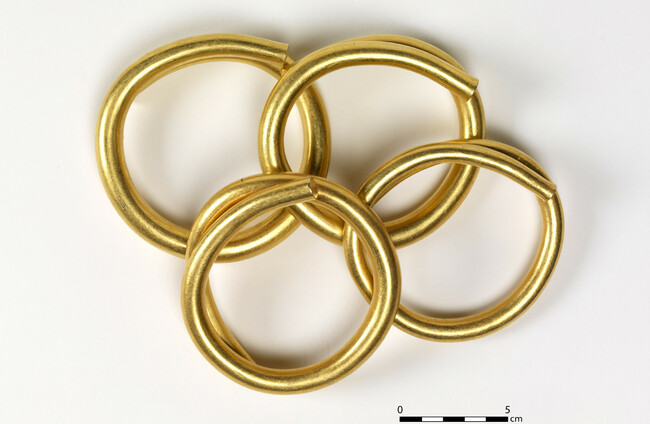
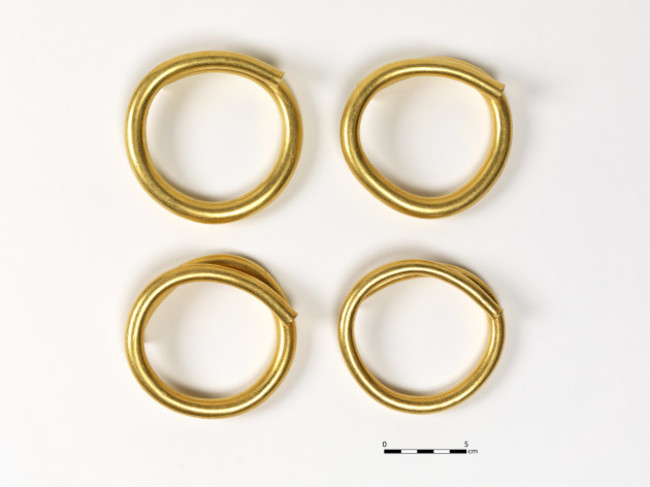
A HOARD OF gold which consists of four large rings has been discovered by locals in Donegal.
The keeper of Irish Antiquities at the National Museum of Ireland (NMI), Maeve Sikora described the find which dates from the Bronze Age as very significant.
Speaking on Morning Ireland, Sikora said that the “chance discovery” was reported to them on Tuesday by a member of the public.
“We received a call on Tuesday afternoon from a member of the public saying that they had found these artefacts and it wasn’t until we saw the photographs in an email that we recognised them to be what they are which is a prehistoric hoard of gold objects.”
Sikora said that it was immediately apparent to the curator on duty what they were as they have similar objects in the national collection of Bronze Age gold at the NMI.
Portable wealth
According to Sikora a lot of the Bronze Age artefacts in the museum are older finds, found when context was not so well recorded.
She said that it was important for them to understand the circumstances under which these objects were buried in the ground at the time.
“We have investigated the site and now our research will start.
“They are tubes of gold about the size of an arm ring, so they were probably worn and probably someone’s portable wealth.”
The NMI say that a lot of bronze age metalworks are often deposited in watery places like rivers and lakes so it’s not unusual that the gold hoard was found in the wet location in Donegal.
The location of the find will not be revealed so that ‘”treasure hunters” are not attracted to the area.
The NMI is grateful to the people who called in the find but there will be no finders’ fee as objects found without a known owner are automatically state property.
Sikora told Morning Ireland that the find is for everyone to enjoy as part of the national collection and will be on display in the NMI once their research is complete.

To embed this post, copy the code below on your site














have your say