Sign in. It’s quick, free and it’s up to you.
An account is an optional way to support the work we do. Find out more.
Sign in. It’s quick, free and it’s up to you.
An account is an optional way to support the work we do. Find out more.
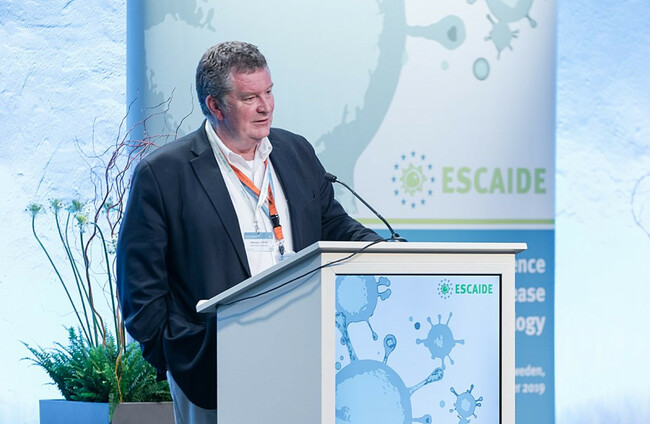
DR MIKE RYAN, executive director of the World Health Organization’s (WHO) Health Emergencies Programme, told a University College Cork seminar that he may have PTSD after receiving death threats due to his work combating Covid-19.
Dr Ryan joined experts from UCC’s School of Public Health and UCC’s Centre for Global Development yesterday for a webinar exploring the next phase of the COVID-19 pandemic.
“It’s true in Ireland and a lot of places, we’re running our health systems at 120% occupancy almost. We’re running our health systems right at the edge of their ability to do normal business and then we wonder why they fail when we stress them.”
He added that healthcare systems were not prepared for a new stage of the pandemic and predicted that this winter, in Ireland and other parts of Europe, emergency rooms would be full and patients would be left on trolleys.
“We know it’s coming, its been like that a decade or more and we haven’t done anything.”
Dr Ryan also said that he was concerned about the long-term impacts of the pandemic on healthcare workers.
“The proportion of health workers who have been diagnosed with PTSD is horrifying. The fact that we think come November, December that if there’s a new variant we just go back to how things were two years ago is a very dangerous assumption.”
“Our health workers are tired and some of them are dealing with the longterm psychological impacts. We don’t need to be planning ahead for 10 year’s time. We might need to be thinking ahead for 10 weeks time and what our healthcare systems will do then.”
Dr Ryan added that he thinks he has PTSD
“We’ve had death threats here, we’ve been shouted at. I’ve worked all over the world in the most extreme situations, in Afghanistan and Iraq, and I have never been as scared personally for my own safety as I have been during Covid. That’s an incredible thing to say, living in Geneva, Switzerland, most of the time.”
He also said that the pandemic is not over, despite “people saying it is”.
“There’s a degree of complacency and we still have huge uncertainties and vulnerabilities. The virus could do a number of things in the next few months that would be unpredictable. Health systems haven’t’ recovered from the first four or five waves.”

To embed this post, copy the code below on your site














have your say