Sign in. It’s quick, free and it’s up to you.
An account is an optional way to support the work we do. Find out more.
Sign in. It’s quick, free and it’s up to you.
An account is an optional way to support the work we do. Find out more.
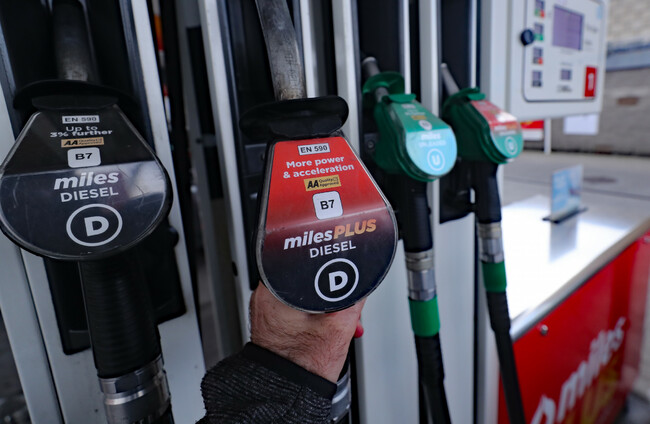
TAOISEACH MICHEAL MARTIN has warned that petrol and diesel prices rising above €2 per litre will become the “new norm”.
Martin said the State-established energy expert group has advised that prices could rise and stay above the €2 mark.
Speaking at the end of the Fianna Fáil think-in in Tullamore, Martin described it as a “moving situation” caused by the war in the Middle East.
The threshold of €2 per litre sparked the nationwide fuel protests earlier this year.
Last month, the government paused a planned increase to fuel excise duty and will instead implement a phased return of excise duty costs.
Martin said: “They’re (expert group) making the point to our minister that, as far as they can see out on the horizon, this seems to be a new norm and that a lot of this is being priced in because of the volatility around the Middle East.
“I think that means we have to stand back a bit. We’ve got to engage with all of government as to what’s the best way to map our way forward, to protect people as best we can, mindful also of the wider budgetary pressures.
“But I think it suffices to say, we’re looking at everything in the round and nothing ruled out, nothing ruled in.
“I don’t think it’s wise to put a particular price threshold on it because it’s a moving situation, and we have other priorities as well that I’ve discussed,” said Martin.
Speaking to The Journal at the think-in, O’Brien said unfortunately, the outlook is that the current price levels are going to stay elevated for the next 12 to 24 months.
“So even if the crisis in the Middle East ended tomorrow, not just because of the infrastructural damage that’s been done, but because the premium now, the risk premium on refined products has increased. So we’re going to see these elevated prices for some time to come, and that’s no consolation to anyone, but we’ll do whatever we feasibly can to assist,” said the minister.
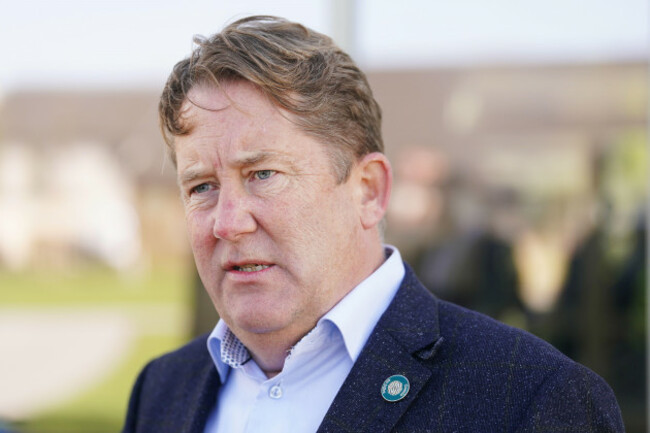
Speaking about the budget, the minister said the best way to offset the high energy costs is to bring in permanent measures that deliver permanent savings.
The minister said he is looking to introduce additional grants, but he ruled out an increase to the existing ones.
Grants for domestic battery grants are being considered, with the minister stating that it “makes a lot of sense” for households to be able to store their own energy.
He acknowledged that many people don’t have the money upfront, stating that he is investigating if a household could make a net payment at purchase. Instead of having to go through the SEAI grant application, the minister wants the grant to be given at source.
“I think that would definitely speed that up,” he added.
On the issue of the carbon tax, O’Brien said the carbon tax gives the government the money to provide retrofitting grants.
While he said he recognised that we are in a climate of elevated prices, the minister said the carbon tax is a very important climate measure.
“What I’ve said is if, and it’s not agreed, if there’s a pause on the increases in carbon tax, the money that would have been forthcoming through the increases needs to still come in to the department,” said the minister.
O’Brien said his department needs that income if 70,000 home retrofits are to be carried out this year.
“The carbon tax is a critical way of us funding that… what I’m saying as Minister for Climate, Energy, Environment, this tax is really important for us to make permanent changes for our households, for our families. It does reduce emissions. It does make our households more efficient, and we use less energy and it saves on pricing,” said the minister, adding:
So if there’s to be a pause in the increases, that amount of tax foregone will need to be paid into the department through central funds, if that is the case.
“At the end of the day, the Minister for Finance actually approves the carbon tax increases, but as part of the National Development Plan ceilings, as part of the work that I have to do between now and 2030, the carbon tax increases is baked into my capital ceilings. So if that’s taken out, it needs to be filled with something else. That’s what I’m saying,” said O’Brien.

To embed this post, copy the code below on your site












have your say