Sign in. It’s quick, free and it’s up to you.
An account is an optional way to support the work we do. Find out more.
Sign in. It’s quick, free and it’s up to you.
An account is an optional way to support the work we do. Find out more.
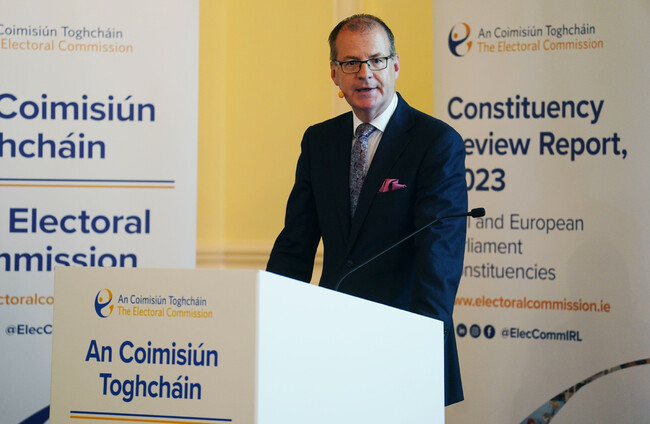
THE ELECTORAL COMMISSION has raised serious concerns about the accuracy of the electoral registers in Ireland and has appealed to the government to hire more staff in local authorities to fix the issues.
Although it said it could not put a figure on how inaccurate the registers are or how many names are on the register that shouldn’t be, CEO of the Electoral Commission Art O’Leary said today it is “safe to say this figure is in the hundreds of thousands”.
Following the publication of its first oversight report on Ireland’s electoral registers today, An Coimisiún Toghcháin (the Electoral Commission) has said it is “deeply concerned” at “legacy accuracy issues” across the country.
The Commission stressed, however, that despite these issues, it has “no evidence” of voter fraud in Ireland.
In Ireland, there is not one single register of voters for elections, instead, the 31 local authorities across the country have separate ones.
Today’s report found that as of December 2024, 11 local authorities had more people listed on their registers than the estimated eligible population for their areas.
The Commission said this is due to a number of issues, for example, people not transferring their vote when moving to a different local authority, and local authorities not removing people from the register who have died or who have emigrated.
As a result of this issue, the Electoral Commission said it is not possible to accurately assess election turnout in the 11 counties.
These counties are: Sligo, Donegal, Leitrim, Longford, Monaghan, Galway County, Cork County, Westmeath, Carlow, Cavan and Mayo.
O’Leary said that although local authority staff do undertake work to keep their electoral registers accurate, they are not currently appropriately equipped by the government to do the job.
“In some of the smaller local authorities where they don’t have full-time resources, I mean, in the morning, you could be listening to the deaths on the radio and RIP.ie and making changes to the register and in the afternoon, you could be interviewing lifeguards for the summer season,” he said.
Tim Carey, head of electoral operations at the Commission added that local authorities staff don’t “cross people of a list” based on RIP.ie or radio death notices, but that they use these to get an indication of deaths and make enquiries.
The Commission used PPS numbers, dates of birth and eircodes in order to assess the accuracy of each of the 31 electoral registers.
It is not an obligation for voters to provide their PPS numbers in order to register to vote, but the Electoral Commission has said today it would encourage people to do so in order to assist with improving the accuracy of the registers.
As of December 2024, of all entries on registers across the country, just 22% had a PPS number attached.
The Commission has recommended a plan for the Department of Housing, Local Government and Heritage and the 31 local authorities to address this issue before the elections in 2029.
It said this work should begin with audits of every electoral register in the country.
The report’s key recommendations set out the need for:

To embed this post, copy the code below on your site















have your say