We need your help now

Support from readers like you keeps The Journal open.

You are visiting us because we have something you value. Independent, unbiased news that tells the truth. Advertising revenue goes some way to support our mission, but this year it has not been enough.

If you've seen value in our reporting, please contribute what you can, so we can continue to produce accurate and meaningful journalism. For everyone who needs it.

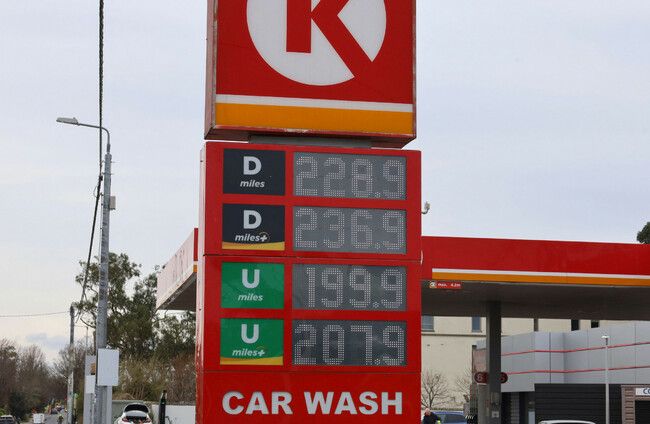
Fuel prices at their peak in Ireland last week on 23 March before Government intervention - diesel is now sitting at around €2.07 per litre. Alamy Stock Photo

What are other countries doing to save energy and combat rising fuel costs?

Countries across the world are having to take action as conflict in the Middle East pushes oil costs skywards.

ANYONE WHO DRIVES in Ireland will know all about rising fuel costs, which remain high despite government intervention early last week. 

A €250m emergency package included a suite of temporary measures aimed at alleviating the pressure on motorists. These included a cut in excise duty, a yet-to-be-implemented scrapping of the National Oil Reserve Authority (NORA) levy of 2c per litre, and tax rebate for hauliers. 

However, issues with fuel supply mean other countries have taken bigger steps not only in easing costs, but in conserving fuel as supply dwindles. The Strait of Hormuz remains choked and there’s no sign of when it may reopen for international oil tankers.

So far, the Irish government has not signalled it will be implementing or advising people to follow recommendations from the International Energy Agency (IEA) to reduce demand.

So what are other countries doing?

Some measures are aimed at saving consumers money at the pumps, such as making similar excise cuts as have been implemented here, while others are aimed at alleviating pressure on supply and conserving energy and oil where possible.

South and Southeast Asia

South and Southeast Asia are among the worst impacted by the energy crisis. Much of their supply originates from the Middle East – differing from many countries in the west, including Ireland, which sources much of its oil from the North Sea.

Therefore many of the measures being taken are aimed at conserving energy and preserving fuel supply rather than slashing taxes to make fuel more affordable for motorists, as has been priority for much of Europe.

In the Philippines, a national energy crisis was declared by its President Ferdinand Marcos Jnr. The country has the highest petrol and diesel costs in Southeast Asia, aside from Singapore, which has a much higher standard of living and higher wages. Diesel in the Philippines is now at around $2.3 (€2) a litre. 

In response to the rising fuel costs and a fear of scarcity, students and workers in some cities have been given access to free bus rides. A subsidy for motorcycle taxi drivers and other public transport workers was allocated.

Government offices have moved to a four-day in office work week and one day from home, with private sectors encouraged to follow suit.

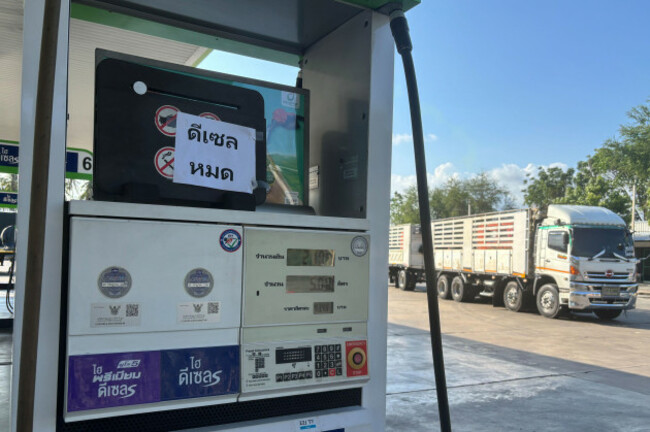
a-sign-announcing-diesel-fuel-has-run-out-is-displayed-on-a-gas-staton-in-prajuab-kirikhan-thailand-wednesday-march-18-2026-ap-photogrant-peck A sign announcing 'Diesel fuel has run out' is displayed on a gas staton, in Prajuab Kirikhan, Thailand, 18 March. AP Photo / Grant Peck AP Photo / Grant Peck / Grant Peck

In Thailand, energy-saving guidelines include adjusting air-conditioning use and setting temperatures at around 26-27 degrees, as well as wearing short-sleeved shirts and avoiding suits and ties aside from formal occasions.

People are encouraged to use the stairs rather than lifts and work from home. An emergency measure of closing petrol stations at 10pm is on the cards.

Bangladesh opted to close its universities and begin the rationing of fuel at the beginning of March in a move to conserve energy. Civil servants have been told to switch electrical appliances off during the work day and not turn on the lights if there is sufficient natural light.

Today, the Energy Ministry announced a reward of 100,000 Bangladeshi taka (about €707) for information on illegal fuel storage and smuggling.

New Zealand

New Zealand imports much of its fuel as refined products rather than crude oil. It sources the majority of its transport fuel from Asia-Pacific refineries, the crude oil of which comes from the Middle East.

The country is facing a major supply issue. It has outlined measures to ration fuel if its supply begins to run dry, and has assembled a four-phase National Fuel Plan. It is currently at phase one.

Phase one is mainly providing people with information to allow them to voluntarily lower their fuel consumption and monitoring global developments. At phase two there would be “a stronger push for voluntary uptake by households and businesses of measures that help to conserve fuel, and a reduction in the public sector’s use of fuel where appropriate”.

If disruption increases, the plan allows for stronger interventions at Phases 3 and 4 including prioritising fuel for emergency services, freight and food supply chains, and key industries that underpin New Zealand’s economy.

Australia 

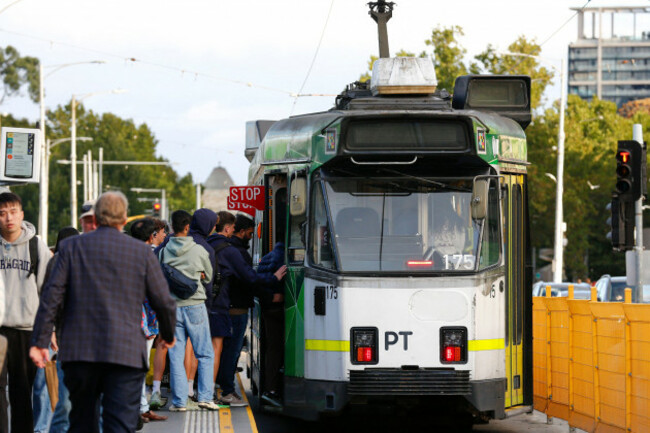
melbourne-victoria-state-australia-28th-mar-2026-people-seen-taking-trams-in-the-city-one-month-into-the-united-states-iran-conflict-the-country-is-experiencing-rising-fuel-prices-supply-disru People seen taking trams in Melbourne, Victoria State, Australia on 28 March. © Ye Myo Khant / SOPA Images via ZUMA Press Wire © Ye Myo Khant / SOPA Images via ZUMA Press Wire / SOPA Images via ZUMA Press Wire

Two states in Australia are introducing free public transport to incentivise people not to drive. 

Travel on Victoria’s trains, trams and buses will be free from tomorrow and throughout April. Commuters in Tasmania will not need to pay for buses, coaches and ferries from today until the end of June.

Australia, like New Zealand, imports the majority of its transport fuel as a refined product from Singapore. It has the largest trade deficit in refined petroleum products globally. A litre of diesel costs around AUD 2.54 (€1.52) at present – which might not seem like much to Irish readers, but one month ago, it was AUD 1.67 (€1) per litre.

The country today announced it would be halving the tax on petrol and diesel.

Slovakia

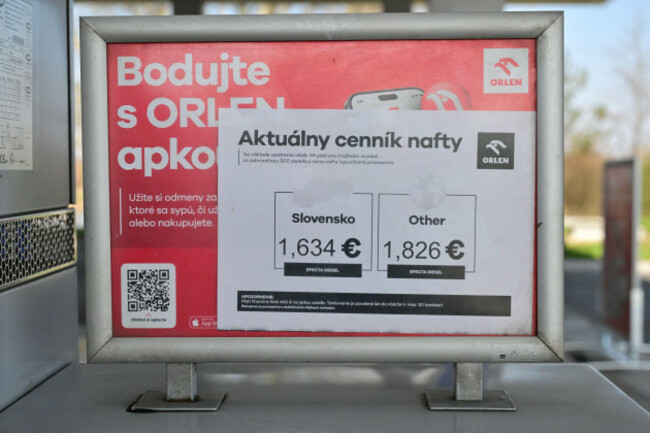
holic-slovakia-23rd-mar-2026-a-filling-station-with-information-about-double-price-for-diesel-in-holic-slovakia-pictured-on-march-23-2026-slovakia-started-to-apply-double-diesel-prices-at-pet A filling station with information about increased diesel prices for foreign drivers in Holic, Slovakia, pictured on 23 March. Vaclav Salek / CTK Photo/Alamy Live News Vaclav Salek / CTK Photo/Alamy Live News / CTK Photo/Alamy Live News

Closer to home, Slovakia imports the majority of its crude oil from Russia. It and Hungary secured EU exemptions from the sanctions placed on Russia after its invasion of Ukraine.

Foreign drivers are subject to higher petrol and diesel prices after Prime Minister Robert Fico accused “fuel tourists” of driving into the region from Poland to avail of lower fuel prices. There has also been a cap on refuelling for these drivers.

Slovakia faces a different oil supply issue than other EU countries as the pipeline connecting its supply to Russia, which travels through Ukraine, was damaged. This caused its fuel prices to increase slightly but it has mainly been unaffected by conflict in the Middle East.

Its fuel costs remain significantly lower than its neighbours who do not source oil and gas from Russia. The average price of a litre of diesel in Slovakia is at around €1.662, with foreign drivers subject a fixed rate of €1.826. In Poland, prices are around €1.782.

Norway

Norway will temporarily slash its taxes on petrol and diesel, the government said today.

From 1 April, the tax on petrol will be reduced by 4.41 kroner (39c) per litre and that on diesel by 2.85 kroner (25c) per litre, the government said in a statement.

Norway, Europe’s biggest oil and gas producer after Russia, has the highest number of electric vehicles per capita in the world, representing around 32% of the country’s car fleet in December 2025.

Diesel cars accounted for 31.8% of the fleet, compared to 23.9% for petrol cars and 12.6% for various hybrids, meaning as well as its advantageous position as a producer of oil, it also does not have the same reliance on transport fuel as other European countries.

Spain

On 20 March, the Spanish government approved an anti-crisis plan worth €5 billion to mitigate the impact of the war in the Middle East on energy prices and other sectors.

The decree reduces VAT on fuels, electricity and gas to 10%, includes discounts of up to 30c per litre of fuel, and provides direct aid to transport operators, farmers, livestock breeders, and fishers, as well as subsidies for fertilisers and tax cuts for energy-intensive companies and consumers.

It also includes partial compensation for increased costs in regular passenger maritime transport, a freeze on maximum butane and propane prices, flexibility in supply contracts, and reductions in the underground gas storage levy.

HotNews contributed to the production of this article in the framework of the PULSE initiative for collaborative journalism

Readers like you are keeping these stories free for everyone...
A mix of advertising and supporting contributions helps keep paywalls away from valuable information like this article. Over 5,000 readers like you have already stepped up and support us with a monthly payment or a once-off donation.

View 65 comments
Close
65 Comments
This is YOUR comments community. Stay civil, stay constructive, stay on topic. Please familiarise yourself with our comments policy here before taking part.
Leave a Comment
    Submit a report
    Please help us understand how this comment violates our community guidelines.
    Thank you for the feedback
    Your feedback has been sent to our team for review.

    Leave a commentcancel

     
    JournalTv
    News in 60 seconds