Sign in. It’s quick, free and it’s up to you.
An account is an optional way to support the work we do. Find out more.
Sign in. It’s quick, free and it’s up to you.
An account is an optional way to support the work we do. Find out more.
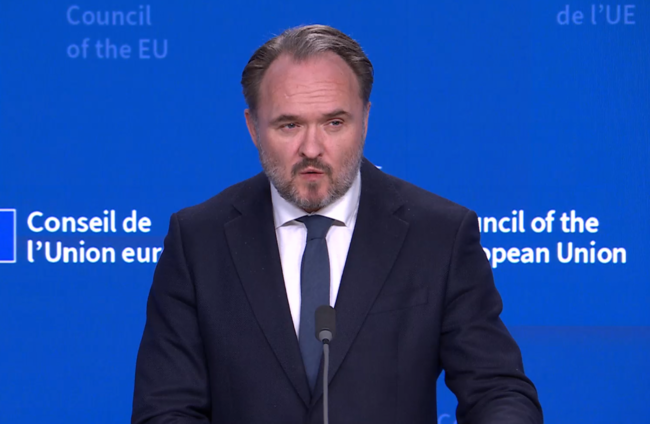
THE EU COMMISSIONER for Energy has said Europeans should work from home and drive less to save fuel amid the ongoing conflict in the Middle East.
Dan Jorgensen endorsed the International Energy Agency’s (EIA) measures to ease the economic impact of the energy crisis on consumers, including recommendations to work from home, reduce speed limits, encourage public transport, avoid air travel and increase car sharing.
Speaking at yesterday’s informal conference of Energy Ministers, Jorgensen said the fuel crisis “will not be short” and the situation “will not go back to normal in the foreseeable future”.
“Even if there was peace tomorrow, there would still be consequences, because energy infrastructure in the region has been ruined by the war, and continuously is being ruined by the war,” he said.
“The more you can do to save oil, especially diesel, especially jet fuel, the better we are off,” he said, advising EU member states to look at the IEA recommendations for inspiration.
“The IEA has recommended a ten point plan, which includes work from home where possible, reduce highway speed limits by at least 10 kilometers, encourage public transport, alternate private car access to roads in large cities in different ways, increase car sharing and adopt efficient driving practices.”
He said the recommendations by the IEA are not a “one size fits all package”, but are a “very good toolbox”.
“We very much recommend that every country look at which possibilities they have,” he said, adding that an energy advice package from the EU will be announced soon.
He also encouraged member states to take action to lower fuel prices for citizens and households, including lowering fuel taxes and speeding up processes to complete renewable energy projects.
Earlier this week, Tánaiste Simon Harris said the government has no plans to alter its advice around remote working or travel in the midst of a spiralling energy crisis.
Asked about the matter of remote working again this morning on the way into Cabinet, the Tánaiste said “we’ve no plans to change that mandate”.
Speaking to reports at Government Buildings today, Energy Minister Darragh O’Brien said government advice on conserving energy will be delivered in the coming weeks.
“We will be coming forward in the next couple of weeks with some suggestions and assistance in relation to how people and businesses can use energy appropriately and conserve energy,” he said.
He said he is also looking to accelerate the implementation of retrofitting, particularly in businesses.
He went on to say that yesterday’s meeting of Energy Ministers showed him Ireland’s level of intervention regarding fuel costs is “one of the most significant in Europe so far”.
“We have said that that is our first intervention, we have flexibility in that regard to intervene again,” he added.
When asked about impacts to public transport the fuel crisis might have, the minister said there are no plans to curtail public transport operations.
Harris said the European Commission is working on advice and a “toolkit” of sensible ideas that might be offered to the public.
“Irish people are eminently sensible. I think people are already saying, ‘What can I do in my own home to conserve energy? What can I do in my own life as well? And of course, if any useful information becomes available, we’ll pass that on, just like we did during the Ukrainian crisis,” said the Tánaiste.
While he said fuel supply is not an issue for Ireland right now, if that were to change in the weeks ahead, then government advice would, of course, have to reflect that situation.
With additional reporting from Christina Finn.

To embed this post, copy the code below on your site












have your say