Sign in. It’s quick, free and it’s up to you.
An account is an optional way to support the work we do. Find out more.
Sign in. It’s quick, free and it’s up to you.
An account is an optional way to support the work we do. Find out more.
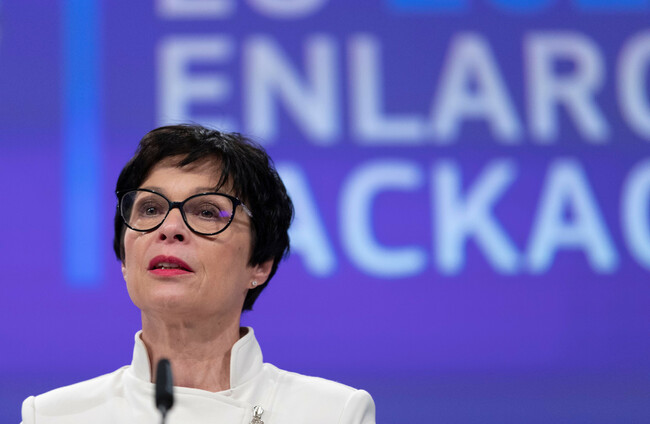

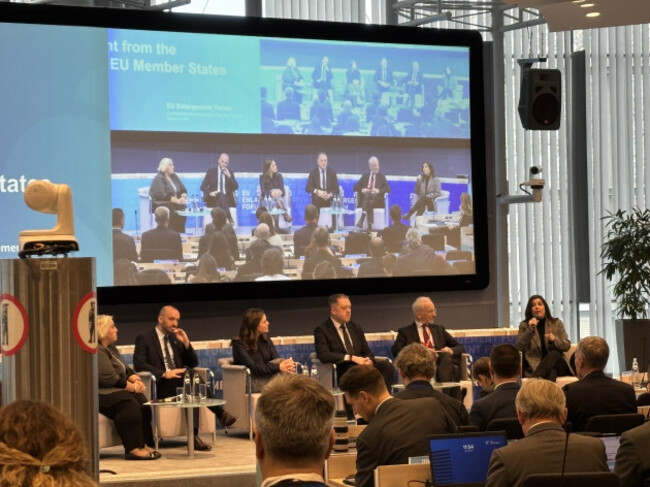
EUROPEAN LEADERS gathered in Brussels today for the bloc’s first-ever forum on EU enlargement.
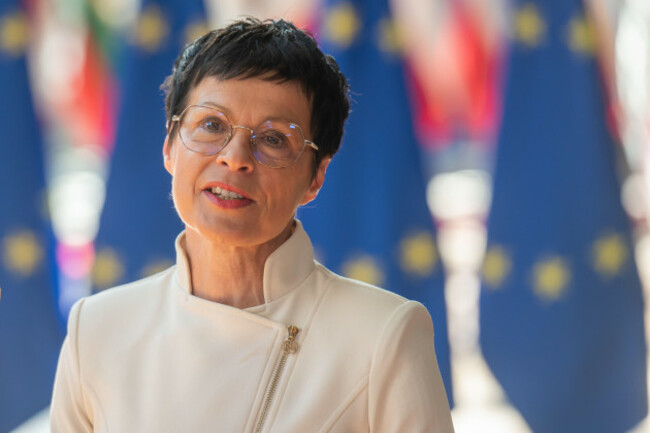
Established by Commissioner for Enlargement and Eastern Neighbourhood Marta Kos, the conference is envisioned to be a permanent platform to bring together and connect EU citizens and candidate countries around a common future for Europe.
The EU is currently actively pursuing what it considers the most ambitious enlargement agenda in well over a decade, with negotiations underway with several countries, including Ukraine, Montenegro and Moldova.
Montenegro has vowed to become the 28th EU member state by 2028, and Albania’s stated goal is to finish the accession negotiations by the end of 2027.
According to the EU, both are making steady progress in implementing reforms towards fulfilling the criteria for membership.
Meanwhile, Ukraine, which got sign-off to start accession talks in 2023, has not formally begun its accession process due to Hungary’s veto.
Addressing Hungary’s block today, Commissioner Kos said it should not stall Ukraine’s implementation of the reforms required for EU membership.
“My message to Ukrainians, you don’t need Viktor Orban to do the reforms, just do it,” she said.
Opening the conference this morning, Commission President Ursula von der Leyen said: “In times of geopolitical uncertainty, enlargement is more than a choice for peace, it is an investment in our collective security and freedom.”
Von der Leyen noted that gaining EU membership is a challenging process for candidate countries that requires many reforms, but she said the benefits of enlargement are many.
“Countries that joined the European Union in the last wave experienced incredible economic growth. Living standards doubled, unemployment almost halved. Life expectancy rose by an average of four years, and 6 million new jobs were created. The same will happen with the next enlargement process,” she said.
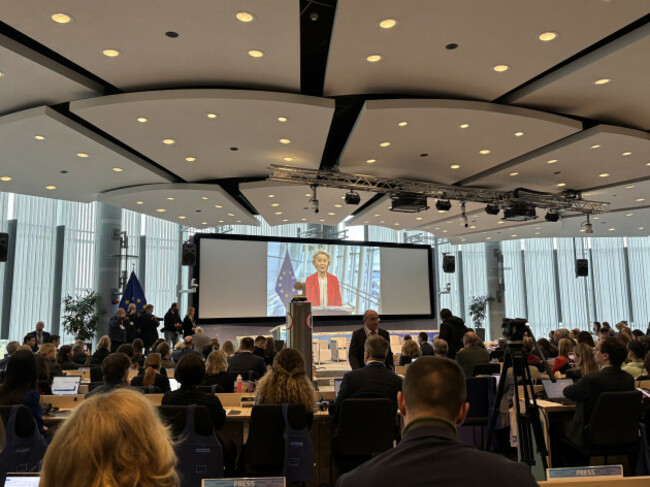
She added that countries that join the EU must deliver key reforms to ensure a level playing field with the EU single market, and in return, the EU opens up the single market and provides investment.
“This is how we build a Europe of shared prosperity. Enlargement is a journey that matters to all of us, because we all share the same continent, history, culture and challenges,” she said.
Commissioner for Enlargement Marta Kos said today that the EU needs to “push back against forces that aim to destabilise our continent”.
She noted that in the area of defence, it is one of the EU’s future member states, Ukraine, that is “driving us forward” in ways that were “unimaginable in the past”.
She also noted that by 2027, Ukraine and Moldova will be integrated into the EU energy market, protecting them against Russian “energy blackmail”.
Earlier this month, the European Commission published an enlargement review of candidate countries. The review praised the progress made by Montenegro, Albania, Ukraine and Moldova, and criticised Serbia and Georgia for their progress on key admission metrics.
Other countries covered by the review were Serbia, North Macedonia, Bosnia and Herzegovina, Kosovo, Türkiye and Georgia.
Responding to the review, Ukrainian President Volodymyr Zelenskyy said he wants to see Ukraine become a member state of the EU by 2030.
A Eurobarometer poll on enlargement carried out in spring 2025 showed that while 56% of EU citizens support further enlargement, there are concerns about corruption, migration, and the perceived cost to taxpayers.
The EU argues that these concerns are often amplified by disinformation or a lack of visibility of the long-term benefits of enlargement, with 67% of EU citizens not feeling sufficiently informed about enlargement and how it benefits their country or themselves personally.
As things currently stand, Montenegro looks primed to become the 28th member of the European Union, but it still has a long road ahead, with many reforms to enact.
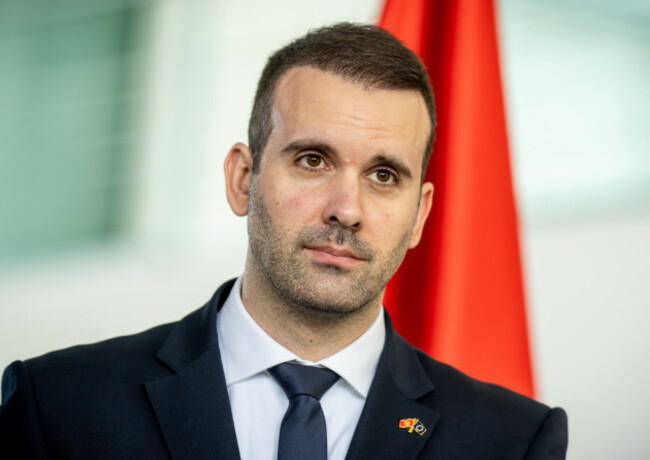
Speaking at today’s conference, the country’s prime minister Milojko Spajić, said his country has “some homework to do” to go through all the reforms that are necessary for membership, but that he is committed to closing all negotiation chapters in 2026.
“We mean business,” he said.
Representing Ireland at today’s conference, Minister of State for European Affairs Thomas Byrne said Ireland would like to see Montenegro conclude the negotiation process next year, while Ireland holds the European Presidency.
He noted that admitting Montenegro, a small country (it has a population of approximately 600,000), wouldn’t have a big impact on the EU budget but would send out a “powerful signal” that would accelerate momentum to grow the EU.
“We’ve seen how European Union membership has transformed Ireland over 50 years, from being a very poor country, to one that’s very outward looking, and one that’s involved in European affairs…We would like to see those benefits shared,” Byrne said.

To embed this post, copy the code below on your site











have your say