Sign in. It’s quick, free and it’s up to you.
An account is an optional way to support the work we do. Find out more.
Sign in. It’s quick, free and it’s up to you.
An account is an optional way to support the work we do. Find out more.

SOMETIMES YOU JUST want to write a whimsical little column about fridges being hacked.
Sure, you’d find some way to acknowledge that a fridge-hacking is serious business and speaks to the vulnerabilities inherent to “smartening” up all of our devices right down to our kitchen appliances, but mostly it would be quaint little jokes along the lines of “What will they hack next, our kettles?” And everyone can have a nice lighthearted time.
That was the plan for this column at the start of the week, after SuperValu announced that 13 of its stores had been affected by a cyberattack that targeted their refrigeration systems. Obviously it’s not ideal for anyone who wanted to buy ice cream from any of those 13 SuperValu that day, but you know, no use crying over unrefrigerated milk and all that.
But then you realise that this is the real world, and that the Great Fridge Hack of 2026 is actually probably part of a coordinated series of attacks to undermine the orderly functioning of society, terrify ordinary people and ultimately create conditions whereby we all have less trust in the institutions upon which we rely. Because nothing can ever be good craic for any longer than 30 seconds. You get 30 seconds of craic, and then you realise that the essential infrastructure of your country is under threat.
As much as an online columnist might hope that SuperValu’s fridges were hacked as part of some kind of prank, alas, it seems to be an awful lot more serious than that.
That is, unless you also consider calling in bomb threats to multiple airlines a prank. It would probably be more accurately described as ‘an international security issue’, when you really think about it. Multiple flights carried by major airlines had to reroute, doubtlessly causing distress and disorder for many travellers and their families. Not really a prank at all, actually, unless very serious felonies can fall under the category of ‘hi-jinks’.
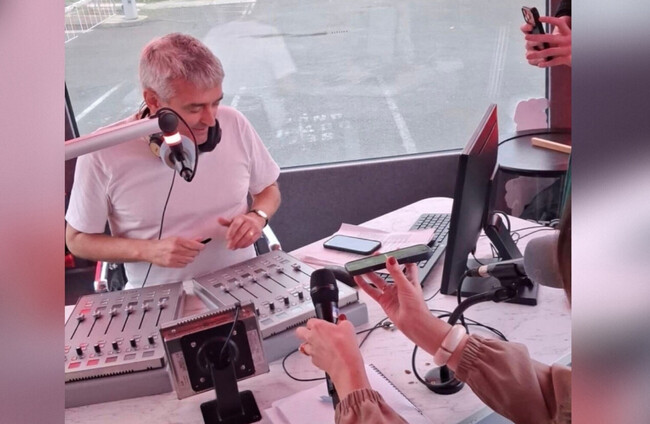
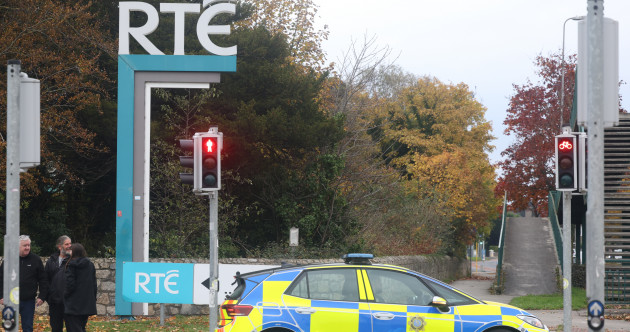
And the hoaxes haven’t stopped there. On Friday morning, multiple Irish media organisations were forced to evacuate their headquarters after bomb threats were sent in. This included RTÉ, where David McCullagh ended up broadcasting from the RTÉ Roadcaster for his own safety.
The buildings of both the Irish Independent and Bauer Media (which owns Newstalk) evacuated their buildings. Virgin Media, who also received a threat, simply kept broadcasting. Which is a pretty ballsy move. You’d have a hard time keeping me in the office if I smelled smoke coming from the kitchen toaster (especially now that toasters are presumably fair game for hacking too).
Undoubtedly, the staff of these organisations will have been spooked by the spectre of a bomb threat in their workplace, and by the presence of Gardaí sweeping their buildings for explosives. At worst, it is possible that these threats will usher in a new era of uncertainty, queasy vigilance, an atmosphere rife with the threat of violence and disruption.
These incidents come ahead of next week’s European Political Community summit in Dublin, which will bring around 50 heads of state and government to Ireland. Which would have been perfectly amusing if all we’d had to worry about was 13 SuperValu fridges being hacked by a bunch of tech-savvy teenagers or a basement troll looking for kicks. Oh no, the Grand Duke of Luxembourg won’t be able to get his Rustlers microwaveable burgers. That’s the kind of thing I’d been writing had this all been no more than an innocent, isolated incident of fridge-hacking. But instead, it seems like there could be some force out there that’s hoping to hit us with a two-pronged attack — taking out our butters and cheese first before going after our communications infrastructure.
Both Ryanair and Aer Lingus flights were targeted this week during the spate of false bomb threats. No fewer than 27 flights had been targeted before Friday morning’s unprecedented attack on Irish media. It would be foolhardy to assume that this episode is entirely concluded.
It is clear that the Irish government is taking these threats seriously, and Taoiseach Micheál Martin was quick to tell the public that the state ‘will go after this to identify who’s responsible and to hold them accountable’. Which is a very nice idea, in theory. I am not an expert in national security, but it seems to me that the perpetrators of these attacks might be very hard to find. Sadly, this doesn’t seem like the work of local pranksters. On a scale of Dennis the Menace to Dr No, it’s probably tilting in the direction of the James Bond super villain.
The prospect of failing to identify and apprehend whoever is behind these attacks is a particularly scary one, since sending in a bomb threat is an extremely low-tech and efficient way to cause disruption. Not only that, but a false bomb threats seem like a method of disruption utterly ripe for copycat behaviour.
It is imperative for the orderly functioning of society that these hoaxes don’t continue, and yet, it seems possible that they’ll be quite difficult to stop. Remember how much trouble we had preventing drones from getting near the airport a few years ago?
Should the hoax attacks continue then even in the best case scenario journalists (and potentially many others) will end up doing our jobs against the backdrop of some vague sense of threat. All of us will be checking a little box on the Ryanair website to confirm we’re prepared to pay extra so that they’ll promise to investigate it if our flight ends up being targeted with a bomb threat. Living in a real world version of the boy who cried ‘get David McCullagh into the RTÉ-mobile, stat!’
The government will be left hoping that the only further disruption to next week’s European Political Community event is the much more self-inflicted strike by public sector workers, including teachers, university lecturers, Office of Public Works workers, nurses, doctors and more.
And of course, our ability to navigate an event of next week’s magnitude — ensuring a secure and smoothly run operation that will encompass dozens of European leaders — is really just a warm-up for next year, wherein we as a nation will need to facilitate no fewer than 10 Garth Brooks concerts.
It was announced this week that the singer will perform two shows each in Belfast, Galway, Kilkenny, Limerick and Cork, swerving Dublin entirely. Brooks played five sellout gigs in Croke Park four years ago, after cancelling a slate of gigs back in 2014 when he was told he wasn’t allowed to play five nights at Ireland’s largest stadium due to resident concerns. If anything, it’s especially cruel for these bomb threats to emerge just as the nation was ready to heal from those scars.
With such a disturbing new tactic now facing Ireland’s (and indeed Europe’s) security apparatus, it seems essential that we find a way to address these false bomb threats as soon as possible, lest Mr Brooks face another trip to Ireland that is curtailed by mayhem.
And don’t hack the fridge in his dressing room either, while we’re at it.
To embed this post, copy the code below on your site










have your say