Sign in. It’s quick, free and it’s up to you.
An account is an optional way to support the work we do. Find out more.
Sign in. It’s quick, free and it’s up to you.
An account is an optional way to support the work we do. Find out more.
EUROVISION IS KICKING off its official schedule of events as this year’s crop of competitors prepare take to the ‘turquoise carpet’ for the usual Sunday night opening ceremony.
Around 30,000 people are expected to line the streets of Vienna tomorrow to watch the 35 acts parade through the city, waving their national flags.
Full-length dress rehearsals – staged, as usual, before paying fans – start the following day at the Wiener Stadthalle ahead of the Tuesday and Thursday night semi-final shows, before a winner of the contest’s 70th edition is decided in Saturday night’s finale.
As far as things appear on its website and across Eurovision’s multiple social media platforms, everything’s proceeding pretty much as it tends to every other year.
As you’ll no doubt be aware, however, the world’s biggest televised live music event is playing out once again in the shadow of controversy.
National broadcasters from five nations that traditionally compete (Ireland amongst them) made the decision to sit out the contest last December, after it was decided that Israel would be allowed to continue in the contest.
So what can we expect from the week ahead? After years of protest and tension, what changes are being made to how the contest is run? And how have Austrian authorities been preparing?
Here’s everything you need to know about what’s shaping up to be the most divisive Eurovision in years.
Ireland, Spain, the Netherlands, Slovenia and Iceland made the decision to drop out of the contest in protest over Israel’s war on Gaza and after revelations of unfair voting practices at the 2025 contest.
That followed a meeting of European Broadcasting Union (EBU) members in Geneva before Christmas, where broadcasters debated and voted on new rules to reform how the contest operates.
RTÉ, which, as the national public broadcaster, oversees the Irish entry, had flagged ahead of the meeting that it would not be sending an act to Vienna if Israel was allowed to take part.
Broadcasters were asked to support various new rules – including measures to stop government agencies from backing organising song contest voting campaigns. The ballot of members, which was comfortably carried, included a clause whereby there would not be a follow-up vote based solely on Israel’s inclusion in the 2026 competition.
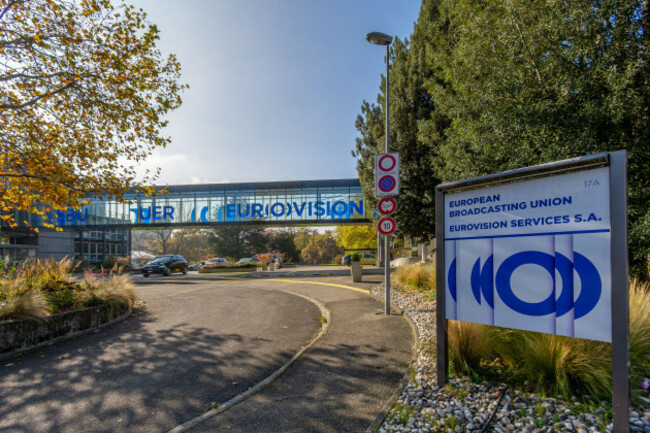
RTÉ’s boycott extends beyond simply not fielding a contestant in Vienna. It won’t be airing any of the shows across the week. In its December statement, the broadcaster said:
“RTÉ feels that Ireland’s participation remains unconscionable given the appalling loss of lives in Gaza and the humanitarian crisis there which continues to put the lives of so many civilians at risk.
“RTÉ remains deeply concerned by the targeted killing of journalists in Gaza during the conflict and the continued denial of access to international journalists to the territory.”
In case you were wondering, the last time Ireland missed out on Eurovision was in 2002 when harsh relegation rules meant we weren’t entitled to take part after finishing near the bottom of the table the previous year.
Two decades before that, we were unable to send an act in 1983 because of an RTÉ strike.
That December meeting of TV executives followed uproar over voting practices in the 2025 competition, staged in the Swiss city of Basel.
It emerged in the wake of last year’s contest that an agency of the Israeli government had deployed social media advertising and used state social media accounts to encourage voting for the country’s act.
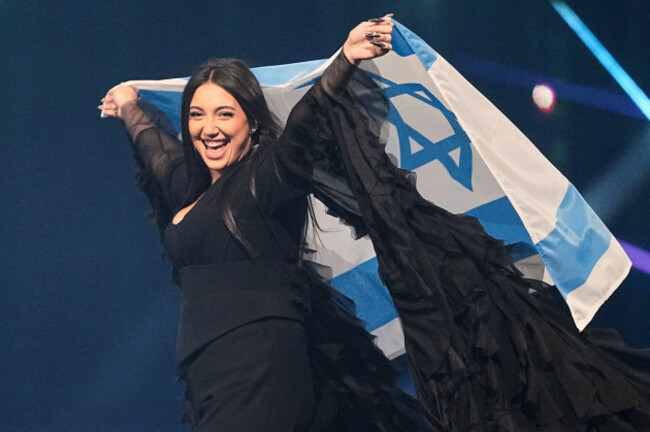
The Israeli singer, Yuval Raphael, finished in second place in the contest having garnered the highest number of public votes. Eurovision News Spotlight – the investigative journalism unit of the EBU’s news service – uncovered the story.
The EBU assured members they were “taking concerns seriously” after a number of broadcasters called for a review of the voting system, and an independent consultant was brought in to come up with a solution.
The changes backed by a majority vote of members in Geneva included clearer rules to discourage promotion campaigns backed by governments and government agencies. In addition, the maximum number of votes allowed per payment method has been reduced from 20 to 10.
The way semi-final acts qualify for the final was also overhauled – with professional juries making a return to the Tuesday and Thursday contests for the first time since 2022 in a bid to “ensure that high-quality entries with broad artistic merit are recognised”.
It’s hoped the two-pronged approach will cut down on the risk of organised campaigns giving acts an unfair boost.
It should also go some way towards addressing complaints from fans in recent years that too many novelty songs were making it through from the weekday contests, at the expense of quieter or less showy compositions.
There’ll now be a 50:50 split in how the top 10 qualifiers from the weekday shows are decided – with juries accounting for half of each act’s score and the other half still decided by the public vote.
A number of demonstrations – mostly against, but also some in support of Israel competing – have been scheduled for Vienna for the week of the contest.
Potentially one of the highest-profile events is a pro-Palestine concert set to be held in the city next Friday. Billed as a ‘political event featuring music’, it’s being organised to coincide with Nabka Day, the anniversary of when around 760,000 Palestinians fled or were driven from their homes during the 1948 wartime creation of Israel.
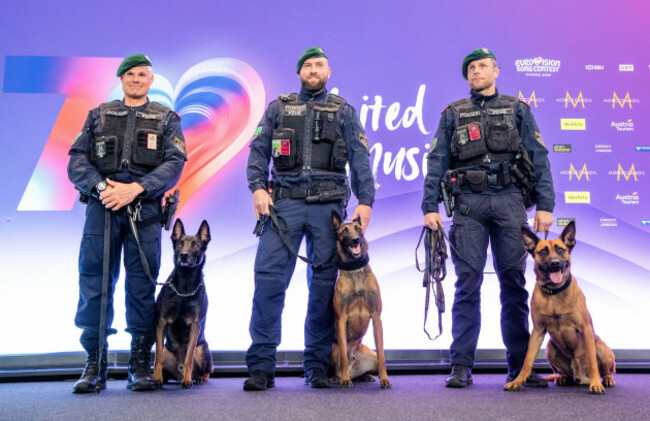
Authorities are planning a heavy security presence in the city throughout the week, with counter-extremism officers, drones and bomb detection dog units all being deployed and public order units placed on standby.
Airport-style security will be in place for anyone entering the contest venue throughout the week.
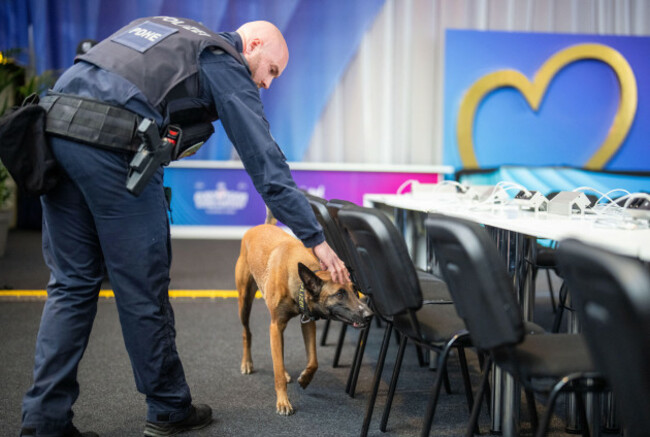
Statements from the city’s police in recent weeks have stressed that Austrian law puts very few restrictions on public gathering or protests, while noting that officers are on standby to act should they be needed. Protests aren’t being allowed in the immediate area around the contest arena.
In terms of possible protests during the live shows, Austrian host broadcaster ORF has confirmed it will not ban use of the Palestinian flag within the venue and won’t censor booing from the crowd.
According to the show’s executive producer, Michael Kroen: “We will not sugarcoat anything or avoid showing what is happening, because our task is to show things as they are.”
It follows criticism from fans that both booing and cheering were muted in the audio mix during last year’s contest in Basel, making for a more sanitised viewing experience.
Israel’s contestant in Vienna, Noam Bettem, said this week that he had been preparing for Eurovision by having his team boo at him during rehearsals.
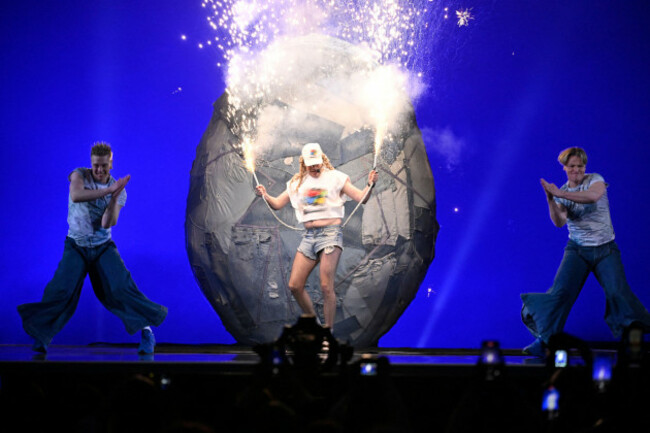
In terms of events on stage, the Finnish duo of singer Pete Parkkonen and classical violinist Linda Lampenius are clear favourites to take home the trophy next Saturday with their none-more-Eurovision pop-classical crossover Liekinheitin (Flamethrower),
Greece, Denmark, France and Australia - who are represented by a bone fide star in the shape of Delta Goodrem this year – make up the rest of the current top five, according to the bookies. Odds of around 19/1 are being given for an Israel victory. The UK are firmly down in the mid-table at 90/1.
Elsewhere, the involvement of Boy George in this year’s contest has generated plenty of column inches in the UK papers in recent weeks. The Culture Club frontman co-wrote San Marino’s song this year and is set to appear on stage, but only lends his voice to the final few phrases of the performance.
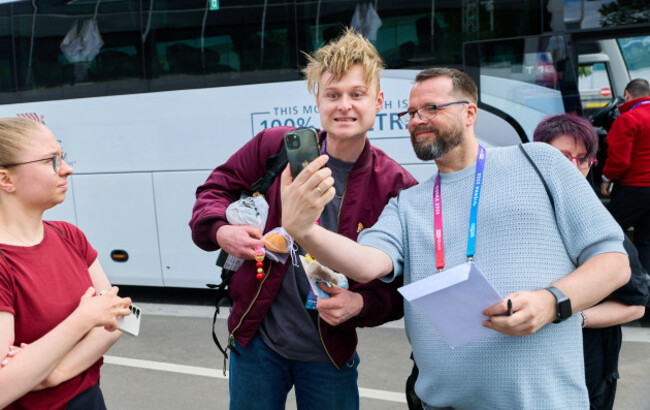
In what’s become a standard approach to the interval section of Grand Final, various former winners and fan-favourite contestants have been drafted in to perform a ‘Eurovision Allstars’ medley.
And while there’s been no shortage of singers happy to take the booking, it’s notable that some figures from the wider Eurovision ecosystem who may have expected a phone call have very publicly opted out in advance.
Nemo, who won back in 2024 for neighbouring Switzerland, announced late last year they were handing back their trophy over the decision to allow Israel to continue to compete.
While not giving a reason, Austria’s last winner of the contest back in 2014, Conchita Wurst, made a statement withdrawing from all involvement with Eurovision at the start of the year.
Closer to home, Ireland’s three-time winner Johnny Logan said on Ireland AM last week that he’d been asked multiple times to get involved this year but had turned down the offers on the basis of backing RTÉ’s boycott.
The singer – still known on the continent as the ‘King of Eurovision’ – last appeared on the song contest stage at Malmö in 2024.
As mentioned, RTÉ won’t be airing any of the shows.
That They May Face the Rising Sun, the 2023 film based on the John McGahern novel, will be broadcast in the RTÉ One slot usually occupied by the Eurovision final next Saturday. In a nod to the contest, the classic Father Ted episode that sees the Craggy Island priests enter the ‘Eurosong’ will be airing over on RTÉ 2.
By contrast, it’s business as usual at the BBC with Graham Norton returning on commentary duty for Saturday’s final and another Irish broadcaster, Angela Scanlon, joining the line-up to co-host the commentary for the semi-final shows. Scanlon replaces the axed Scott Mills in the presenting team.
And while national broadcasters in the Netherlands and Iceland will be showing the contest, Spain’s RTVE has opted to air its own home-produced musical variety show in the Saturday Eurovision slot. The boycotting broadcaster’s head of content noted this week that the date has “special significance in Europe… it’s the International Day of Living Together for Peace”.
Slovenia’s RTV is going further still with its boycott, with the head of the national broadcaster confirming that it will air a series of films and documentaries about Palestine instead of Eurovision content.
Asked about decisions around taking part in future contests, RTÉ said in response to a query from The Journal that, as yet, it had nothing to add beyond its original statement on the Vienna contest issued last December.

To embed this post, copy the code below on your site









have your say