Sign in. It’s quick, free and it’s up to you.
An account is an optional way to support the work we do. Find out more.
Sign in. It’s quick, free and it’s up to you.
An account is an optional way to support the work we do. Find out more.
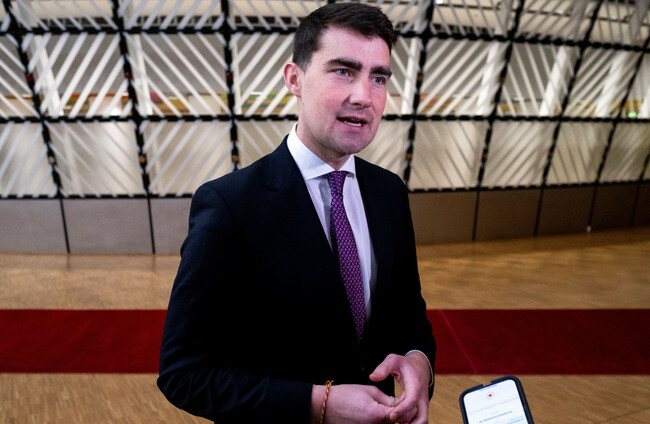
MINISTER FOR PUBLIC Expenditure Jack Chambers has once again ruled out “ad hoc” energy supports for people struggling to pay their gas and electricity bills, despite a recent briefing from the Department of Energy that recommended they be reintroduced.
“What I’ve said in the context of energy credits is that we want to move away from a position which we’ve had in recent years of ad hoc, temporary supports,” Chambers told RTÉ Radio this morning.
Chambers said that the State would focus on improvements to energy infrastructure instead of providing energy credits.
“We want to move to a position where we set out the fiscal parameters in the context of a medium term fiscal plan, and that we plan the supports and the measures for businesses and consumers within those parameters.”
He also said that the social protection system “is a mechanism to support people who face particular pressures”.
Ireland has the second-highest energy prices in Europe.
Reporting from The Irish Times and The Sun have detailed a briefing from the Department of Energy that said the average annual electricity bill for a household in Ireland comes to €1,779 while the average annual gas bill is €1,503.
The briefing said that electricity prices are currently 61% higher than they were in 2020 while gas prices are 90 % higher.
The briefing also said that 230,000 electricity customers – around 10% of the market – are in arrears on their bills.
Around 162,000 homes and businesses are in arrears on their gas bills, representing roughly 24% of the market.
The briefing, which was sent to Minister for Housing, Local Government and Heritage Darragh O’Brien, said that supports for those struggling with their bills would be necessary.
“Targeted supports will be required to provide for those least able to pay, to reduce the number of customers in arrears and ensure that the figure does not grow further which would cause the financing of the Green Transition to be spread across a narrower group.”

To embed this post, copy the code below on your site

















have your say