We need your help now

Support from readers like you keeps The Journal open.

You are visiting us because we have something you value. Independent, unbiased news that tells the truth. Advertising revenue goes some way to support our mission, but this year it has not been enough.

If you've seen value in our reporting, please contribute what you can, so we can continue to produce accurate and meaningful journalism. For everyone who needs it.

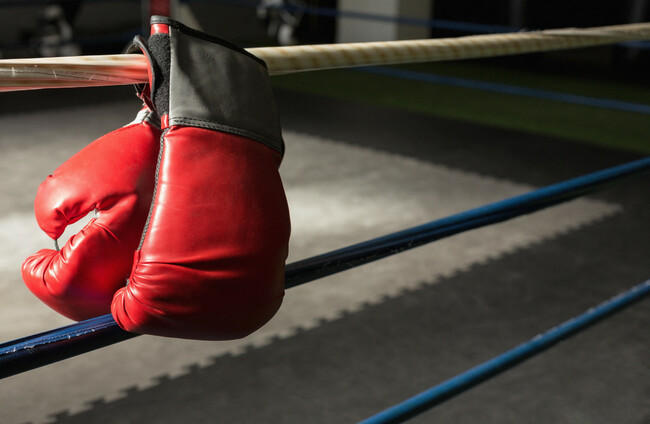
Are Ireland's golf clubs accessing more funding than boxing clubs? Alamy Stock Photo

FactCheck: Do golf clubs apply for sports capital funding at three times the rate of boxing clubs?

Social Democrats TD Gary Gannon made the claim last month.

WE MIGHT NEARLY be over Ireland’s World Cup playoff heartbreak against Czechia last month, but there are still important debates from around the time relating to sports funding.

On the day the match was played, the Dáil heard how certain sports are funded by the government in Ireland – and the impact this has on in communities across the country.

One such claim suggested that there was a stark disparity in the State funding that boxing and golf clubs can access, as an example of two sports that are traditionally enjoyed by different groups in society.

It was suggested that golf clubs apply for three times more funding than boxing clubs – but is this accurate?

The Claim

Social Democrats TD Gary Gannon made the following statement during a Dáil Éireann
debate on 26 March 2026:

“To access the sports capital programme for capital work, communities need to own their land outright or hold a lease of at least 21 years duration.

“The communities that already have facilities get more and the communities that have nothing remain locked out.

“That is exactly why golf clubs in this State apply at for this funding exactly three times the rate of boxing clubs, not because golf matters more but because golf clubs and the like have the cultural capital to access the system”.

The Evidence

The Sports Capital and Equipment Programme, now known as the Community Sport Facilities Fund, is the primary mechanism for local, regional and national sports organisations to obtain government funding in Ireland.

This article therefore has two components.

First, there is Gannon’s claim that golf clubs apply for the Community Sports Facilities Fund at three times the rate of boxing clubs.

And we also need to look at whether it’s the case that, for a sports club to be eligible for capital works, they must either own the site or hold a long-term lease of at least 21 years.

The Journal got in touch with Gannon to inquire about his sources, and he provided a link to the following online article by Irish consultancy group 2into3: Sports Capital 2018: Does Class Matter?

2into3 used data published by the Department of Culture, Communications and Sport in 2018.

However, applications closed for the most recent round of Community Sport Facilities funding in 2023 – so it is worth noting that this source is not using the most recent data that is currently available.

Let’s look at the most up-to-date data to see how it compares.

The receipts

The gov.ie website contains an immense amount of information on all the organisations that have applied for and received sports funding, but let’s focus specifically on Gannon’s main claim concerning the number of funding applications before anything else.

A detailed list of all 2023 applications for Sports Capital funding allows us to see every single one of the 3,210 organisations that have applied for funding, the organisation type, the amount of funds requested, and the proposed purpose for the funds.

Tallying up the applicants based on sport type from this list, we can see that 150 golf clubs and 55 boxing clubs applied for sports capital funding in 2023.

Based on this, it can be said that golf clubs apply for funding at around three times the rate of boxing clubs – 2.7 times the rate to be specific, but it’s fair to round up.

When it comes to funding successfully allocated in 2023, however, golf clubs received nearly seven times the amount of funds as the boxing applicants: golf clubs received €13,403,163 while boxing clubs received €1,966,859.

Golf clubs have three times the number of grant applications than boxing, but receive seven times more funding.

And the reason for this disparity pertains to the second aspect of this factcheck: the issue of land ownership when it comes to sports grant eligibility.

The lay of the land

When applying for grants from the Community Sports Facilities Fund, there are two routes a club can take.

Clubs can request funds for sports equipment, or capital works (i.e. structural alterations to property).

Clubs can apply for grants up to €200,000, an increase from €150,000 in 2018.

However, the amount of money a club can receive and what this money can be spent on is largely dictated by the type of property the club occupies.

Gannon claimed that for clubs to access the sports capital programme for capital work, communities need to own their land outright, or hold a lease of at least 21 years duration.

According to the 2023 sports capital application guide, this is not entirely true.

For a club to be eligible for the maximum grant allowing for capital work, they must either own their land outright, or have held a lease for 15 years.

And if a club has held a lease for less than 15 years, they are still eligible to apply for maximum of €70,000 in capital works – as long as their landlord signs off on it.

So in summary, a club can still be eligible to receive funds for capital work, even on a short-term lease.

Sports equipment grants are also capped at €70,000.

So for a club with a short-term lease on their property, it appears that the absolute maximum grant they can receive from the Community Sport Facilities Fund is €140,000.

Meanwhile, clubs that own their property or have a long term lease are eligible for up to €200,000.

This helps contextualise why golf clubs apply for Community Sport Facilities funding at three times the rate of boxing clubs but receive seven times the amount of funding.

As Irish Times sports journalist Johnny Waterson has said:

“Boxing as a sport often tends to flower in disadvantaged areas, and it also reaches out to participants from diverse cultures and backgrounds, such as immigrants and the Traveller community. But boxing lacks investment capital and facilities.”

Some moves have been made to address inequities in sports grant allocation, such as the introduction of the Pobal Deprivation Index in the application assessment process.

But a crucial point that Gannon made in the Dáil stands: the Pobal Index can only help when an application has been submitted.

For some disadvantaged sporting communities, the red tape involved in applying for sports capital grants without land ownership or a long-term lease could be enough to dissuade them from applying at all.

Verdict

Social Democrats TD Gary Gannon claimed that golf clubs in Ireland apply for capital funding at three times the rate of boxing clubs.

Gannon was referencing a report by consultancy group 2into3, which used data published by the Department of Culture, Communications and Sport in 2018.

However, a more up-to-date list of all 2023 applications for Sports Capital funding is available and shows that 150 golf clubs and 55 boxing clubs applied for funding that year.

Based on that, golf clubs apply for funding at around three times the rate of boxing clubs – specifically 2.7 times the rate.

However, it should be noted that the amount of money a club can receive is largely dictated by the type of property the club occupies.

We therefore rate the claim: MOSTLY TRUE. As per our verdict guide, this means the claim is close to accurate, but is missing details or context.

Close