Sign in. It’s quick, free and it’s up to you.
An account is an optional way to support the work we do. Find out more.
Sign in. It’s quick, free and it’s up to you.
An account is an optional way to support the work we do. Find out more.
LAST UPDATE | 8 Jul

DOWN THE COUNTRY recently, in a large, well-run, locally-loved supermarket, it might as well have been a pigsty for the amount of slop you had to trudge through.
The shop floor is absolutely littered in AI generated posters.
The bakery, the deli, the coffee dock, the fishmonger, the butcher counter, every section, another AI print-out proudly displayed. All from the same generic template.
Aside from being unmistakable for that piss-y coloured sepia shade these posters tend to fashion, it’s the waffle-y, regurgitative declarations that give the game away — one of the bakery posters has a triad of the same promise in different places: “prepared in store daily… baked fresh daily… freshly baked in-store daily!”.
Say Bloody Mary three times in front of the mirror to conjure her… or just let AI conjure her for you.
The dead giveaway, other than the identikit template, is the overly-perfected food imagery: perfectly lit, perfectly cooked, sometimes even steam added for fake flourish. If it looks too good to be true, it probably is, and in this case the sad, stale product below bore little resemblance to the poster above promising it.
It’s brazen at best and false advertising at worst. Your breads don’t look like that, nor do your cakes or coffees. AI has produced a guesstimate of what you sell rather than using the real product you make as the basis. Someone on Reddit called the phenomenon “cartoon food”, which is exactly what it is: fake, artificial food images, made to AI house style, and while not illegal, it’s certainly unethical.
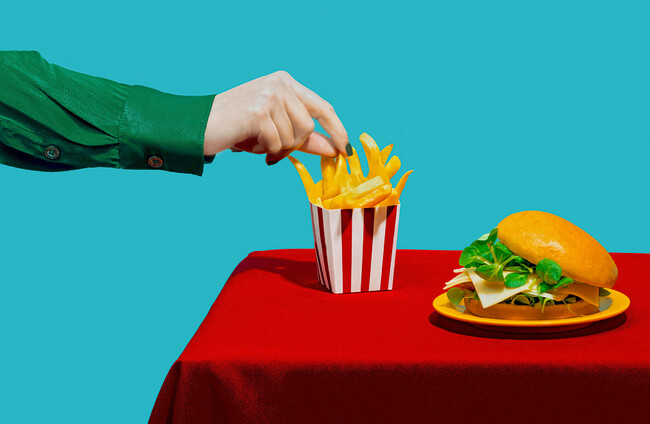
Trickery has been rampant in food advertising for donkey’s years, though. Long before AI, we’ve seen fast food giants, in particular, fiddle with food, from clever, expensive styling to heavy-handed editing. They’re divils for making their menu items the ultimate, levelled-up, unattainable version when the reality sitting and sweating inside your takeaway burger box is the food equivalent of an illegible photocopy.
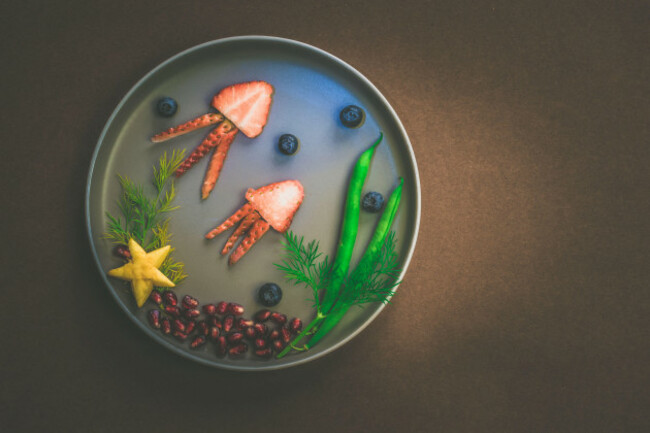
Food styling can be a lucrative career and requires technical skills, twists and hacks to make food appear more appealing, even sometimes making inedible or raw food appear cooked to perfection.
For example, dish soap in beer makes it more frothy while the practice of painting a whole turkey with shoe polish to fake the perfect golden bird is still rampant in supermarket Christmas campaigns. While a little deceptive, there’s something far more damaging and dishonest about generating something solely from ChatGPT or Gemini prompts, rather than from your own kitchen or bakery.
On social media, the images may be obvious, but the AI-generated captions and text sometimes slip under the radar. There are the tell-tale signs, though: the overdone “it’s not X, it’s Y” comparative clause; the “and that matters/that’s important” caveat; the use of the adverb “quietly” or the noun “game-changer” and the tell-tale em-dashes. When it comes to accuracy or dependability, AI is notoriously shaky, so relying on it as a replacement for a team member or skilled creative, rather than a sometimes-helpful assistant, is a bold business choice and feels contemptuous of customers you take for fools.
You’ve probably cottoned onto it yourself scrolling through Instagram and Facebook this year; how could you possibly escape it? One Temple Bar restaurant has been embracing AI of late, generating self-promotional images posted to their social media, like Brooklyn and Victoria Beckham reconciling over a glass of wine at one of their tables.
It landed a laugh and, even though a bit cringe, seemed harmless. There is a hidden damage, though: this is a restaurant which routinely markets itself by the various celebrities dropping in to dine, whether by accident or design. Generating AI renders of celebrities that were never physically there, however obvious and harmless, has the potential to entirely undermine the trust and reputation the business relies on to market itself.

Trust is the real kicker here. This is not another big battle cry against AI. There’s no doubt it can be a powerful and useful tool for the back-end of business. Automation, projections, processes, and, while not entirely trustworthy or dependable, AI does have the potential to make systems more efficient, but food advertising is not one of them, and hospitality’s main foundation is a personal, human touch.
Why are food businesses embracing AI? It’s just like Temu and SHEIN; cheap, fast and accessible. The irony is that these businesses are embracing AI in a desperate bid to stand out, whereas the reality is homogenisation, rendering nearly identical things from one business to the next and eradicating credibility. The authenticity and human element is what sells your food business, yet with the great Gold Rush towards generative AI that uniqueness is all but lost.
The pushback is, thankfully, already happening. The Thomas House in Dublin 8 recently took a public stand on AI posters, pointing out that not only is it a bad look that they are located right next to the National College of Art and Design, but that we all got by without AI in the past and we will do so again.
Delivery apps like JustEat also stipulate in their merchant terms and conditions that AI-generated imagery is not allowed, though one wonders how quick they are to catch or challenge culprits.
AI may be getting more sophisticated by the day, but so too are customers who can spot cheap, tacky, artificial renders more often than not.
In the desire to stand out, AI is a total false economy for food businesses, and cartoon food is entirely tasteless.
Let’s stop wading through the slop-filled sty, desperate for an easy shortcut, and prioritise the real thing over a render. Uniqueness is the very gold we’re all desperately searching for, yet AI directs us further away from it.
Patrick Hanlon is a writer, food critic and columnist with TheJournal.ie.
To embed this post, copy the code below on your site















have your say