Sign in. It’s quick, free and it’s up to you.
An account is an optional way to support the work we do. Find out more.
Sign in. It’s quick, free and it’s up to you.
An account is an optional way to support the work we do. Find out more.

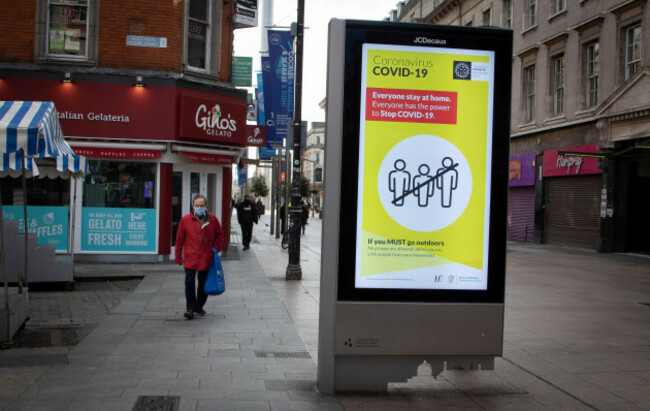
CLOSE TO FIVE years ago today, the first “stay-at-home” measures were introduced in Ireland to curb the spread of Covid-19.
Five years on, some of the impacts of the pandemic still linger.
The Central Statistics Office today published COVID-19 – Our Lives Five Years On: Social Impact.
It’s the third in a series of releases exploring the social and economic impact of Covid-19 on society since the onset of the pandemic.
The findings are based on an online-only survey which took place between 16 January and 2 February 2025, and explored how the Covid-19 pandemic is still impacting our lives five years on.
The survey gathered 21,003 responses and while not nationally representative, the CSO said the results are calibrated to Irish population totals and “provide valuable insight”.
Many predicted the death of the handshake during the pandemic, with some opting for elbow bumps as alternatives.
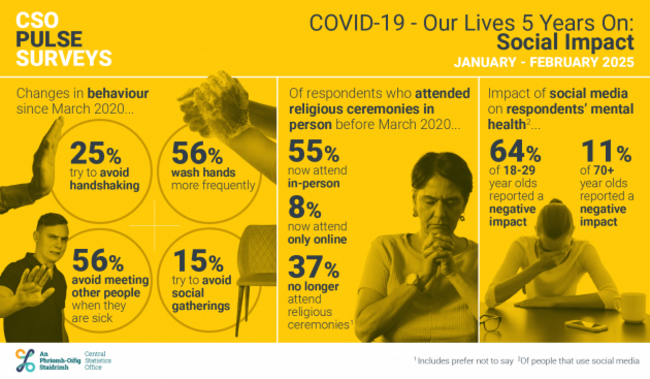
Five years on, 25% of those surveyed by the CSO said they still try to avoid handshaking.
Those with poorer health try to avoid handshaking more than those with better health.
Some 31% of respondents who rate their health as fair or bad try to avoid handshaking compared with 21% of those who rate their health as very good.
Women (32%) are more likely to attempt to avoid handshaking compared with men (18%), and women also report increased handwashing since the pandemic (61% vs 51%).
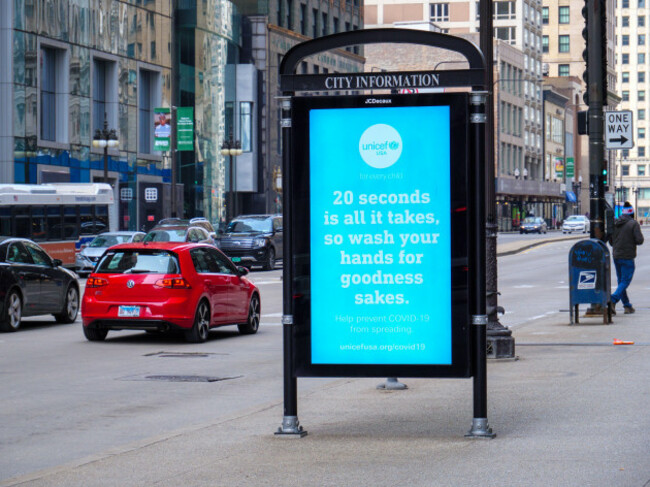
Some 56% of respondents reported that they wash their hands more often now than before the onset of the pandemic, while 6% say they wash their hands less often.
Meanwhile, 37% of respondents report no change in their frequency of handwashing.
Many people got a pet during the Covid lockdowns and most are happy with the choice.
Some 16% of respondents got a pet during the pandemic, with 67% of these getting a dog, while 30% got a cat.
However, only 6% of people who got a dog, and 3% who got a cat, now regret doing so.
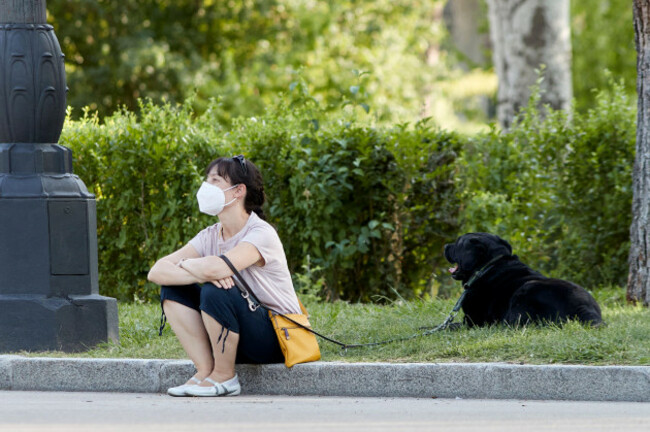
Other common pet types obtained during the pandemic include rabbits, hamsters, guinea pigs, chickens, and fish, while more unusual pandemic pets listed by respondents include ferrets, mice, rats, lizards, and snails.
Nearly one in four (23%) of respondents aged 18-29 say they got a new pet, more than three times the proportion (7%) of those aged 70 and over.
More than one-quarter (27%) of respondents who lived with their partner or spouse when Covid related restrictions were in place report that the pandemic had a positive impact on their current relationship.
However, 17% said that their current relationship has been negatively impacted, while almost half (49%) feel it has had no impact on their current relationship.
The financial situation of the household at that time appears to affect how the restrictions impacted on relationships between partners or spouses.
Some 38% of respondents who rated their financial situation in 2020 as bad, report that the pandemic had a negative impact on their current relationship.
This compares with 13% of those who rated their financial situation as good at that time.
Respondents who did not work from home before the pandemic but are now working remotely from home at least half of the working week are most likely to say that the pandemic has had a positive impact on familial relationships.
Just over four in ten (41%) of respondents who lived with their partner or spouse when Covid restrictions were in place and who currently work from home at least 50% of the time report that the pandemic has had a positive impact on their relationship.
The comparable rate for employees who do not work from home is 23%.

And exactly half of respondents who are now working remotely from home at least half of their working week report that the pandemic has had a positive impact on their relationship with their children.
The comparable rates for those who do not work from home is 35%.
Meanwhile, 86% of people agree or strongly agree that their work-life balance has improved since they started working remotely from home.
And 70% agree or strongly agree that their job satisfaction has improved since they have started working from home during the pandemic.
Overall, 33% of relevant respondents report that working from home has had a positive impact on their relationships with work colleagues.
Some 17% say it has had a negative impact, while 45% report no impact.
Of those who regularly attended religious ceremonies in person prior to March 2020, 37% no longer do so on a regular basis.
More than half, 55%, still regularly attend in-person, while 8% say they only attend online.
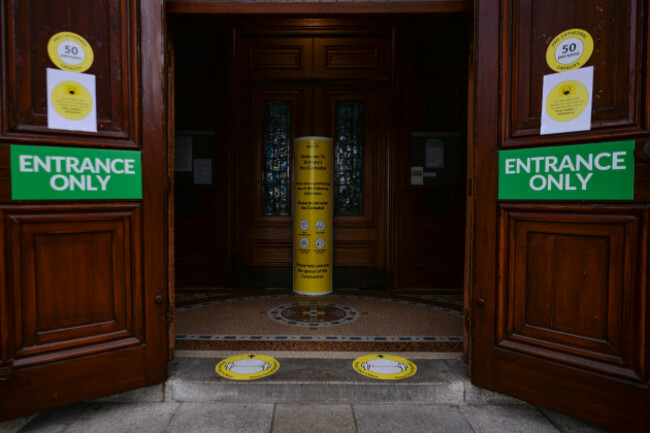
Older respondents are most likely to still attend religious ceremonies either in person or online, with 69% of those aged 70 and over still regularly attending in person, while 12% opt to attend online instead.
However, 67% of younger respondents, those aged 18-29, say they no longer attend religious ceremonies regularly in any form.
Three in ten (31%) say they still attend in person, with only 2% saying they attend online.
One-third of younger respondents, those aged 22-29, say their alcohol consumption has increased, while 40% report a reduction and 27% report no change.
Respondents who describe their household’s current financial situation as good are most likely to report their frequency of exercising increasing since pre-Covid levels, with 38% stating they exercise more often.
In contrast, only 23% of respondents who describe their household’s current financial situation as bad report an increase in their exercise frequency.

Meanwhile, 41% of employees who work from home report their frequency of exercising has increased, while this figure is only 29% for employees who do not work from home.
Elsewhere, 69% of respondents aged 18-29 say they have increased the amount of time spent on social media, compared with 53% of social media users who are 70 years or older.
And while 64% of respondents aged 18-29 state social media impacts their mental health negatively, 75% of respondents aged 70 and over who use social media report it has no impact on their mental health.
Since the pandemic, 27% of respondents who rate their health as fair or bad say they try to avoid social gatherings, almost four times the proportion (7%) of those who rate their health as very good.
Meanwhile, 59% try to avoid others when they themselves are sick – some 68% of female respondents report doing this, compared with 49% of male respondents.
Almost 70% of employees who work remotely from home at least half the working week try to avoid others when they are sick, compared to 55% for those who do not usually work from home.
And only 9% try to keep at least one-metre social distance between themselves and others, with no difference between the rates for male and female respondents.

To embed this post, copy the code below on your site














have your say