Sign in. It’s quick, free and it’s up to you.
An account is an optional way to support the work we do. Find out more.
Sign in. It’s quick, free and it’s up to you.
An account is an optional way to support the work we do. Find out more.
IT WAS THE longest-running criminal trial in the history of the State, and it ended with four out of the seven men who went on trial being convicted of sexually abusing their deaf and vulnerable relative over a number of years.
At the heart of the case was a woman in her 30s – profoundly deaf – who alleged she had been sexually abused from childhood by her three uncles and four younger brothers.
Two other complainants, her younger sisters, also alleged they had been abused by one of these brothers (a now 35-year-old man).
The logistical challenges of the trial emerged while it was still in the Central Criminal Court case management list.
One issue was where the trial would take place, given the large number of parties required to be present, including multiple legal teams comprising around 25 barristers.
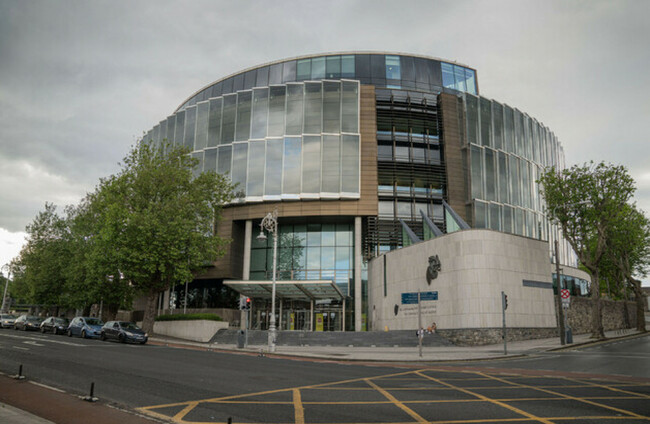
Potential venues discussed included the Rotunda Hospital, the RDS, Croke Park and Waterford Courthouse. In the end, the trial took place in courtroom 19 in the Criminal Courts of Justice before Judge Caroline Biggs.
Seven men faced a combined total of 103 charges – 98 of which pertained to abusing the main complainant. They denied any wrongdoing.
Towards the end of the trial, which ran for nearly eight months before an extended jury panel, the Director for Public Prosecutions withdrew 83 of the 103 original charges. One of the brothers (34) had all charges against him withdrawn.
This decision came after extensive legal argument mostly relating to the main complainant’s evidence.
She was questioned and cross-examined for three and a half months about the abuse she had allegedly suffered at the hands of her relatives, giving evidence via video link due to her vulnerabilities.
The court heard the woman has a borderline learning disability with the reading level of a young child. Significantly, she has language deprivation when it comes to Irish Sign Language (ISL).
Due to her complex needs, she required both a hearing ISL interpreter and a deaf relay/intra lingual interpreter, as well as an intermediary to support and assist her communication with the court.
The court heard she has difficulties communicating the concept of time – such as before and after, dates and ages. As a result, visual timelines and sequence charts were used to assist her.
Two further interpretation teams were present in court for the woman’s evidence – one for the defence and one for the court – to ensure the interpretation process was being carried out correctly.
Months of pre-trial hearings took place before the trial to hammer out these and many other issues.
The court heard the woman’s language deprivation and her limited understanding of ISL resulted partly from her dysfunctional family upbringing, but also stemmed from the fact she grew up at a time when parents were often discouraged from using ISL with their children.
She communicated with her family members using home sign (localised gestures developed within the family), lip-reading and later by typing messages on her phone. Her closest relatives had very limited formal sign language between them.
The court heard the family was fractured, with the main complainant living away from home for long periods. Some of the brothers lived with relatives, and did not have a close relationship with their parents.
When the main complainant was giving evidence, questions were submitted to her support team beforehand and the evidence was divided into topics to try and minimise confusion.
Despite this, the woman often struggled to answer questions directly, regularly saying she didn’t remember or didn’t know.
She gave indirect responses to questions such as what age she was when something occurred, often replying “It was (his) fault” in relation to the relative she was being asked about.
During her testimony, the woman gave evidence that varied from the timeframe on the indictment. In relation to one brother, she testified he raped her when he was as young as four years’ old, and she was seven – something the defence would later say was a “devastating problem” for the prosecution.
But the prosecution maintained that the jury had to examine the evidence in the context of the woman’s vulnerabilities, her language deprivation and the associated difficulties communicating her narrative.
The 20 remaining charges against the six men that eventually went to the jury to consider were a more accurate reflection of the evidence they had heard, Roisin Lacey SC, prosecuting, told the jury in her closing speech.
She urged jurors to focus on the allegations themselves and the woman’s credibility, rather than the dates of the alleged events and the ages of those involved.
The six men left on trial at the end were charged with 16 counts of sexual abuse pertaining to the main complainant, while the 35-year-old man was charged with four counts against his other two sisters.
To differentiate between them, the men were given pseudonyms of Accused A, B, C etc. The main complainant’s sisters were referred to as Complainant 2 and 3.
Accused D (a 34-year-old brother) was discharged from the indictment after all 22 counts against him were withdrawn. This left Accused A, B, and G – three uncles aged 55, 49 and 45 respectively and Accused C, E and F – three brothers aged 35, and two 33-year-olds.
Accused A was accused of a single count of raping his niece on a date between 2009 and 2011 when she was in her early 20s. Accused G was accused of one count of raping her when she was a child between 1995 and 1996. The jury were unable to reach a verdict in relation to these charges.
Accused B was accused – and later convicted – of three counts of rape and one count of anal rape over an eight-year period between 2006 and 2014.
The woman’s brothers, Accused E and F, were both charged with raping her on dates between December 2007 and December 2009 when she was in her late teens and early 20s. Accused E was charged with two counts of anal rape and Accused F was charged with two counts of rape.
The jury found Accused E guilty on both counts. They returned a guilty verdict on one count in relation to Accused F, but disagreed on the second count.
The remaining brother, Accused C (34) faced 10 counts against three sisters. In relation to the main complainant, his older sister, he denied three counts of rape, two counts of anal rape and one count of sexual assault all between 2003 and 2010.
The jury convicted him on all six of these counts.
Two younger sisters also alleged Accused C abused them. In relation to Complainant 2, he denied one count of sexually assaulting her on a date between 2005 and 2006 and two counts of raping her on dates between 2015 and 2018.
He also faced a charge of one count of anally raping a third sister, Complainant 3, on a date between 2010 and 2014.
Jurors returned guilty verdicts on the four counts in relation to these two sisters. They gave evidence early in the trial.
Complainant 2 said her brother sexually assaulted her in a bedroom when she was about six or seven years’ old. She also alleged that at the age of 16, she woke up to her brother raping her after she passed out while drinking at his home.
Sometime after this alleged incident, the woman said Accused C’s partner told her she’d found a porn search on his phone for “raping drunken sister”. The evidence before the court showed it was “how to rape your sister in her sleep”.
A phone belonging to Accused C, which he threw into a field, was analysed by gardaí and pornographic material was found. Accused C told gardaí he viewed everything on Pornhub including mother/son, brother/sister, gay, lesbian and rape porn.
Complainant 2 said Accused C raped her for a second time when she was 19 after they had been drinking in his home and his partner had gone to sleep.
Under cross-examination, she accepted that she made a complaint of a sexual nature against another brother (who was not on trial), and later declined to give a statement to gardaí as it was a “bad dream that felt real”.
Defence counsel for Accused C, Karl Finnegan SC, later told the jury this other allegation demonstrated “from her own mouth she has imagined or experienced sexual abuse as feeling real when it is not”.
He told the jury that while it may find the evidence of the man’s pornography search history “embarrassing” “distasteful” and “crude”, it was not proof of a crime.
Complainant 3 gave evidence that she was anally raped by Accused C in her bed at night when she was aged between 10 and 12.
In cross-examination, Complainant 3 said she did not know her brother and had extremely limited contact with him. Defence counsel submitted her chance to observe who was there was momentary and the jury could not safely convict on her evidence.
The main complainant was sworn in on 4 November and spent about six weeks giving evidence to senior prosecuting barristers Roisin Lacey and Gerardine Small. The remainder of her three-and-a-half months in the video link room was spent being cross-examined by seven defence barristers.
Her evidence was that each of her relatives abused her at various times and in different locations from when she was as young as seven until she was in her 20s.
The trial heard that the main complainant first disclosed the alleged abuse in 2017, after she attended a sexual health promotion course. An organiser of this course gave evidence that the woman asked him if sex between family members was breaking the law. He later met her to arrange a Tusla referral.
The woman was first interviewed by gardaí in 2017, but this was later described in court as a failed process because there were concerns about her understanding of the questions and ability to answer them. A number of defence counsel emphasised that their clients were not named by the woman during her first garda interviews.
Expert reports were prepared to ascertain a complete background of the woman’s language deficit and required resources. She was eventually interviewed extensively in 2021 with a team of interpreters.
In relation to Accused A, her 55-year-old maternal uncle, the woman alleged he raped her in his apartment after they had been drinking together when she was in her early 20s.
She told the court there were four incidents relating to Accused B, another maternal uncle (49) involving three rapes and one anal rape.
The woman also described the first incident as a “one-night stand” and said it took place in her grandparents’ home. She outlined incidents of further abuse.
The main complainant further alleged a third uncle (Accused G, 46) raped her when she was seven years old, the most historic count on the indictment, dating back to 1995.
In relation to the three younger brothers she said raped her, the woman said Accused C (35) abused her on numerous occasions, including in the downstairs toilet of her house, in a bedroom and by a lake. She said she repeatedly told him no and told her mother about it.
Giving evidence about Accused E (33), the woman said he anally raped her on two occasions. In relation to the last brother, Accused F (also 33) she alleged he raped her on two occasions when she was 17 and 18.
Accused A described the allegations as “poxy lies” when interviewed by gardaí. He also said that around 2010, the main complainant told him and one of his sisters that she had been abused by her stepfather.
Accused A said he asked his sister to tell the complainant’s mother, who allegedly replied that her daughter “wanted it”. He said he left it in their hands.
Accused B, initially denied having sex with the primary complainant, before admitting to having sex with her on five occasions over an approximate 10-month period. He said he was very drunk at the time. He insisted he did not have anal sex with the woman.
The other defendants all emphatically denied the claims.
Under questioning from defence counsel about her sexual history, the woman was brought through various other sexual relationships she had, with the judge stressing this had been agreed to allow the court to differentiate what the woman saw as “normal” sex as opposed to abuse.
The woman agreed she had sex with her uncle-in-law whom the court heard was married to her aunt. She was unable to identify a clear time when that happened.
She described the sex with this man variously as a “one-night stand”, “normal and rape”. He has never been charged with any crime.
As well as telling the jury to look at the woman’s evidence in the context of her language deprivation, Roisin Lacey SC suggested the three complainants were “credible and believable”.
She submitted there was a “distinct theme” of the accused men creating distance from the primary complainant in their garda interviews.
In their closing speeches, a number of defence barristers noted that age differences and the chaotic family situation could explain why their clients may not have known the primary complainant well.
They focused on the reliability of evidence, which was often described as limited.
Michael Hourigan SC, defending Accused A, suggested that the evidence was “fundamentally problematic” and the woman’s account had “changed and shifted”.
Hugh Hartnett SC, defending Accused B, submitted it was clear from the garda interviews that his client was “deeply ashamed” of having had sex with his niece, which is “unpleasant – but not a crime”.
Karl Finnegan SC, defending Accused C, suggested jurors were being asked to ignore evidence from the complainant that her brother raped her when he was four years’ old and being told not to worry about ages, dates and times – an “extraordinary proposition”.
Roderick O’Hanlon SC, defending Accused E, said that some of the woman’s evidence defied common sense, while John Peart SC, defending Accused F, suggested there was “sparse information” about the alleged incidents.
“Nonsensical is my respectful suggestion to you,” he said.
Marc Thompson SC, defending Accused G, noted that the case against his client was based solely on the primary complainant’s evidence, which lacked detail.
On 13 May, exactly 31 weeks and three days since they had been sworn in on 3 October and after a 500-page charge, Judge Biggs told the jury it was finally time to deliberate.
“You have patiently received all of the evidence,” she said. “Now, we hand the reins over to you.”
To embed this post, copy the code below on your site












have your say