Sign in. It’s quick, free and it’s up to you.
An account is an optional way to support the work we do. Find out more.
Sign in. It’s quick, free and it’s up to you.
An account is an optional way to support the work we do. Find out more.
LAST UPDATE | 2 Mar
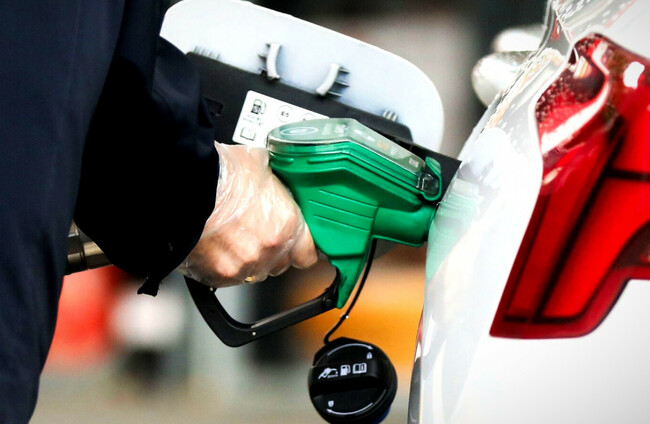
OIL PRICES HAVE shot up since the US and Israeli attack on Iran on Saturday – but Irish consumers are unlikely to feel the brunt of this at the pump, the chief executive officer of Fuels for Ireland said.
The Strait of Hormuz, through which around 20% of the world’s oil supply passes, has been shut by Iran. Crude oil prices have increased at various rates, generally sitting at around 10% higher than before the attack on Iran when the markets opened today.
Fuels for Ireland’s Kevin McPartlan told The Journal that the effect of this increase in oil prices is minimal on the price Irish consumers see at the pump.
Fuels for Ireland is the national representative body for the companies that import, refine, distribute and sell liquid fuels (whether fossil, advanced, synthetic or biofuel) across the State.
Petrol and diesel have both seen an increase of around 2c per litre since the launch of the attack on Iran, he said, while kerosene has increased about 2.5c.
“While crude oil may have gone up 10% that doesn’t mean that the wholesale prices of petrol, diesel, kerosene go up by the same amount,” McPartlan said, explaining how the market is influenced by the strength of the dollar, the logistics – including shipping – and supply.
“As of 10:03 on Monday morning, there is nothing that suggests there will be very severe or long term changes to the price. And they’re two different things,” McPartlan said.
“We saw after the invasion of Ukraine a kind of a fundamental shift in the availability of oil products – and that is still in effect, that has had a long term impact on fuel prices. But a lot of the risk that we are talking about here in relation to the Middle East has been baked in by the traders already.”
The situation remains “very dynamic” and Fuels for Ireland is monitoring the international markets.
There are measures being taken to keep fuel prices as steady as possible, he added.
“OPEC+ increased their output estimates. So that’s deliberately trying to put more fuel onto the market so that we reduce some of the concerns.”
OPEC+ is an organisation comprised of eight oil-producing countries, as well as oil-dependant countries, which works to influence the global market and ensure cooperation between exporters and importers.
“This is why OPEC plus announced increased outputs on Saturday, just to kind of quell any fears that would be any lack of supply. And when you do that, then that has a downward pressure on retail prices too.
“So there are a number of different forces working here, and it’s in everybody’s interest to keep the market as safe as possible,” McPartlan said.
Speaking to reporters this afternoon following a meeting of the Government Trade Forum, Tánaiste and Finance Minister Simon Harris said he is “concerned” about potential rises in costs as a result of the conflict in the Middle East.
“The three things I’m most concerned about at the moment are the degree of economic uncertainty this conflict injects into a world where there is already a lot of uncertainty, the impact on commodity prices, which include oil and gas, and the potential risk of shocks to the financial markets,” Harris said.
He said he had instructed his department to carry out an economic analysis of the situation, and they would “update our forecasting and our projections for the Irish economy by the end of the month”.
Harris did acknowledge “this is very, very early days”, adding there is “a huge amount of unknowns at the moment”.
“Does this situation deescalate relatively quickly? Is this something that goes on for a prolonged period of time?
“And the difference between those two things economically could be very significant.”

To embed this post, copy the code below on your site










have your say