Sign in. It’s quick, free and it’s up to you.
An account is an optional way to support the work we do. Find out more.
Sign in. It’s quick, free and it’s up to you.
An account is an optional way to support the work we do. Find out more.
OIL PRICES HAVE shot up since the United States and Israel launched a massive attack against Iran on Saturday, which killed the country’s supreme leader and has led to Iranian strikes against US-aligned states across the Middle East.
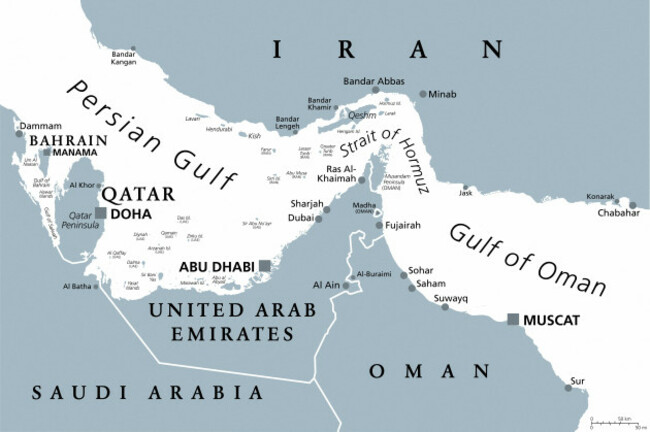
The Strait of Hormuz, through which around 20% of the world’s oil supply passes, has been shut by Iran.
Yesterday, at least two ships were struck, one off Oman’s coast and another off the UAE’s, British maritime security agency UKMTO said.
Iranian state television said an oil tanker was hit and was sinking after trying to “illegally” pass through the strait.
The main shipping companies have already confirmed they are suspending the passage of their fleets through the strait.
Brent crude oil briefly spiked almost 14% and West Texas Intermediate rose by nearly 12% at the start of business.
Stocks have also gone down in Asia today.
Equity markets across Asia sank, with Tokyo, Hong Kong, Singapore, Mumbai, Bangkok, Wellington and Taipei all deep in the red. US futures were down more than 1%. Still, Shanghai edged up and Sydney was flat.
Airline stocks took a battering as they were forced to cancel flights to the region.
However, energy firms rallied, with Australia’s Woodside Energy and Santos each jumping more than 6%, while PetroChina added almost 4% in Hong Kong. Inpex in Japan was up more than 6%.
Gold, a key go-to in times of geopolitical turmoil, climbed 2%, while the dollar also saw a boost from a rush into safe havens.
Representatives of the fuel industry in Ireland have sought to downplay the impacts of the rising crude prices.
“Such reactions are typical when global tensions increase and reflect short-term market sentiment rather than any confirmed change in supply conditions,” industry representative group Fuels for Ireland said in a statement over the weekend.
“There is no indication at this stage that this weekend’s events will lead to dramatic or sustained increases in Irish pump prices. As always, retail prices will move in line with underlying international market trends,” the group said.
CEO of Fuels for Ireland Kevin McPartlan said:
“International oil markets often react quickly to geopolitical developments, but history shows that not every market movement translates into significant or lasting changes at the pump. Ireland’s fuel supply chains are robust and reliable, and the market is well accustomed to managing short-term volatility.”
“If higher oil prices persist, it raises the risk of stickier headline inflation and can slow the pace at which inflation prints improve,” wrote Saxo Markets’ Charu Chanana.
“That does not automatically mean policy tightening, but it can make the Fed more cautious about cutting quickly, because energy-driven inflation can spill into expectations and broader pricing behaviour over time.”
US President Donald Trump urged Iranians to rise up against their government and said the war could last “four weeks”.
The powerful head of Iran’s Supreme National Security Council said today the country “will not negotiate with the United States” and denied media reports that officials had sought to initiate talks with the Trump administration.
In theory, oil-importing countries have reserves, with OECD members required to maintain 90 days’ worth of stocks, but prices above $100 cannot be ruled out.
If the blockade of the Strait of Hormuz continues, “no matter how much spare capacity (in the strategic reserves) is not going to fill that gap. That gap is just too big”, said Bakr.
Another analyst at Kpler, Michelle Brouhard, described high oil prices as “the Achilles heel of Trump”.
She said Iran was likely to look to keep crude prices high to force Trump to back down, as he promised his electorate low prices, as the United States approaches mid-term elections in November.
With reporting from AFP

To embed this post, copy the code below on your site














have your say