We need your help now

Support from readers like you keeps The Journal open.

You are visiting us because we have something you value. Independent, unbiased news that tells the truth. Advertising revenue goes some way to support our mission, but this year it has not been enough.

If you've seen value in our reporting, please contribute what you can, so we can continue to produce accurate and meaningful journalism. For everyone who needs it.

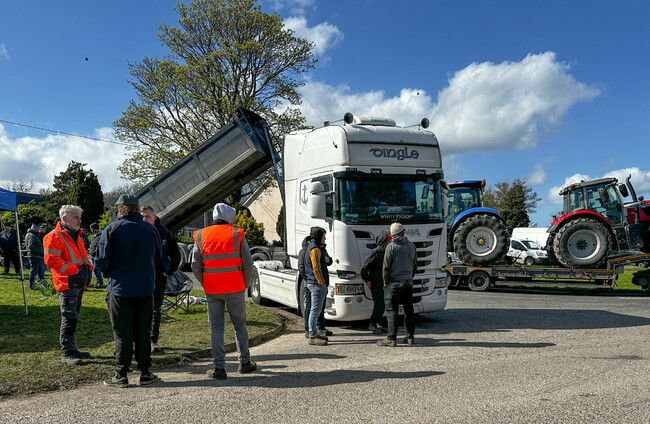
Protesters outside the Irving Oil Refinery in Whitegate, Co Cork this afternoon.

'Serious misjudgement': Fuels for Ireland says blocking depots hurts households, not politicians

CEO Kevin McPartlan said that when fuel deliveries are blocked, “the consequences are serious”.

FUELS FOR IRELAND has said that blockading fuel terminals and refineries is a “serious misjudgement” that “disrupts the lives of ordinary people”.

Blockades have been taking place at fuel depots in Limerick and Galway, and at Ireland’s only oil refinery at Whitegate in Co Cork on the third day of protests against the government’s response to rising prices. 

The Defence Forces has been deployed to remove vehicles that are blocking access to critical infrastructure. 

The Convenience Stores and Newsagents Association said earlier that up to 40 forecourts in Munster, as well as some in Connacht, have closed pumps or are running out of fuel due to shortages caused by the blockade at Foynes Port in Limerick. 

In a statement this afternoon, Fuels for Ireland CEO Kevin McPartlan said it is aware that some forecourts are running out of stock as a direct result of the blockades. 

“The position is straightforward. If access to fuel terminals and refineries is obstructed, fuel cannot be loaded and delivered as normal. If fuel cannot be delivered as normal, stock levels at forecourts cannot be maintained,” he said.

“What we are now seeing at some sites is the inevitable consequence of those blockades.”

He said since the US-Israel war on Iran began on 28 February, the industry’s focus has been to protect Ireland’s security of fuel supply, adding that the sector has “worked hard” with the Department of Climate and the National Oil Reserves Agency to ensure that a reliable supply remained available. 

It is therefore disappointing that, at a time when enormous effort has gone into maintaining supply to Ireland, people in Ireland are now being prevented from accessing that fuel because key fuel facilities are being blocked.

‘Beyond inconvenience’

McPartlan said the people being hurt by these actions are not politicians, civil servants or fuel suppliers, but “households, businesses, farmers, hauliers, workers and communities across the country”.

“They are the very people who rely on fuel to live their lives, to get to work, to run their businesses, to care for family members, and to keep essential services moving,” he said. 

“This goes beyond inconvenience, as when fuel deliveries are blocked, the consequences are serious.”

He said essential workers, businesses, communities and emergency services are all affected as a result, adding that if forecourts run dry, emergency vehicles “will also face difficulty accessing the fuel they need”.

He said Fuels for Ireland has “real empathy for the concerns that are driving these protests” and understands the pressure that the very high prices are placing on hauliers, agricultural contractors and families, adding their concerns are real and legitimate.

“But blockading fuel terminals and refineries is a serious misjudgement. It does not put pressure on decision-makers in any meaningful way. Instead, it disrupts the lives of ordinary people and damages the very communities the protesters say they represent.

For that reason, we are appealing directly to those involved to stand down these protests at these fuel terminals and the refinery.

“We do not want to see a situation in which An Garda Síochána or the Defence Forces are required to intervene. We do not want to see anybody getting into legal difficulty. But nor can Ireland’s fuel infrastructure be obstructed without serious consequences for the public.”

He concluded by saying that those involved should reflect carefully on whether this is the right way to make their point. 

Readers like you are keeping these stories free for everyone...
A mix of advertising and supporting contributions helps keep paywalls away from valuable information like this article. Over 5,000 readers like you have already stepped up and support us with a monthly payment or a once-off donation.

Close
60 Comments
This is YOUR comments community. Stay civil, stay constructive, stay on topic. Please familiarise yourself with our comments policy here before taking part.
Leave a Comment
    Submit a report
    Please help us understand how this comment violates our community guidelines.
    Thank you for the feedback
    Your feedback has been sent to our team for review.

    Leave a commentcancel

     
    JournalTv
    News in 60 seconds