We need your help now

Support from readers like you keeps The Journal open.

You are visiting us because we have something you value. Independent, unbiased news that tells the truth. Advertising revenue goes some way to support our mission, but this year it has not been enough.

If you've seen value in our reporting, please contribute what you can, so we can continue to produce accurate and meaningful journalism. For everyone who needs it.

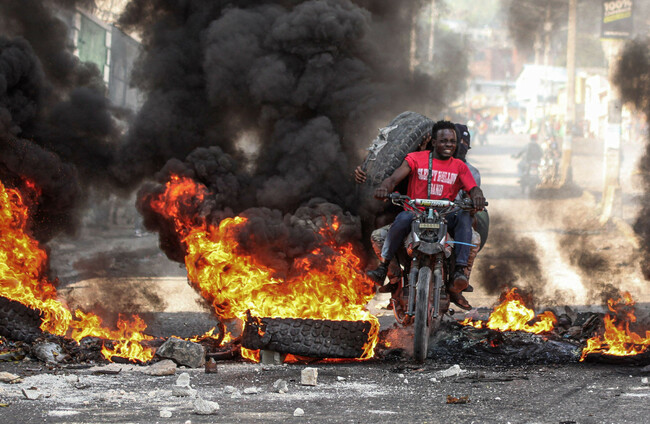
A protestor drives through a blaze amid protests at Government failure to tackle gang violence. Alamy Stock Photo

Inside Port au Prince: Purge-like gang violence, drone strikes and millions going hungry

Humanitarian Matt Knight said that the situation inside the Haitian capital is worse than ever.

LAST UPDATE | 6 Aug 2025

AN AID WORKER in the Haitian capital of Port au Prince likened the heavy fighting in the city to the horror film ‘The Purge’ when he spoke to us in March of last year. 

Matt Knight, country director in Haiti for the Irish charity GOAL, says the situation has only deteriorated further since then, with 1.4 million people now internally displaced within the Caribbean nation. 

Knight spoke to The Journal as efforts continue to secure the release of Mayo woman Gina Heraty and seven others, including a three-year-old child, abducted from the Sainte-Hélène orphanage on the outskirts of the city over the weekend.

Haiti has suffered multiple social and political collapses since the days of a long-running dynastic dictatorship which ended in the 1980s.

The Haiti earthquake of 2010 destabilised the fragile state much further, with the latest outbreak of gang-led violence beginning five years ago as a feeble government struggled to contain domestic unrest. 

The violence has spiralled from there and now the gangs have control of 90% of the capital city, with their tentacles also reaching out into the jungles of the interior.

Knight, one of Gina Heraty’s fellow humanitarians in Port au Prince, runs a team of aid workers spread out across the city. 

Based on his experiences living and working in Haiti, he says what was already a desperate situation is continuing to deteriorate. 

“According to UN figures half the population are in need of humanitarian assistance – it’s gone up to about six million over the last year when it was 2.6 million last year.

“That is an extra three million people who just don’t know where their next meal is coming from – Haiti is now in the top five countries at risk of famine.

“It is a really, really serious situation and compounded by that security issue.”

Gang wars have raged across the country and the capital in particular in recent months. To combat the problem the ailing Haitian government hired American mercenaries to try and find a way to quell the violence.  

A Kenyan deployment last year of hundreds of police officers to Haiti in a US-funded and UN-backed mission to help local law enforcement secure the country has failed to bring peace.  

Kidnapping of local people has been a daily reality but the kidnapping of a foreign aid worker is a departure from the norm – this has worried security sources we spoke to in Haiti and elsewhere.

A security source in the region has said that the assessment regarding those Kenyan forces is that they were ill-prepared for what they faced and because of the continuing danger many are now remaining inside their compounds. 

As a result the fighting is often left to the murky mercenary groups, particularly ones from the US, who are now using tactics taken from the Ukraine war. They are using first-person view explosive drones to attack the gangs. 

In one high profile attack last month, sources said, a major player in one of the gangs suffered severe burns. That attack was launched as many of the gangsters were watching a football match inside their enclaves across the city.

Video has also emerged of drone blasts targeting roving groups of gunmen inside heavily fortified locations. 

It has meant that gang leaders, such as Jimmy ‘Barbecue’ Chérizier – the leader of the group believed to be behind the orphanage kidnappings, Viv Ansanm – have sourced heavily armoured cars and are taking security measures to defend against the drones. 

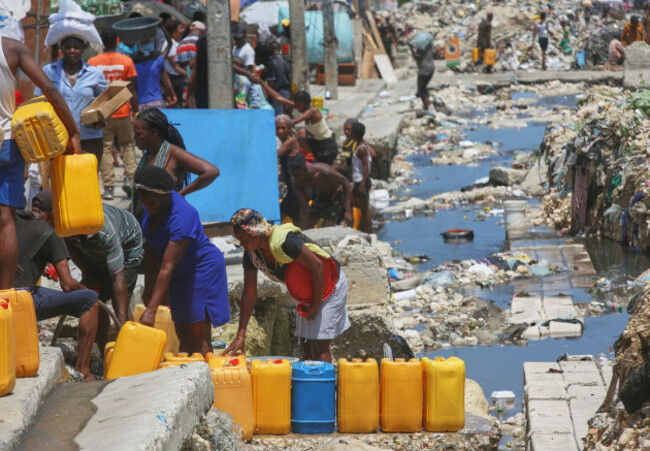
people-wait-to-fill-their-containers-with-drinking-water-from-broken-underground-pipes-in-port-au-prince-haiti-friday-may-9-2025-ap-photoodelyn-joseph People in Port au Prince gather water from burst water pipes. Alamy Stock Photo Alamy Stock Photo

Febrile atmosphere

Knight said it is not all disaster in Haiti with some areas across the island nation relatively safe. The biggest challenge for his team, which is made up of local Haitians, is getting in and out of gang controlled areas. 

What they have done is develop a set strategy to liaise closely with the gangs to allow free passage – he believes this has been working as the gangs are also benefiting from the food aid he and his team are distributing. 

Knight said at this stage, it is clear that Haitians are now sick of the gang violence and that there is a movement by local people to take action. 

“There comes a point where everybody gets sick of it and the tide will turn. We have seen that in terms of the response to the armed groups.

“In some instances the community has armed themselves and responded to the armed gangs and dealt with them in a kind of vigilante fashion.

“It’s not ideal, and what everybody needs is a workable political solution, and that doesn’t appear to be just around the corner – it’s complicated.”

WhatsApp Image 2025-08-05 at 18.41.19 Matt Knight, who is country director of Irish charity GOAL inside Port au Prince. GOAL GOAL

Local solution

Knight said locals are speaking about Haiti’s possible solution being similar to that achieved in El Salvador in Central America. 

Heavy handed police tactics were used to arrest gangsters and there was also direct negotiations to control the gangs. 

Knight’s message to the international community is that there needs to be a massive influx of funding to help build a major humanitarian response. 

While he had warm praise for the Irish Government efforts to fund his work in the country he was very critical of the cuts to USAID by the Trump regime.

“We’re allowing gangs to have far more power than they should have because of the lack of funding. I think if we were able to make the communities more resilient, they would be able to deal with these kind of problems internally.”

Readers like you are keeping these stories free for everyone...
A mix of advertising and supporting contributions helps keep paywalls away from valuable information like this article. Over 5,000 readers like you have already stepped up and support us with a monthly payment or a once-off donation.

Close
JournalTv
News in 60 seconds