Sign in. It’s quick, free and it’s up to you.
An account is an optional way to support the work we do. Find out more.
Sign in. It’s quick, free and it’s up to you.
An account is an optional way to support the work we do. Find out more.
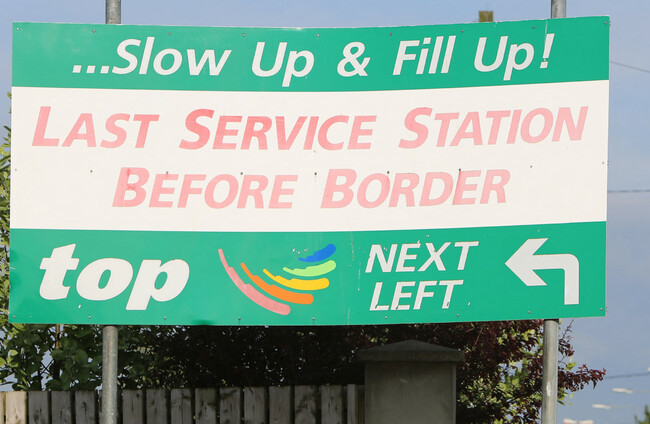
AS FUEL PRICES increase dramatically in the Republic amid the ongoing conflict in the Middle East, forecourts on the northern side of the border are seeing an uplift in custom.
On Monday 2 March, diesel prices in Newry, Co Down were around £1.38 (€1.59). A week later, on Monday 9 March, this increased to around £1.60 (€1.85).
Even better deals can be found by venturing a little further north, with diesel in Banbridge, Co Down – a 30-minute drive from Dundalk – costing as little as £1.48 (€1.72).
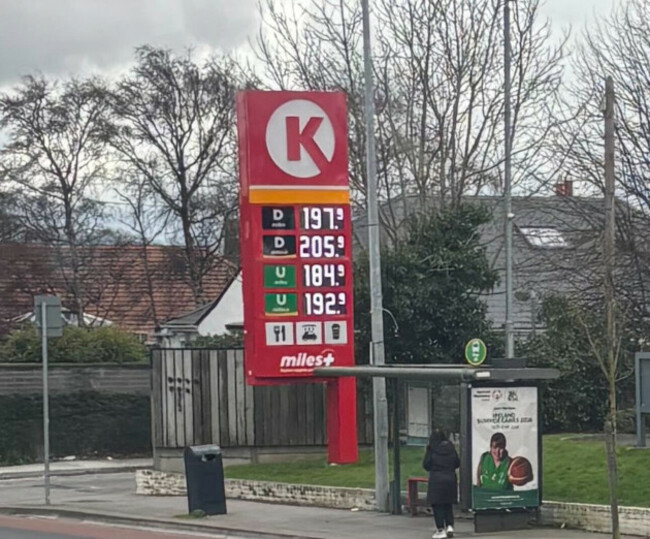
And while this is a considerable increase at the pumps in the north, it is still cheaper than many filling stations in the Republic – and it is pushing motorists from border counties to make the short trip to fill up their cars.
One person who recently made such a journey from Dundalk to Banbridge told The Journal that the savings made in diesel, as well as grocery, costs made the trip well worth it.
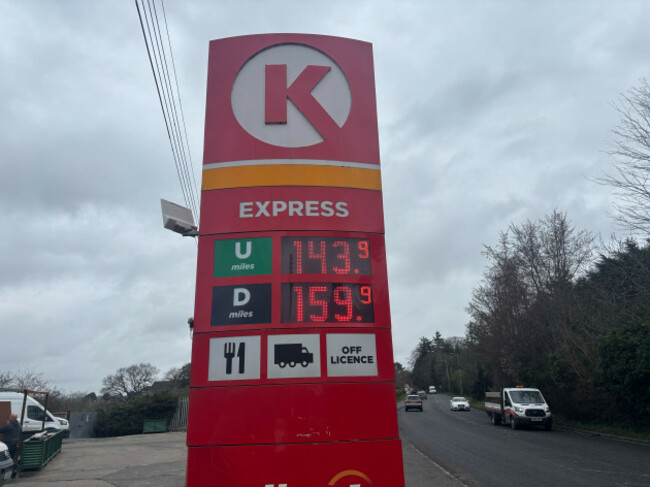
Kevin McPartland, CEO of Fuels for Ireland, told The Journal that rising prices means people are “highly motivated to find the cheapest fuel they can and that means going north of the border”.
He said there are now reports of higher volumes of fuel being bought in the North. Last week, a busy forecourt in Newry was said to have run out of diesel twice in one day, with long tailbacks at the pumps.
Elsewhere, “traffic watch” Facebook groups covering the southern border counties with over 70,000 members are populated with comments urging people to venture across the border to avail of a discount.
McPartlan also said there’s been an increase in “drive-offs” from forecourts in the Republic, which highlights how “people are feeling the heat of the extra costs”.
McPartlan said that the search for the best price for fuel “isn’t something that has just happened this week”, and that the cheaper prices in filling stations in Northern Ireland have had a detrimental impact on some border areas.
“We’ve already had businesses closing in border areas on the southern side because of that price differential,” said McPartlan.
“That’s been happening in the last few months, and this [current price increase] can only increase that problem.
“One of the focal points for that problem is rural areas where people are finding it very hard to maintain their businesses.”
McPartlan said it’s been a “growing problem” and added: “It used to be the case that as currency fluctuated there was an advantage one side or the other, and this would sometimes last for a year or so, or maybe just weeks at a time.
“But what has happened over the past three years is there has been a growing difference in the price.”
He put this down to the “way in which we tax fuel and because of the compliance costs”.
“We have a carbon tax in the Republic that isn’t there in the North and we pay a higher level of VAT.”
He also said that the last time there was a “really dramatic spike” in fuel prices after the 2022 Russian invasion of Ukraine, there was a reduction to the excise duty rate.
“In the Republic, we fully reinstated that,” said McPartlan, “but in the UK they never did and that also makes a difference.”
Edgar Morgenroth is a professor of economics in the Business School of Dublin City University (DCU).
He noted that there are places where there are petrol stations “literally within 100 metres of each other on either side of the border”.
“It’s swings and roundabouts, and that’s the way it’s been going on along the border forever,” Morgenroth told The Journal.
“Obviously it hurts particular retailers that are close to the border, but that’s the nature of it.”
Meanwhile, he said there is an “asymmetry that seems to go against the consumer”.
Often it can seem that when global prices drop, there is a lag in this drop being reflected at the pumps – but when global prices go up, that increase is felt almost immediately at forecourts.
“There is a question as to whether there’s a consumer protection issue that should be investigated by the authorities,” said Morgenroth.
Tánaiste Simon Harris last week urged the public to send examples of “price gouging” to the CCPC, the competition watchdog.

“It’s uncanny how prices go up by the same pretty much everywhere,” said Morgenroth.
“You’ve got a little bit of local competition between petrol stations, but the wholesale level seems to be going up the same everywhere.
“If you had competition, it wouldn’t be going up by the same amount.”
He also argued that the “oil that is now more expensive probably hasn’t even been loaded onto a ship, never mind distilled yet into diesel.”
“Ultimately, this is to do with competition and ability of retailers or wholesalers to ramp up the price.”
He said what’s going on looks like price gounging.
“Everything here points to wholesalers, retailers, whoever does it, taking advantage of what’s going on in the world as an excuse to ramp up prices and make a bigger margin.”
However, McPartlan claimed that the “lag is hours, not days”.
He said: “In the last week I have had an awful lot of people who don’t admit when they actually don’t understand something and don’t have the facts.”
He said the pricing for fuels is “very simple” and that Ireland follows a “just-in-time” model, receiving fuel as needed, rather than holding excess stock.
“There is very little storage in Ireland for fuel because fuel costs a lot of money to store.
“If you have a couple of million euros worth of fuel in the tank, and we all see how volatile fuel prices can be, you’re absorbing the risk of that volatility and you don’t want to do that.
“So it’s a ‘just-in-time’ model and that means if you are an importer of fuel, you pay the wholesale price when it leaves the last port before it comes into Ireland.”
He said the in the majority of cases, the last port before Ireland is Pembroke in Wales, a six-hour voyage.
“So if at 3pm, a cargo of oil is coming into Dublin port, the wholesale price for that is the one which was established on global markets at 9am – a six-hour voyage time.
“That could then be unloaded within an hour or two this afternoon and could be straight onto a tanker truck that goes to a forecourt or a home heating oil depot. The lag is hours, not days.”
He also hit out at Taoiseach Micheál Martin who last week remarked: “There is no excuse for prices going up at the pump yesterday or indeed anywhere as our oil is coming from the North Sea”.
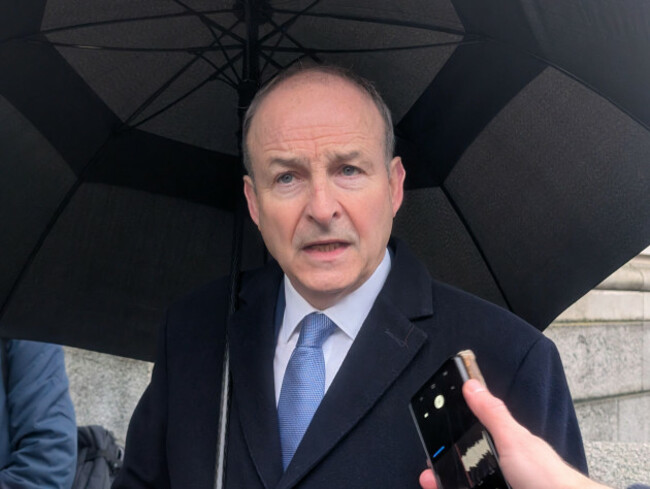
“Why did he do this? He knows it’s not and he knows this is wrong,” said McPartlan.
He said Martin is “trying to avoid the pressure they’re getting to have some sort of cost-of-living measures”.
“So they throw the fuel industry under the bus to try and curry favour with punters and say, ‘well, we can’t do anything about it, it’s those fellas over there that are price gouging’.
“But in reality, we were selling fuel last week at a loss, far from profiteering.
“The only people last week who made more money was the Government.
“There was an extra €38 million in tax collected last week alone on the basis of the increase in volume being sold and also the high level of VAT, because the price is high, so they get more on the VAT than they were expecting.”

To embed this post, copy the code below on your site














have your say