Sign in. It’s quick, free and it’s up to you.
An account is an optional way to support the work we do. Find out more.
Sign in. It’s quick, free and it’s up to you.
An account is an optional way to support the work we do. Find out more.
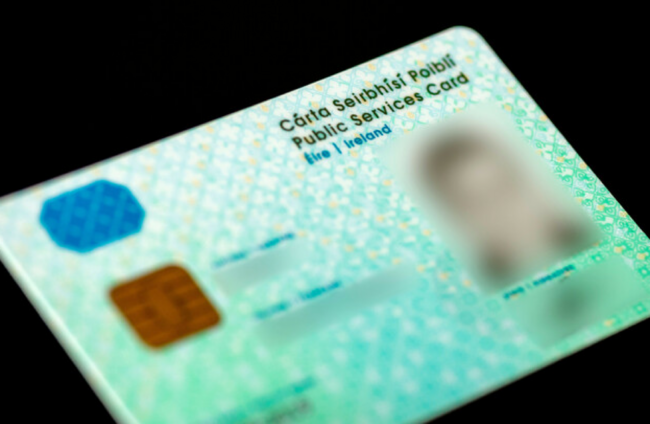
THE GOVERNMENT IS to make the Public Services Card a form of identity which can be used in places like the bank, or with a utility provider.
The change will be included in Social Welfare and Other Matters Bill 2026, which Minister for Social Protection Dara Calleary has received government approval for the priority drafting of.
A Public Services cardholder will be able to use their card as a form of identity in places like the credit union, whereas previously, if a body accepted the Public Services Card as a form of identity, they would be guilty of an offence.
The amendments will also allow a cardholder to choose to include their date of birth on their card so they can use it for age verification.
Public Services Cards were previously the subject of a landmark ruling in 2019, when the Data Protection Commission (DPC) found that they should not be required to receive State services such as obtaining a driving licence or passport.
The Department of Social Protection highlighted that the DPC since found that the Department could continue to process personal data in order to authenticate the identity of, and issue the cards to, any person who requested one.
The cards became a source of controversy due to concerns around the processing of personal data related to cards, which the government previously said it had a “strong legal basis” to do so.
However in 2021, the Department of Social Protection acknowledged there is no legal basis for people to be compelled to get a Public Services Card for anything other than social welfare payments and benefits.
Today the Irish Council for Civil Liberties (ICCL) and Digital Rights Ireland (DRI) have said they are “seriously concerned” about the move to allow the card to be used as a form of identity.
In a statement today, the organisation said this expansion in the use of the card is a “legal quagmire” as it relies on a system they say is already in breach of data protection law.
In 2025, the Data Protection Commission (DPC) fined the Department of Social Protection €550,000 following a major investigation into its use of facial recognition technology linked to the Public Services Card.
Highlighting the fine, the organisations said they believe extending the card’s use will “compound the legal issues with the card rather than resolving them”.
Dr TJ McIntyre, Chair of Digital Rights Ireland, said: “The PSC was originally introduced for social welfare purposes. Now it is being turned into a de facto national identity card.”
“There has been no public debate about introducing a national identity card and no proper legislative framework.”
In a statement to The Journal, the Department of Social Protection said: “Following consultation with the Attorney General’s Office, the Department believes that there is in fact an adequate legal basis and in July last year appealed this latest DPC decision, in the manner provided for in the Data Protection Acts.”
“Consequently, a stay on the implementation of the DPC’s June 2025 Decision, including the order to cease processing, was granted pending the determination of the High Court of the appeal proceedings. This is now a matter for the Courts to adjudicate in the coming months.”
They said the change allows a person to use the card as a form of identity “at their own discretion”, but does not empower service providers to demand or insist on the production of one.
“This will be of particular benefit to those who do not hold a driving licence or passport as there is a cost involved in obtaining or renewing these documents. There is no fee charged when a person obtains or renews their PSC,” they added.
They said the DPC has been consulted about these proposed amendments.
“The DPC has carried out two Inquiries into the processing of personal data in relation to the PSC. The first has been completed and the second is currently a matter before the Courts.”

To embed this post, copy the code below on your site












have your say