Sign in. It’s quick, free and it’s up to you.
An account is an optional way to support the work we do. Find out more.
Sign in. It’s quick, free and it’s up to you.
An account is an optional way to support the work we do. Find out more.
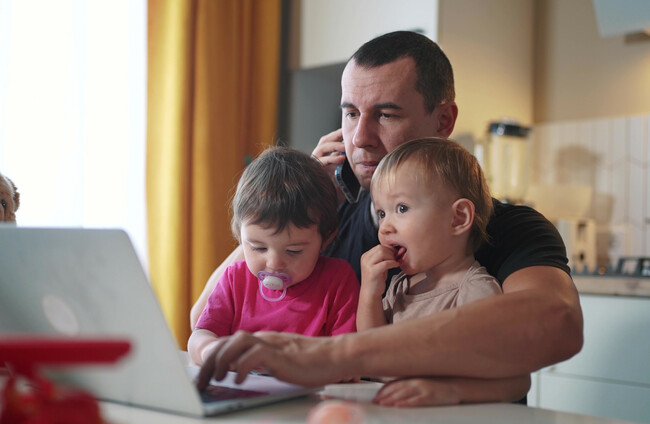
A NEW REPORT has revealed that only half of new fathers in Ireland avail of the paternity benefit available to them.
All fathers in Ireland have been entitled to a maximum of two weeks of paid paternity leave – taken consecutively – since 2016 with the passing of the Paternity Leave and Benefit Act.
The current standard weekly rate of paternity pay is €289, provided the father has built up enough PRSI contributions.
The joint report published today by the Irish Human Rights and Equality Commission (IHREC) and the Economic and Social Research Institute (ESRI) examined the uptake by parents of child-related leave benefits and how this affects gender equality in the workplace.
A key finding is that higher-earning fathers are far more likely to take paternity leave than their low-earning counterparts, a fact which it says contributes to unequal sharing of child care responsibilities between the genders.
The ESRI analysed sample data from births between 2019 and 2022 and determined that only half of fathers were availing of paternity entitlements.
It indicates that lower paid jobs in which employers do not provide additional top-up payments to new fathers directly contribute to reluctance on behalf of fathers to take the time off due to “income-related concerns”.
Higher paid fathers, on the other hand, more frequently take advantage of leave if the benefits cover a large proportion of earnings, and if they have a certain proportion of leave entitlements reserved for them by their employer.
The report also found that the vast majority of mothers take their full 26-week maternity leave entitlement.
In addition to paternity and maternity leave, both parents are entitled to 26 weeks of unpaid leave called Parental Leave – unpaid time off for parents of children under 12 - up from 18 weeks since 2019.
Only a quarter of fathers in Ireland opt for this, the report says.
Additionally, there is what is called Parent’s Leave which allows nine weeks of paid parental leave for each parent, to be taken in the first two years after the birth or adoption of a child.
In 2023, the Work Life Balance and Miscellaneous Provisions Act was also enacted which provides for five unpaid days off for parents of sick children under 12.
However, there have been calls to further improve laws around leave entitlements, namely the length of paid paternity leave to enable fathers to better assist the mother in the care of their newborn child.
When questioned in January prior to the formation of the new cabinet, then-Minister for Children and Equality Roderic O’Gorman said there were “no further plans” to introduce any such measures due to recent expansions to parental entitlements.
Chief Commissioner of the IHREC, Liam Herrick, says reform of parental entitlements is needed to address structural inequality between men and women.
“Ireland must find a new relationship between paid employment, care work and gender roles,” he said.
“This report robustly demonstrates the need for effective and gender equitable child related leave schemes, and where policy efforts should be focused to greatest effect.”
Dr Claire Keane of the ESRI says the report shows that implementation of its recommended policy changes will have an effect of “achieving greater gender equality” by supporting both parents in “balancing work and family responsibilities”.
To embed this post, copy the code below on your site













have your say