We need your help now

Support from readers like you keeps The Journal open.

You are visiting us because we have something you value. Independent, unbiased news that tells the truth. Advertising revenue goes some way to support our mission, but this year it has not been enough.

If you've seen value in our reporting, please contribute what you can, so we can continue to produce accurate and meaningful journalism. For everyone who needs it.

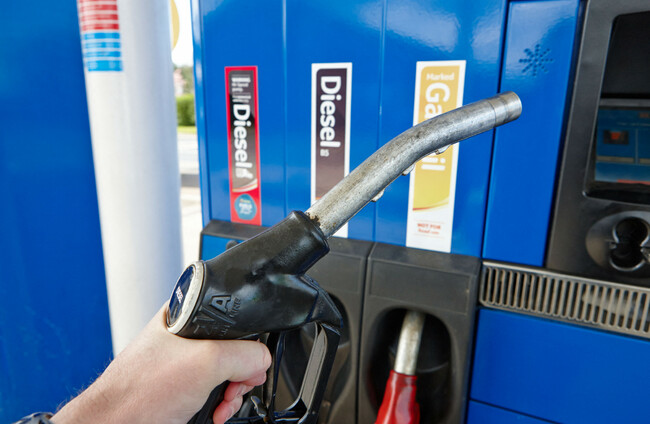
Sinn Féin's Pearse Doherty said "half measures" from the Government "won't cut it". Alamy Stock Photo

Petrol prices set to fall as Tánaiste confirms Tuesday action on fuel costs

A temporary cut on excise is under consideration by government.

LAST UPDATE | 21 Mar

TÁNAISTE AND MINISTER for Finance Simon Harris has said that the government will take measures next week to reduce fuel prices. 

The government measures, which could also include an enhanced diesel rebate scheme for hauliers, are expected to be announced after Cabinet next Tuesday.  

However, Sinn Féin has warned that “half measures” won’t work and that a real package of measures is needed to help people with the burden of rising fuel prices. 

The criticism comes amid speculation the government is focusing on cutting excise duty. 

A senior source said any specifics reported today are speculative until leaders meet and Cabinet decides.

They said the government will look at all the areas such as the areas reported on today regarding excise cuts and it’s understood any measures will only be temporary.

Another senior source added: “There is a whole range of areas being looked at” while another said “nothing decided yet”.

With the escalating US-Israel war in Iran, the head of the International Energy Agency today warned that the conflict is “the greatest global energy security threat in history”.

‘Largest shock to global oil market’ says Harris

“The hit to oil supplies is of the order 20 million barrels per day – making it the largest ever shock to the global oil market.

“At this point, there is no clarity regarding the depth and duration of the conflict – this means there is considerable uncertainty regarding the economic fallout from the shock to oil supplies,” Harris said in a statement this afternoon.

He added:

If the conflict continues for a prolonged period, the impact on the global economy will be real – Ireland could not be immune from such an outcome.

Harris explained that it was “important to stress” that Ireland was in a “position of relative strength” as it was running a significant budgetary surplus which gives us the fiscal capacity to respond.

“In the past, we have often been criticised for running these budget surpluses and asked why we do not spend all available resources. The current situation highlights why it is so important to run budget surpluses in ‘good times’ – this common-sense approach to budgetary policy allows us to build up fiscal buffers and gives us the capacity to intervene when an economic shock arises,” he added. 

Harris has also said that a side-effect of the energy price shock has been the increase in sovereign borrowing costs. Harris explained that these have reached near two-decade highs in some countries.

Harris said due to Ireland’s fiscal position means that the country will not suffer this issue.

‘Appropriate balance’

“The interventions we will announce on Tuesday strike an appropriate balance between providing help now and keeping some of our powder dry – nobody knows what the situation will be in a month from now; so we must remain nimble and flexible in our response.

Sinn Fein’s spokesperson on Finance Pearse Doherty today said that he is concerned by “reports that Fianna Fáil and Fine Gael do not intend to reduce diesel by the maximum amount of 25c a litre”. 

Doherty also said that it is reported that the government is “refusing to reduce tax on home heating oil”. 

He said this would amount to “abandoning” hundreds of thousands of households to “totally unaffordable bills”. 

Doherty added that “half measures” from the Government “won’t cut it” as the cost-of-living crisis is pushing households to breaking point. 

Brent crude oil, the international standard, rose to $112.66 (€97) today, up 3.69% from the previous day and more than 47% since the start of the war. 

Taoiseach Micheál Martin had strongly hinted earlier this week that excise duty could be cut to alleviate fuel costs. 

“For this reason, I believe that any measures introduced initially should be for a short, defined period, with the option to renew, revise or adjust them as circumstances evolve; this approach is in line with that which some other EU Member States are taking,” added Harris today.

He said that he believes that the Irish economy will continue to grow but at a slower pace. 

The Tánaiste will attend a meeting of the Eurogroup next week to work closely with EU partners. 

With reporting from Christina Finn.

Readers like you are keeping these stories free for everyone...
A mix of advertising and supporting contributions helps keep paywalls away from valuable information like this article. Over 5,000 readers like you have already stepped up and support us with a monthly payment or a once-off donation.

Close
65 Comments
This is YOUR comments community. Stay civil, stay constructive, stay on topic. Please familiarise yourself with our comments policy here before taking part.
Leave a Comment
    Submit a report
    Please help us understand how this comment violates our community guidelines.
    Thank you for the feedback
    Your feedback has been sent to our team for review.

    Leave a commentcancel

     
    JournalTv
    News in 60 seconds