We need your help now

Support from readers like you keeps The Journal open.

You are visiting us because we have something you value. Independent, unbiased news that tells the truth. Advertising revenue goes some way to support our mission, but this year it has not been enough.

If you've seen value in our reporting, please contribute what you can, so we can continue to produce accurate and meaningful journalism. For everyone who needs it.

Alamy Stock Photo

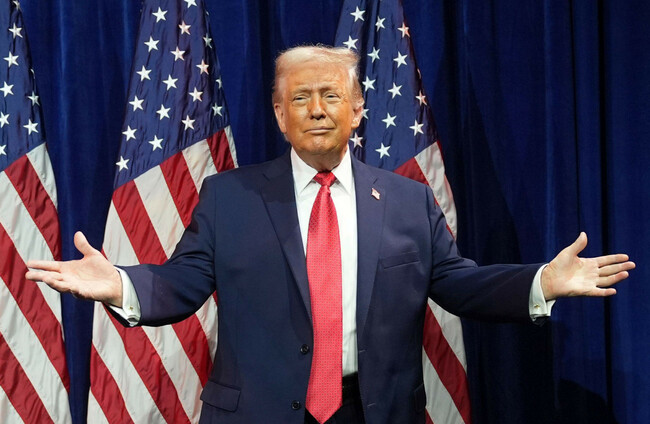
Black gold: How did Maduro and Venezuela become a target of Trump?

“They took our oil away from us,” Donald Trump said.

IN A COURTROOM in New York this week, the ousted Venezuelan leader Nicolás Maduro and his wife plead not guilty to drug trafficking and other US federal charges.

“I am still president of my country,” said Maduro, thousands of kilometres from the Venezuelan capital where he was abducted by US special forces in a night-time raid widely viewed as a breach of international law.

But how did he – and Venezuela itself – become such a target of Donald Trump and his administration? 

Before turning to politics, Maduro was a bus driver and union leader in Venezuela, the oil-rich country on the Caribbean coast. 

After facing a punishing austerity regime in the late 1980s and 1990s, impoverished Venezuelans began to rally around a figure promising socialist policies that promised to end poverty and fight against American imperialism. The country had experienced a cycle of booms and busts as oil prices fluctuated and left a socioeconomic chasm between the country’s elite and its ordinary citizens.

In 1998, they voted for Hugo Chávez, a colonel who led two coups, as their president.

Chavezism, the Venezuelan strongman’s brand of rhetorically left-wing and anti-western populism became entrenched across the Venezuelan state after the landslide victory of Chávez in 1998. The policies enacted during his presidency consolidated his power across Venezuela’s institutions as he used elections and referendums to dismantle democratic institutions.

During his presidency, Chávez aligned his increasingly isolated country with regimes in Cuba, Nicaragua, China and Russia, which operates two oilfields in Venezuela.

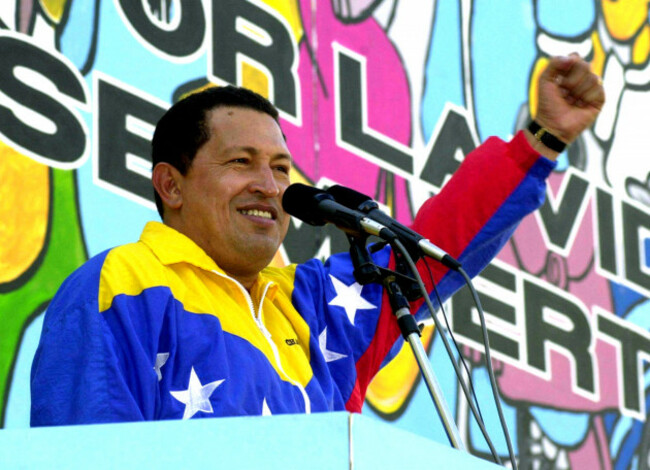
the-revolution-will-not-be-televised-hugo-chavez-2003 Hugo Chavez pictured in 2003 Alamy Stock Photo Alamy Stock Photo

Meanwhile, ordinary Venezuelans began to emigrate en masse to Latin America, the Caribbean and the US.

Venezuelan oil was largely nationalised in the 1970s when foreign-owned concessions to pump oil were revoked, but compensation was provided to these companies which included Exxon and Chevron.

In the 2000s, the Chávez government took direct control of the state oil company, Petróleos de Venezuela (PDVSA) and began using its oil profits to bankroll the Venezuelan military. The mismanagement of PDVSA played a significant role in the collapse of oil production in Venezuela and the impact on the wider economy.

The decline later deepened as US sanctions were imposed from the mid-2000s onward.

Then, in 2007, the Venezuelan government under Chávez took a further step of forcing the remaining foreign-owned oil companies operating in the country to give government-owned companies majority stakes in any joint ventures.

Several international law experts have said that this action is not equivalent to Venezuela “stealing American oil”.

Eddy Wifa, co-director of the Aberdeen University Centre for Energy Law, told the BBC that any oil found in Venezuela was owned by the Venezuelan government: “In America if you find oil in your backyard it belongs to you. In other parts of the world, including the UK, Nigeria and Venezuela, oil belongs to the government”.

Venezuela’s actions triggered a sharp drop in foreign investment in the country. US oil companies ConocoPhilips and Exxon Mobil also brought claims worth billions against Venezuela at international investment tribunals. In 2019, a World Bank tribunal ordered Venezuela to pay $8.7 billion (around €7.4 billion) to ConocoPhillips in compensation – but so far, that sum has not been paid.

Before dying of cancer in 2013, Chávez anointed his vice-president Maduro as his successor. Maduro then won a narrow victory in the presidential elections in 2013, as Venezuela entered one of the deepest peacetime recessions in modern history.

The country struggled to import food and supermarket shelves became bare. Today, over 80% of Venezuelans are now estimated to live in poverty while oil production in Venezuela, which has the largest oil reserves in the world, has plummeted to one million barrels of oil per day (about 0.8% of global crude oil production).

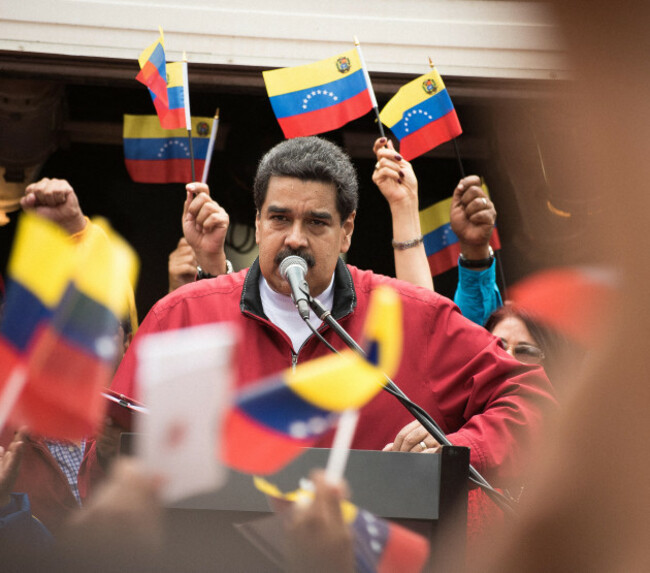
caracas-venezuela-23rd-may-2017-venezuelan-president-nicolas-maduro-speaks-in-an-act-to-support-to-assembly-constitutuent-credit-marcos-salgadoalamy-live-news Nicolás Maduro Alamy Stock Photo Alamy Stock Photo

“That’s less than half of what it produced before Maduro took control of the country in 2013 and less than a third of the 3.5 million barrels it was pumping before Chávez took over,” wrote David Goldman for CNN.

Despite years of poor economic mismanagement, isolationist policies, spiraling criminality and mass emigration, Maduro survived – until now.

‘They took our oil away from us’ – Trump 

In December, the Trump White House released its National Security Strategy paper which declared that the US will “reassert and enforce the Monroe Doctrine to restore American pre-eminence in the western hemisphere”. US Secretary of State Marco Rubio has said, “We’re not going to allow the western hemisphere to be a base of operation for adversaries, competitors, and rivals of the United States.”

Trump has suggested in public statements that a key objective of Maduro’s abduction was to place the country’s oil sector under US control and allow American oil companies an opportunity to rebuild there after their assets were nationalised in the mid-2000s.

“The oil companies are going to go in and rebuild their system,” Trump said.

“It was the greatest theft in the history of America. Nobody has ever stolen our property like they have. They took our oil away from us. They took the infrastructure away and all that infrastructure is rotted and decayed, and the oil companies are going to go in and rebuild it.”

According to Michelle Goldberg in The New York Times, “Rather than the moralistic imperialism of George W. Bush, Trump’s foreign policy is imperialistic gangsterism. As one administration official put it to me, ‘there’s something refreshing about Trump just saying, ‘Yeah, we are taking the oil”.”

According to sources who spoke with Reuters, the White House and State Department officials have told US oil executives that they would need to return to Venezuela quickly and invest significant capital in the country to revive the damaged oil industry if they wanted compensation for assets expropriated by Venezuela.

US oil companies are wary about committing further resources and investment to a country as unstable as Venezuela, particularly in circumstances where the legality of Trump’s actions is highly questionable.

Meanwhile, tens of billions of dollars would be required to significantly expand heavy crude production in Venezuela’s Orinoco Belt, while oil prices remain low.

“Just because there are oil reserves – even the largest in the world – doesn’t mean you’re necessarily going to produce there,” one oil industry source told CNN. “This isn’t like standing up a food truck operation.”

The source said the Trump administration put “rhetoric before reality” and stressed political stability is “paramount” when companies weigh investing overseas.

Readers like you are keeping these stories free for everyone...
A mix of advertising and supporting contributions helps keep paywalls away from valuable information like this article. Over 5,000 readers like you have already stepped up and support us with a monthly payment or a once-off donation.

Close
53 Comments
This is YOUR comments community. Stay civil, stay constructive, stay on topic. Please familiarise yourself with our comments policy here before taking part.
Leave a Comment
    Submit a report
    Please help us understand how this comment violates our community guidelines.
    Thank you for the feedback
    Your feedback has been sent to our team for review.

    Leave a commentcancel

     
    JournalTv
    News in 60 seconds