We need your help now

Support from readers like you keeps The Journal open.

You are visiting us because we have something you value. Independent, unbiased news that tells the truth. Advertising revenue goes some way to support our mission, but this year it has not been enough.

If you've seen value in our reporting, please contribute what you can, so we can continue to produce accurate and meaningful journalism. For everyone who needs it.

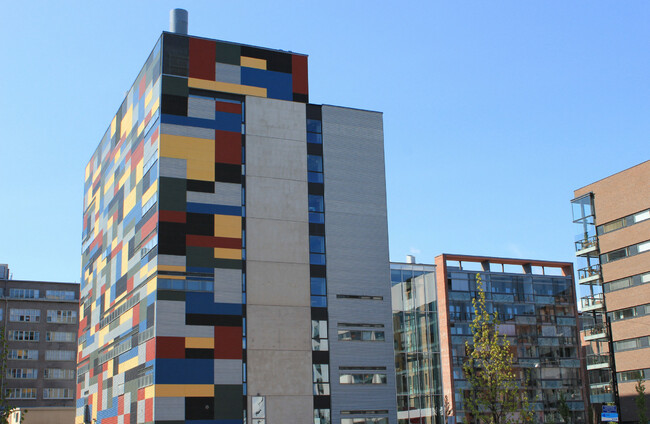
An apartment building on the outskirts of Helsinki, Finland. Heini Kettunen via Shutterstock

Everyone should have a home but the evidence suggests Ireland doesn't believe it

Homelessness has been normalised, unlike in Finland where affordable, secure housing is an ethical and economic priority.

THE LOOK ON Sana’s face as we walked down Wuppertal main street still sticks out in our minds three years later. It was a mix of shock, confusion, sadness and disgust.

Sana noticed a group of people sitting in the doorway of an empty shop. They were clearly trying to survive on the street, survive without a home. With just a cardboard box, a sleeping bag and a few bottles of beer. Coming from Finland, Sana wasn’t used to seeing people live in this situation, she was confused about why they had nowhere else to go.

She was saddened to see people abandoned in such a rich country like Germany and was disgusted by a European society that would allow this to happen.

We immediately wondered: what would Sana think if she ever visited Ireland?

We had slow travelled to the Wuppertal Institute for Climate, as part of a collaborative project with partners also from Italy, Greece and France. We were introducing them to the concepts of systems design, our RestPlayWork proposal for liveable cities and the growing #DerelictIreland movement. Although they were all facing a housing crisis and were familiar with the challenge of abandoned homes, the scale of dereliction and vacancy in Irish cities and towns centres blew their minds.

But our Finnish partners in particular just couldn’t get their heads around the reality of leaving so many people suffer when there are so many homes lying empty for years.

This is because Finland is a country that said it would end longer-term homelessness. Then went and actually put resources in place to make this happen.

The Finnish government ensures everyone has an affordable and secure home regardless of their income, their health, addictions or even their criminal record. Because in Finland a home is a human right, and their Housing First Model makes that a reality. It eradicated rough sleeping by 2018 and reduced long-term homelessness by 35% since 2008.

Is the Finnish model perfect? No. While homeless figures have risen slightly last year after decades-long declines, it’s important to put these figures into perspective. Ireland and Finland have similar populations, yet Finland has just 4,579 people without a home compared to estimates of 300,000 in Ireland (including rough sleepers, emergency accommodation and hidden homeless).

The Finnish model is not just about ethics and social justice; it’s also economic. While Ireland is handing over €180,000 to host one family in profit-driven emergency accommodation, Finland is saving €14,000 per person per year by giving them a home first.

This is why Sana reacted strongly when she saw the rough sleepers, in all their vulnerability. To her, this was not normal, nor was it acceptable. Yet, if she lived in Ireland, she would not have blinked an eye seeing people sleep outside boarded up buildings.

We were just like Sana, shocked by the normalisation of homelessness when we moved back to Ireland in 2018. It had only taken two years living in Amsterdam to condition us into viewing rough sleeping and dereliction as abnormal. While Finland provides a testament to ending homelessness, Amsterdam is a testament that widespread dereliction and long-term vacancy can be ended. We knew this when we started #DerelictIreland and yet so many people tried to convince us that dereliction is normal, that it wasn’t a solution to the housing crisis and that there was nothing we could do about it anyway.

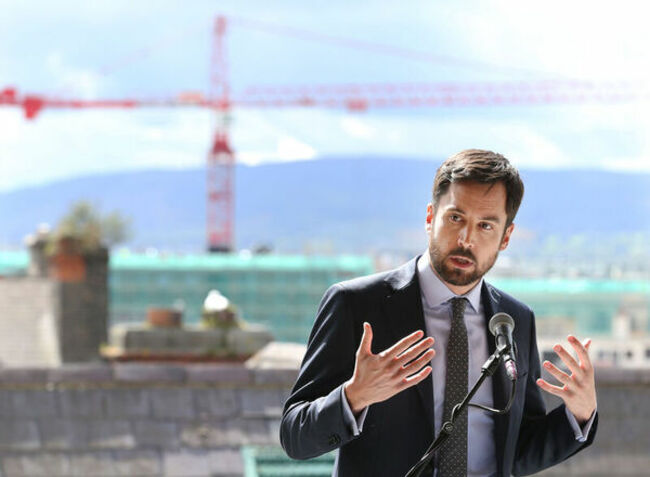
Depressingly we hear these same cynical chants when it comes to discussions on ending homelessness. We’re told so many times that homelessness is normal, so there’s no point trying to end it. Even a Fine Gael housing minister, Eoghan Murphy, said in 2019 that there “will always be” homeless people. This self-fulfilling prophecy has surpassed itself, with a 70% rise in people using emergency accommodation since then.

425 Minister Murphy opened Focus Ireland new 31 unit_90570650 Then Housing Minister Eoghan Murphy opening a Focus Ireland development in Dublin in 2019. Sasko Lazarov Sasko Lazarov

In the same timeframes Fine Gael and Fianna Fáil governments have increased spending on homelessness by 286% to a whopping €563.5 million in 2025. With 75% of this going towards private emergency accommodation, it’s clear that the normalisation for homelessness has created a whole new profit-driven industry in Ireland.

Maybe there are more government politicians like Eoghan Murphy, who don’t believe that everyone can have a home. This would explain successive governments’ failure to solve the housing crisis over the last 12 years.

The figures speak for themselves. In the last six years prices have increased 47% and rents 40% while there are less and less homes available to buy. We heard this year that by the end of 2025 we reached more evictions than during the Gorta Mór, and while analysis from The Journal FactCheck noted that it’s difficult to directly compare statistics from then and now, it confirmed that the evidence underlines that this is an historic uptick. The first three months of this year started with a 50% rise in eviction notices compared to the previous year.

The government is prioritising tax cuts and large handouts for international landlords and big developers, while simultaneously failing to build enough council homes. This is forcing many of us to conclude that the housing crisis is not a failure, that it is working exactly as it was designed to. According to current Fianna Fáil housing minister James Brown “the plan is working”. The government’s actions and inactions are a testament to who they really serve, so maybe it’s time we remind them what their priorities really are.

Art and protest

For an hour every Thursday afternoon “Everyone Should Have A Home” rang out in front of Dáil Éireann. An act of deliberate provocation by musician and activist Martin Leahy. For four long years he travelled all the way from his home in West Cork to perform his powerful track.

It became a weekly reminder of how things should be in Ireland. Inspired, we took these five simple but important words and emboldened them through our visual art on canvases, T-shirts and unsanctioned street art on derelict buildings.

Whenever we joined Martin in solidarity outside the Dáil and anytime we’ve brought his words onto the street, we are always overwhelmed by the large number of strangers that need to stop and tell us, that they agree, “Yes, everyone should have a home.” On a few occasions we were asked, “What do you mean by everyone?” This often opens up emotional conversations with most people agreeing that either everyone has a right to a home, or no one does.

Unfortunately, we also encounter some xenophobic, racist and Islamophobic rants, unveiling an ugly but hopefully relatively small element of Ireland. It’s easy to be lured into the false hope that if we solved the housing crisis that we would rebuild our pre-colonial tradition of Ceád Míle Fáilte, but we cannot afford to be that naïve.

If someone actually believes that all the vulnerable in Ireland would be taken care of if we closed our borders, then they clearly haven’t got a grasp of our history of institutional neglect and abuse.

It’s not that long ago when single mothers were berated for getting council homes.

And depressingly, there are still too many objections to building culturally appropriate Traveller homes. Others are adamant that people with addiction challenges should be clean before being given a home, an unnecessary cruel demand on those simply trying to survive.

If the housing crisis is typically in the top ranking in opinion polls it must mean that the majority of people want to end it. So why aren’t people acting like they care? There’s certainly a lot of rhetoric on how it’s particularly awful for those who’ve done everything right* to still struggle to find a home, (*often code for having a well paid job). Which implies that everyone else who struggles to get a home is because of a personal failure.

Change yourself, not the system, being the message. Unfortunately, Friday’s byelection results are maintaining the status quo, one left TD out, one left TD in, one Fine Gael TD out, one Fine Gael in. As an ordinary citizen who’s not involved in the building trade it can feel close to impossible to influence change, when elections aren’t changing anything.

Yet, we know from our history that Irish people are willing to stand up for something they believe in. We fought and won against the biggest imperialist nation in the world. We’ve demanded free water for everyone and won it through massive nationwide protests. And only last month the country was brought to a standstill, to the brink of fuel and food shortages by protesters who won a €505 million support package.

So why aren’t we seeing the same response to the housing crisis? Where are the public’s demands for a referendum on homes as a human right, or for proven solutions to the housing crisis like good tenants’ rights and more high-quality council homes.

After twelve long years of an ever-worsening housing crisis, it can feel like it’s inevitable, which ironically creates another self-fulfilling prophecy.

This prolonged crisis has damaged our hard-won independent democracy and has created a corrosive apathy, with our last elections having the lowest turnout ever.

This has opened the gates for nasty scapegoating, has let our political and civil servants off the hook, all while we hand our children up for exploitation as they will never have a right to a home. Without a home we all struggle to contribute in any meaningful way to our environment, our communities, to the economy and to wider society or have any real sense of place.

We urgently need to tell another housing story. One where everyone gets a home to rest, relax, feel safe, secure. Where everyone gets access to spaces for play, fun and creativity, as well as work opportunities that are meaningful, fair and sustainable. In today’s climate this sounds very idealistic. But we would argue that ambition for RestPlayWork should be a fundamental foundation for any responsible and just society. We live with dóchas, do you?

Jude Sherry and Dr Frank O’Connor are founders of anois.org, ffud.art and #DerelictIreland. They are part of a series of writers, academics and economists penning a weekly essay delving into the housing crisis and potential solutions.

Readers like you are keeping these stories free for everyone...
A mix of advertising and supporting contributions helps keep paywalls away from valuable information like this article. Over 5,000 readers like you have already stepped up and support us with a monthly payment or a once-off donation.

Close
43 Comments
This is YOUR comments community. Stay civil, stay constructive, stay on topic. Please familiarise yourself with our comments policy here before taking part.
Leave a Comment
    Submit a report
    Please help us understand how this comment violates our community guidelines.
    Thank you for the feedback
    Your feedback has been sent to our team for review.

    Leave a commentcancel