Sign in. It’s quick, free and it’s up to you.
An account is an optional way to support the work we do. Find out more.
Sign in. It’s quick, free and it’s up to you.
An account is an optional way to support the work we do. Find out more.

Politics by Numbers is a brand-new series for The Journal where broadcaster, author and spreadsheet stan Gavan Reilly takes a data deep dive into a political point of the week.
THE SAYING GOES that history is written by the winners. That’s certainly likely to be the outcome of the government’s staredown with the board of the Rotunda Hospital, over the idea of consultants offering care to private patients even though they were employed on ‘public-only’ contracts.
The Rotunda didn’t concede on its argument – it still claims the contracts included a clause permitting private work, which if true is a pretty damning critique of government practice – but backed down because of a threat to cut the State funding for its everyday services. All the legal advice in the world won’t help you out if you can’t afford to turn the lights on.
That row has sparked a national navel-gaze about whether the ultimate abolition of private maternity care in Ireland, whether consciously or by stealth, is a desirable policy. For what it’s worth, I can speak with some experience about the comfort blanket that private care can provide.
When our youngest child’s 20-week scan identified an anomaly which could have impeded her growth and development in the womb, the public system made no offer of more regular scans or the continuity of seeing the same consultant each time. Opting for private care was a big financial hit but the peace of mind, as more regular scans assured us our baby was still growing and healthy, was priceless.
The low-level pushback inside Leinster House at eliminating this option speaks to a distrust that the public system will ever step in to offer this level of continuity. Is it feasible in the fast-paced, subject-to-change world of a busy maternity hospital that every individual patient could see the same obstetrician on every visit? If it were, the numbers looking for private care would ebb away to nothingness. It will only be decades from now, when the last generations of private consultants have left the system, that we’ll know for certain.
Politically the striking thing about the Rotunda row is that, internal government critics aside, the policy is one supported unanimously across the Dáil. That’s the consequence of Sláintecare, where parties came together after the 2016 general election to ensure that future governments would not waste time and money making structural reforms to healthcare that might then be undone by a future minister with a different policy. Disentangling the public and private hospital systems is a key plank of that plan.
That in turn hinges on rejecting the idea that consultants are capable of working in the public hospital system while also doing private nixers on the side. The Rotunda’s Master, Professor Seán Daly, was clear this week that the consultants offering private work on the side were still fulfilling all of their public hours.
This chimes with a longstanding defence: various inquiries into working practices have largely borne out the idea that private care, on the side, is comparable to doing a bit of overtime. Any cases where public duties were being shirked, such as in St Vincent’s in 2014, are rarely found to be replicated elsewhere.
Nonetheless, the public policy remains: any consultant entering the system now must accept the public-only contact. Part of this is because the public system needs them to be present outside of traditional office hours, when many would undertake their private work, but part of it is simple distrust that those on the public payroll are doing what is fully required of them.
That’s an interesting tack coming from politicians, who are no strangers to double jobbing themselves.
There are 174 members of the Dáil, all of whom are expected to juggle the multiple duties of being a full-time TD. There are the duties in the constituency, and carrying those local caseloads with them into Leinster House to secure services on behalf of their peers. Then there’s the job of being a national legislator, scrutinising the draft laws presented to them and trying to look around corners to address possible pitfalls.
Throw in the mandatory appearances at community events at weekends, constituency clinics, the workload of a handful of Oireachtas committees, and the possibility of being made a party spokesperson on a specific subject, and the tasks easily pile up. Sixteen-hour days are the norm on a Tuesday or Wednesday when the Dáil is in full session.
Cabinet-level ministers and ‘junior’ ministers of state are even busier when they have specific parts of government departments to run, so the idea of them having a side hustle is (presumably) almost totally off limits.
But exclude them and the Ceann Comhairle, and double-jobbing is surprisingly common: last year’s register of member’s interests saw 29 TDs disclosing other jobs alongside their positions as public reps. Three TDs are also barristers, three more are solicitors, 11 are farmers; one is a GP, two are publicans, and plenty of others have various private enterprises which they disclose an ongoing management interest in.
(Incidentally that number of 29 does not include the ones who disclosed other incomes but that they were winding them down because of their new role.)
Even if one excludes the 32 TDs who are also landlords (and many won’t see that as a job that requires active input, though the landlords themselves will disagree) that means one in six of our national legislators have other jobs on the side.
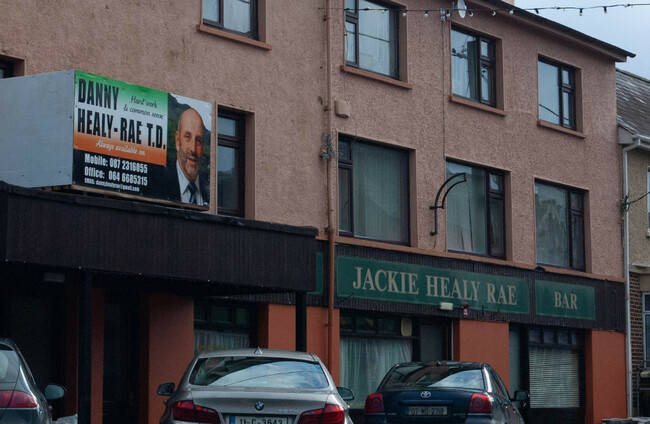
No doubt they’d say it’s possible to manage both, albeit by compromising their own personal time. Indeed, perhaps it is. And for many, having other roles – being the local doctor, publican, shopkeeper or solicitor – is the foundation of their political lives. Would the Healy Rae family be quite so prominent in Kilgarvan if they didn’t also collectively run the village’s pub, petrol pump, bus hire and plant hire operations?
Maybe the Rotunda row should give us pause for thought: if we don’t think public consultants should have the time to take on a separate job, why is double jobbing so rife among our national representatives? And if they think those on the public payroll should work only for public good and not with other duties in mind, isn’t there a case for them turning the mirror on themselves?
Gavan Reilly is the Political Correspondent for Virgin Media News and the host of Monday with Gavan Reilly, which airs every Monday at 10pm on Virgin Media Play and Virgin Media One.
To embed this post, copy the code below on your site













have your say