We need your help now

Support from readers like you keeps The Journal open.

You are visiting us because we have something you value. Independent, unbiased news that tells the truth. Advertising revenue goes some way to support our mission, but this year it has not been enough.

If you've seen value in our reporting, please contribute what you can, so we can continue to produce accurate and meaningful journalism. For everyone who needs it.

'The key thing is authenticity': How the Cine4 scheme changed Irish film

Director Ruán Magan and Commissioning Editor at TG4 Máire Ní Chonláin explain what’s behind Cine4′s success.

SOME THINGS SOUND fantastical until they happen. And when they do, they demonstrate what can be achieved with hard work and a bit of risk taking.

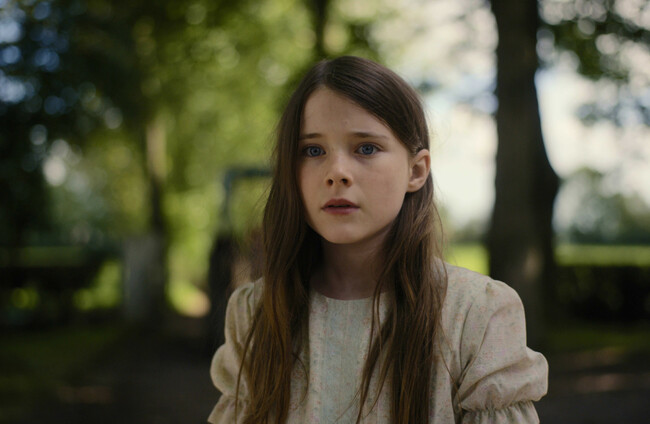
Nothing proves this more than when Irish-language film An Cailín Ciúin, directed by Colm Bairéad and produced by Cleona Ní Chrualaoí, was nominated for an Oscar in 2023.

Overnight, what seemed like a pipe dream for Irish filmmakers became a reality.

The film was made thanks to the Cine4 scheme, which launched in 2017. This is a partnership between TG4, Fís Éireann (Screen Ireland) and Coimisiún na Meán to develop original feature films in the Irish language. Five feature film projects are chosen for development each year by Cine4, with two going on to be made.

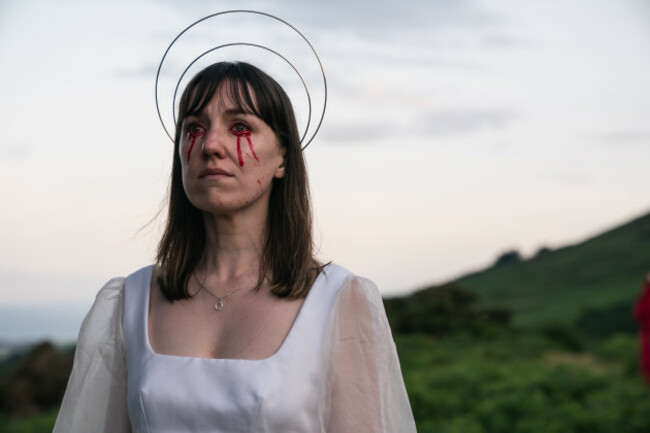
So some might expect Cine4 to keep its selections to within a certain tested theme – but so far it has funded a wide range of features, from folk-horror (Fréamhacha/Fréwaka), to an historical thriller (Arracht).

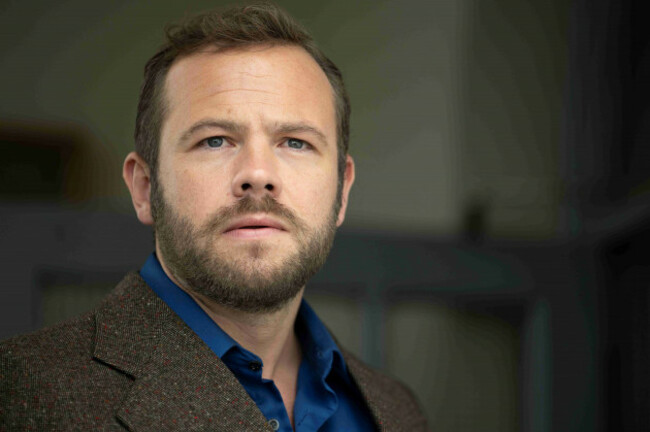
The next film to be released under the scheme is Báite, directed by Ruán Magan, a 70s-set murder mystery based on the novel The Lake by Sheena Lambert, and starring Moe Dunford. 

All of the Cine4 films can be watched on The Seinnteoir TG4 (Player).

‘We want an Oscar/Ba mhaith linn Oscar’

Máire Ní Chonláin is Commissioning Editor at TG4. TG4 was launched in 1996, and was a significant step towards promoting and fostering Irish language broadcasting. 

In 2016, Alan Esselmont became Ard-Stiúrthóir (Director General) of TG4, a role he held until his retirement in April of this year, when he was replaced by Deirdre Ní Choistín.

“He saw that even though we were doing so much for television, there was nothing being done for film,” says Ní Chonláin. In order for films to be made, funding needs to be easy to access, and so Fís Éireann (Screen Ireland) and Coimisiún na Meán agreed to team up with TG4 to provide this funding. 

“What we wanted for Cine4 was that producers didn’t have to go and spend years out there looking for money. It’s very difficult to get money to make a film in first place,” Ní Chonláin explains. “We’ll take the pressure off producers, and we will just concentrate on getting the right stories, written as gaeilge.”

Baite-Moe Dunford as Frank Ryan Moe Dunford as Frank Ryan in Báite

The ambition was huge with Cine4 from the beginning. 

“When we set up the scheme, we were saying ‘we want an Oscar’,” says Ní Chonláin. “And we never thought that five years later we would be nominated.”

TG4 had already been supporting and encouraging filmmakers such as Ruán Magan, whose early forays into documentary-making for the station included Manchán San India (1996) with his brother Manchán Magan. 

“I feel TG4 has nurtured my career since my mid 20s,” says Magan. “And that’s an extraordinary thing. Tugann siad deis dúinn, they give us these opportunities, and they create opportunities. And Cine4 is just the latest of that.”

He was “stunned” to get the call asking if he would be interested in being part of an application under Cine4.

“I was really moved and touched, because I’d always wanted to make a feature film. I’d tried and different things didn’t work out, which is just part of the business. And then suddenly I get a call… and of course it’s going to be TG4.

“The very first documentary I made was with TG4 funding, when I was 25. So 30 years later, they’re still putting the wind behind my sails.” 

Attitudes towards Irish language films have changed hugely since TG4′s founding, says Ní Chonláin. Some have questioned in the past “why is TG4 even there?” she says.

But now she sees TG4 as punching above its weight, particularly given its budget. Younger generations are now seeing that a career in Irish film, and Irish-language film, is possible.

“It’s not seen as a pastime. It is worth something,” she says.

Fréamhacha Clare Monnelly Claire Monnelly in the Cine4-funded film Fréwaka/Fréamhacha

Authenticity/Barántúlacht

What do the Cine4-funded films so far have in common?

“Authenticity really is the main thing, as well as good characters,” says Ní Chonláin.

When Bairéad and Ní Chrualaí told Ní Chonláin they wanted to turn Claire Keegan’s book Foster into a film, initially she was nervous. 

“I said, that’s going to be a really, really hard thing to do, because people have read Foster and they will expect it to be as good as in their own head. But when [Colm] started to elaborate on how he was going to do it… he was the perfect person to do it.”

Making the film was a risk. 

“We are risk takers. TG4 have been always doing the ‘súil eile’, and we will maybe put our heads out further than a lot of other broadcasters,” says Ní Chonláin. 

Says Magan: “They seem to have a really canny way with picking the originality and unique originality and things that people really want to see. I suppose because they’re not so shackled by the need to be commercial, it allows them to be more daring.”

Báite

TG4 / YouTube

Magan’s film Báite is set in the 1970s but has a contemporary sensibility, says the director. 

“It’s exciting, we had no idea if it would work out. But the response in the cinema in Galway [at its premiere during Galway Film Fleadh] was unbelievable. It was a full house, and they leapt to their feet at the end. The whole way through, they just laughed and they cried at the right moments, and moments we didn’t even think they would.”

Magan would love to see more funding available for Cine4, though he adds that a smaller budget “focuses you” and can enable successful filmmakers to go on and work with bigger budgets later.

He predicts more films being made using both Irish and English, due to Cine4′s success:  

If that’s an outcome, it’s an extraordinary outcome… I’m working on something at the moment which would be maybe a third in Irish and two thirds not in Irish. And I’ve talked to loads of people who are doing exactly the same.

Magan’s own journey with Irish mirrors the societal changes regarding the language. “We had Irish when we were born, from the cradle. But by the time I was 14, I’d nearly lost it all because I was so against it, because I was just mortified at speaking it.”

But he recovered his relationship with the language, and ran an Irish-speaking set at Báite. “That was just beautiful,” he says.

“To experience a language that is literally dying, to being at the beginning of a rebirth of the language… that’s just thrilling.”

Magan points out that the success of Cine4 goes all the way back to the activists who campaigned for an Irish language radio station, which led to the founding of RTÉ Raidió na Gaeltachta in 1972, and later TG4 (then called Teilifís na Gaeilge).

“One has to be very much conscious of how making noise can have an effect, but it takes a long time sometimes. The same thing happened in Belfast with Cultúrlann, and Kneecap came out of that – Moglaí Bap’s father Gearóid Ó Cairealláin was a founder of that. It’s the same period of activism, which eventually leads the next generation to a rebirth.”

Historic occasion/Ócáid ​​stairiúil

Back in 2023, the TG4 team gathered at Dublin’s Stella Cinema to learn if An Cailín Ciúin would be nominated for an Oscar.

“It was a historic occasion… People were crying. I think it was so important to us to be recognised – that the language was going to be recognised,” says Ní Chonláin.

We felt vindicated in some way, but so proud, and so proud to be Irish. I think the whole nation was behind us, and we felt that.

The most difficult thing about Cine4 is that it can ultimately only fund two features a year. “But we always say that the other three are so developed, they could bring it elsewhere,” says Ní Chonláin.

Baite-Eleanor O'Brien as Peggy Casey Eleanor O'Brien as Peggy Casey in Báite

The budget for Cine4 is currently €1.8million, up from €1.2million. TG4′s own funding was increased in Budget 2026 by €5.376m, bringing total public funding for it next year to €65.376m.

“I think that politicians now do see the relevance, and the ordinary people of Ireland do see the relevance of TG4 being there, as well as having Irish language cinema there and seen all over the world. When we started first, people did not know in some places there was such a language as Irish. Now it is so widely known,” says Ní Chonláin.

To help more filmmakers to develop their work, TG4 has two other funding schemes, Tús and Céim Eile for shorts.

Looking to the future, Ní Chonláin wants to see Cine4 receive more funding and expand even further. 

“I’d love to develop not just five [films], but that we could develop 10. And that we would have one a year at least, shown in cinemas.”

She’s seen the impact of the film’s success in her own life, saying: “My mother hadn’t been to a cinema in 40 years. Now she’s going every time there’s an Irish language film.”

“With An Cailín Ciúin, we kept hearing all the time the amount of people that came out that hadn’t been to a cinema in years, and because of that are going more often now.”

Báite will be in cinemas early next year.

Close