Sign in. It’s quick, free and it’s up to you.
An account is an optional way to support the work we do. Find out more.
Sign in. It’s quick, free and it’s up to you.
An account is an optional way to support the work we do. Find out more.
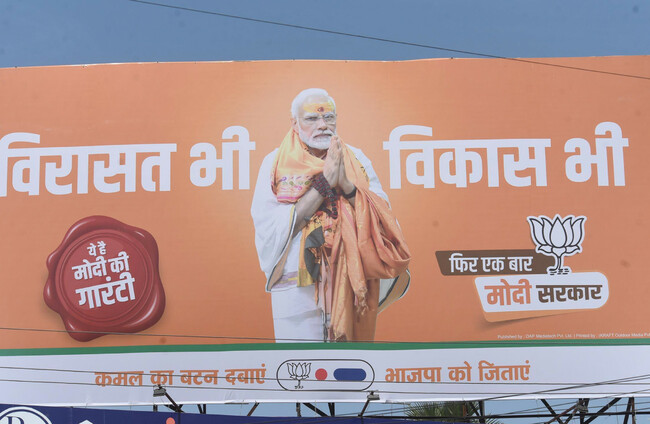
MILLIONS OF INDIANS are at the polls today, marking the beginning of a six-week election where Narendra Modi, the populist prime minister, is seeking rare third term.
The vote is a referendum on Modi’s third term. Voters began queuing up at polling stations in the early hours of the morning to vote on the future of the prime minister who championed an assertive brand of Hindu nationalist politics.
Voting began at 7am local time in 21 Indian states, from the Himalayan mountains to the tropical Andaman Islands.
Nearly 970 million voters — more than 10% of the world’s population — will elect 543 members to the lower house of Parliament for five years during the staggered elections that run until June 1.
The votes will be counted on 4 June. This election is considered one of the most consequential in India’s history and will test the limits of Modi’s political dominance.
If Modi wins, he will be only the second Indian leader to retain power for a third term, after Jawaharlal Nehru, the country’s first prime minister. Most polls predict a win for Modi and his Hindu nationalist Bharatiya Janata Party.
They face a broad opposition alliance led by the Indian National Congress and powerful regional parties. It is not clear who will lead India if the opposition alliance, ‘INDIA’, wins the election.
The alliance’s more than 20 parties have not put forward a candidate, saying they will choose one after the results are in. The election comes after a decade of Modi’s leadership, during which the BJP consolidated power through Hindu-first politics and economic development.
Modi has ratcheted up Hindu nationalist rhetoric on the campaign trail and has sought to present himself as a global leader.
His ministers tout him as the steward of a surging India, while his supporters celebrate his campaign promise to make India a developed nation by 2047 when it marks 100 years of independence.
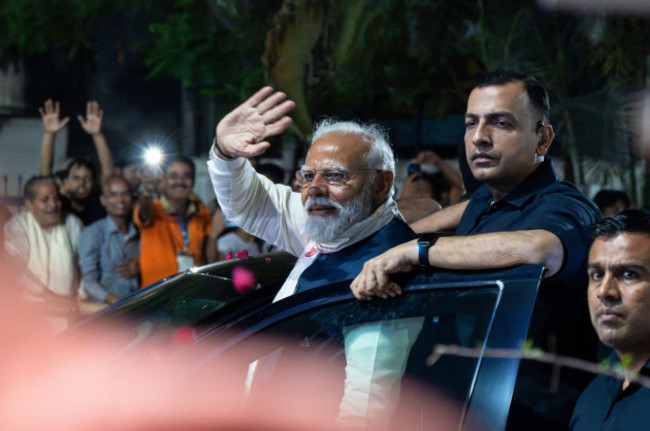
Critics warn that Modi has turned increasingly illiberal and could use a third term to undermine India’s democracy.
His Hindu nationalist politics, they argue, has bred intolerance and threatens the country’s secular roots.
The alliance has promised to arrest the democratic slide it says India has witnessed under Modi’s rule.
They accuse Modi of sidelining elected ministers in favour of trusted bureaucrats and using tax authorities and the police to harass critics and opposition parties.
Christophe Jaffrelot, who has written about Mr Modi and the Hindu right, said: “Modi has a very authoritarian mindset. He doesn’t believe in democracy. He doesn’t believe in parliamentarianism.”
Modi insists that India’s commitment to democracy is unchanged.
He told a Summit for Democracy meeting in New Delhi in March that “India is not only fulfilling the aspirations of its 1.4 billion people but is also providing hope to the world that democracy delivers and empowers.”

To embed this post, copy the code below on your site













have your say