Sign in. It’s quick, free and it’s up to you.
An account is an optional way to support the work we do. Find out more.
Sign in. It’s quick, free and it’s up to you.
An account is an optional way to support the work we do. Find out more.
LAST UPDATE | 24 Jul 2025
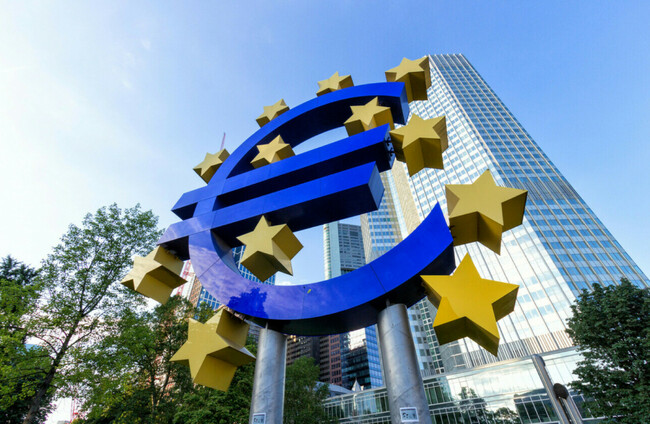
THE EUROPEAN CENTRAL Bank has kept interest rates unchanged today while the possibility of harsher US tariffs hangs in the balance.
Trade tensions are making the economic environment “exceptionally uncertain”, the European Central Bank said today as it kept interest rates on hold.
“The environment remains exceptionally uncertain, especially because of trade disputes,” the ECB said amid ongoing tariff negotiations between the United States and the European Union.
Today’s pause brings an end to a string of cuts that dates back to September last year, as the ECB progressively lowered borrowing costs in response to sinking inflation.
The pace of consumer price rises has settled around the central bank’s two-percent target, having soared to double digit highs in the wake of the coronavirus pandemic and Russia’s full scale invasion of Ukraine.
But the relatively more favourable monetary policy conditions look fragile with a 1 August deadline for the possible imposition of punitive tariffs on European exports into the United States set by Trump.
With Washington and Brussels still in talks over a possible tariff deal, ECB rate-setters would want “more clarity… before considering any further adjustment to monetary policy”, UniCredit analysts said.
A pause would give policymakers the summer to see whether Trump follows through with his threat to slap EU exports with a flat 30-percent tariff, in addition to existing levies on cars, steel and aluminium.
Higher barriers to trade risk delivering a fresh blow to the eurozone economy, and encourage the ECB to contemplate further rate cuts.
After seven straight cuts and eight in total since June last year, the ECB has brought its benchmark deposit rate down to two percent from its peak of four percent in the midst of the inflation wave.
“Neither the economic data nor latest data regarding price dynamics demand an immediate response from the ECB,” according to Dirk Schumacher, chief economist at German public lender KfW.
Eurozone inflation came in at exactly two percent in June and economic indicators including rising factory output have encouraged more optimism about the health of the economy.
The ECB would also want to “keep some powder dry for the case of emergency” if Trump were to apply harsh tariffs, Berenberg analyst Felix Schmidt said.
“A further escalation in the trade dispute would have a significant negative impact on the eurozone economy,” leading to more rate cuts, Schmidt said.
The increased strength of the euro against the dollar as a result of tariff uncertainty could also encourage policymakers to further soften the ECB’s monetary policy stance.
The euro has surged almost 14 percent against the dollar since the start of the year, boosted by investor moves to dump US assets in the face of Trump’s impetuous policymaking and attacks on the US Federal Reserve.
A stronger euro would make imports cheaper and further suppress inflation. The ECB is already predicting the indicator to dip to 1.6 percent in 2026 before returning to target in 2027.
Investors will be listening closely to ECB President Christine Lagarde’s comments in Frankfurt at 12:45pm for indications of what could come next.
Lagarde dropped a strong hint that the ECB’s cutting cycle was “getting to the end” at the last meeting in June, while stressing a data-dependent and meeting-by-meeting approach in the face of uncertainty.
If an expected pause is confirmed Thursday, observers will turn their attention to how ECB thinking is developing ahead of its next gathering in September.
“A relatively quiet July meeting could feature some heightened scrutiny on how comfortable policymakers would be with another euro rally,” according to ING bank analyst Carsten Brzeski said.
Worries over currency fluctuations “may not make their way to official communication, but could help tilt the balance to a more dovish overall tone,” Brzeski said.
“But with the many uncertainties, we doubt markets will get more clarity about the timing during this meeting.”
With reporting by – © AFP2025

To embed this post, copy the code below on your site












have your say