Sign in. It’s quick, free and it’s up to you.
An account is an optional way to support the work we do. Find out more.
Sign in. It’s quick, free and it’s up to you.
An account is an optional way to support the work we do. Find out more.
 InvestigatesElection Expenses
IF YOU’RE THINKING about running for a Dáil seat at the next general election – due to take place no later than January 2030 – you might want to start saving.
A new investigation has revealed that it costs, on average, over €20,000 between candidate and party spending to run a successful election campaign.
The Journal Investigates analysed 528 election expense forms returned to the Standards in Public Office Commission (Sipo) by candidates following the last general election.
These statements must be submitted within 56 days of the polling day and outline every single expense incurred during the election campaign, from posters and leaflets to advertising and branded gilet jackets.
Our team faced broken links, missing candidates, bad math and many politicians simply failing to fill out the form correctly, to build a database of candidates’ election expenses.
What’s more, roughly 150 of these forms have yet to be uploaded to Sipo’s website, almost 12 months after the election. Most of these candidates ran as independents or for smaller parties.
A spokesperson for Sipo said that they are still uploading candidates’ returns and would not comment on how many had failed to supply them.
However, election expense returns are available for all 173 candidates elected to the Dáil last year – Fianna Fáil’s Seán Ó Fearghaíl retained his seat automatically as outgoing Ceann Comhairle.
Our investigative team examined each of these reports, making a note of how much each candidate spent and where that money went.
The findings show that alongside political savvy, well-crafted policies and trust from the public, it takes a substantial sum of money to be elected as a TD.
At least €9.2 million in total was spent by candidates and political parties during the last election, with that figure undoubtedly higher given the number of candidates yet to have their expense report uploaded by Sipo.
For those lucky enough to win a seat in Dáil Éireann, an average of €20,490 was spent on their election campaign.
Candidates can receive a refund of €11,200 from the state if they are elected or meet 25% of the quota, but for many, this only covers half of what it takes to get elected.
Perhaps unsurprisingly, incumbents enjoy the platform and name recognition that comes with elected office and so were able to spend slightly less on average (€19,322) than their political challengers (€21,817).
But there’s no denying that this is still a significant amount for anyone to have to bet on being elected.
Just 8% of those elected – 14 candidates – spent less than €11,200 and got all of their money refunded, meaning that the vast majority of those elected (92%) were left out of pocket from the campaign.
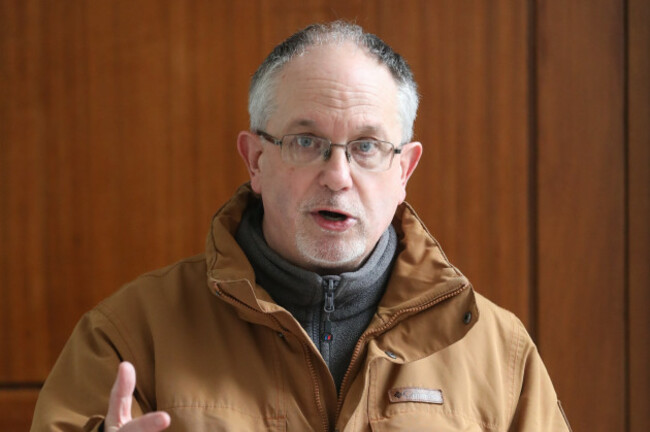
Iain McMenamin, professor of comparative politics at Dublin City University (DCU), told The Journal Investigates that in comparison to many other countries, Irish elections are not expensive.
Candidates in other countries can spend many magnitudes more than what is spent here, he said.
But even with this difference, McMenamin added, coming up with the money to run for a Dáil seat is exclusionary for some, particularly for younger people or those on lower incomes.
There are limits on the amount of money a candidate can spend, ranging from €38,900 in a 3-seat constituency to €58,350 in a 5-seat constituency.
Our investigation found that nobody spent outside of these limits, but this doesn’t mean that some didn’t have to spend a lot more than others.
Seven candidates who were elected spent over €35,000 on their election campaign, with three spending over €40,000.
People Before Profit – Solidarity’s Ruth Coppinger spent the most money of any candidate elected – a massive €46,186.
Fianna Fáil’s Jennifer Murnane O’Connor (€44,009) and Fine Gael’s Emer Currie (€42,709) spent similar amounts, with Currie standing in the same constituency as Coppinger – Dublin West.
Fellow Dublin West constituency colleague, Fianna Fáil’s Jack Chambers, rounds out the seventh highest spend with €35,144.
This highly competitive constituency saw huge amounts of money being spent by candidates.
Green Party leader Roderic O’Gorman took the last seat in the constituency and the sole seat for his party having spent €33,172.
But others who also spent huge amounts missed out, demonstrating how it’s not just about how much you spend.
Labour’s John Walsh, for example, spent just over €35,000 but didn’t return with a Dáil seat.
Successful candidates in other constituencies that spent a significant amount of money include Labour’s Marie Sherlock in Dublin Central (€37,932), Fianna Fáil’s Michael Cahill in Kerry (€36,420) and Fine Gael’s John Clendennen in Offaly (€35,543).
Even though some may feel excluded from being able to run for office due to the lack of funding or political support, McMenamin said that it would be difficult to reduce the cost of elections further, adding:
It’s very hard to imagine a situation where we wouldn’t allow people to spend money on elections.
While some spent huge amounts on their election campaign, others were able to avoid breaking the bank.
As mentioned, 14 candidates spent less than €11,200 and got all of their money refunded, but eight of those actually spent less than €10,000 in total.
Sinn Féin dominates this list, with the five lowest spenders coming from the party.
Only independent Paul Gogarty (€9,130) and Fianna Fáil’s Willie O’Dea (€9,357) were able to make the low-spending cut outside of Sinn Féin.
The shrewd spending is best exemplified by Sinn Féin’s Dessie Ellis, who is the only elected candidate to spend less than €5,000.
Re-using surplus posters and dividing up the electoral area with the fellow Sinn Féin candidates is the secret to success, the Dublin North-West TD told The Journal Investigates.
“I had most of the stuff in place, all the posters we had were ready to go,” he said, adding that his position as an incumbent helped in this regard.
Ellis also said that his team doesn’t hire people to deliver leaflets and put up posters, unlike many others who can spend thousands on this service alone. Instead, they rely on an army of volunteers or party staff to help.
Between candidates and national party spending, Sinn Féin spent the third-highest amount of all the parties, coming in at just over €980,000.
This is significantly less than the government parties Fine Gael and Fianna Fáil, who spent €2.6 million and €2.2 million, respectively.
Both Fine Gael and Fianna Fáil ran a handful more candidates than Sinn Féin in the last election, and the reports for four Sinn Féin candidates have yet to be uploaded by Sipo.
But even with these differences, it’s clear that Sinn Féin are capable of achieving electoral success while also spending substantially less than the two other main parties.
“Sinn Féin tends to have more committed activists,” Dr Eoin O’Malley, associate professor in political science at DCU, told The Journal Investigates.
Because of this, O’Malley explains, they may avoid having to pay others to put up posters or pay for a commercial leaflet drop.
“Sinn Féin have more access to volunteers, which enables them to do it on more of a shoestring budget,” he said.
While our findings suggest a correlation between the amount of money spent and electoral success, it won’t guarantee you a seat in the Dáil.
Plenty of candidates spent huge money on their campaign, only to leave the count centre unsuccessful.
Labour’s Laura Harmon spent over €42,000 in Cork South-Central before falling well short of gaining a seat.
North of the River Lee, incumbent People Before Profit–Solidarity TD Mick Barry came just 35 votes short of retaining his seat in Cork North-Central after spending €37,624 during the campaign.
Both Harmon and Barry received a refund of €11,200 for their expenses after reaching 25% of the quota, but others weren’t so lucky.
Former Minister and Fine Gael TD Alan Shatter ran as an independent candidate in Dublin Rathdown, spending almost €35,000 in the process.
But he failed to reach the threshold for a refund, leaving him completely out of pocket.
Under new rules introduced for the 2024 general election, political parties lose half of their state funding if less than 40% of their candidates are women.
This resulted in 250 women standing for election, with a historic 44 elected to the Dáil.
Analysis of election expenses shows that, overall, men and women who were elected spent roughly the same amount of money, with slightly more spent by women candidates.
The same was true for elected incumbents, with just an €877 difference spent between men and women on average.
Brian Sheehan, chief executive officer for Women for Election, told The Journal Investigates that the data shows when you create an environment for women in politics, there isn’t much of a difference in how much it costs to get them elected.
“Cash has been a particular challenge for women,” Sheehan adds, explaining that, among other things, additional childcare costs are not allowed as election expenses.
“So it is good to see that the cash from the election campaign is lessening as a differential.”
Sheehan said that the absence of women from local government inhibits them from raising the money to fight general election campaigns.
But while money helps, it isn’t the only barrier for more women entering politics, with childcare, women’s confidence that they can succeed in politics, political culture still being dominated by men and candidate selection also cited by Sheehan as issues.
DCU’s McMenamin agrees that money is not the determining factor for Dáil elections, saying that if you are passionate about running, then joining a political party, becoming well known in a community and knocking on doors is the most obvious thing to do.
“We’re in a great situation that they’re the things which seem to get you elected,” he added.
With additional reporting from Concubhar Ó Liatháin.
Reporters & Data Analysis: Conor O’Carroll & Maria Delaney • Editor: Noel Baker • Social Media: Cliodhna Travers • Main Image Design: Lorcan O’Reilly

To embed this post, copy the code below on your site










have your say