Sign in. It’s quick, free and it’s up to you.
An account is an optional way to support the work we do. Find out more.
Sign in. It’s quick, free and it’s up to you.
An account is an optional way to support the work we do. Find out more.
LAST UPDATE | 8 May
DONALD TRUMP HAS said the ceasefire between the US and Iran is still in place after both sides exchanged fire in the Strait of Hormuz on Thursday night.
It was not clear who fired first. The US accused Iran of launching “unprovoked” attacks on American naval vessels, after Tehran claimed Washington had violated the fragile ceasefire by striking Iran-linked ships.
US Central Command (CENTCOM) said American forces intercepted Iranian missiles, drones and small boats during a naval transit operation through the strategic waterway.
In a statement, CENTCOM said US Navy guided-missile destroyers USS Truxtun, USS Rafael Peralta and USS Mason were travelling through the Strait of Hormuz towards the Gulf of Oman when they came under attack.
“Iranian forces launched multiple missiles, drones and small boats” during the transit, the statement said, adding that “no US assets were struck”.
CENTCOM said US forces responded with “self-defence strikes”, targeting Iranian military facilities allegedly involved in the attacks, including missile and drone launch sites, command centres and intelligence infrastructure.
“CENTCOM does not seek escalation but remains positioned and ready to protect American forces,” the statement added.
Earlier, Iran’s central military command, Khatam Al Anbiya, accused the United States of violating the ceasefire by attacking vessels near the Strait of Hormuz and carrying out strikes in southern Iran.
Iran claimed the US had “targeted an Iranian oil tanker moving from the coastal waters of Iran in the Jask region towards the Strait of Hormuz, as well as another ship entering the Strait of Hormuz opposite the port of Fujairah, UAE”.
In a statement carried by Iranian state television, Tehran also accused Washington of carrying out strikes “in cooperation with some countries in the region”.
It said Iranian forces had “immediately and in retaliation attacked American military vessels”.
The United Arab Emirates said that its air defences were “engaging missile and drone attacks originating from Iran”.
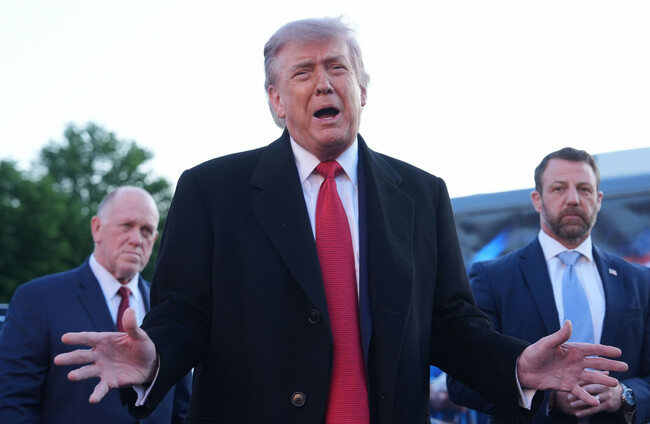
Asked in Washington if the Iran ceasefire was still on, Trump said: “Yeah, it is. They trifled with us today. We blew them away. They trifled. I call that a trifle.”
The US president this week fuelled hopes of a deal to end the war, saying an agreement could be near even as he again threatened to return to bombing if Tehran refused to back down.
He doubled down on that stance after the exchange of fire, posting on his Truth Social platform: “We’ll knock them out a lot harder, and a lot more violently, in the future, if they don’t get their Deal signed, FAST!”.
Iran’s foreign ministry spokesman Esmaeil Baqaei said Tehran would communicate its position to mediator Pakistan “after finalising its views.”
Pakistani prime minister Shehbaz Sharif had struck an optimistic tone before the exchanges of fire, saying in televised remarks: “I firmly believe that this ceasefire will turn into a long-term ceasefire.”
But, inside Iran, civilians were cynical.
“Neither side in these negotiations is really capable of reaching an agreement,” 42-year-old photographer Shervin told AFP reporters in Paris, messaging from Tehran.
“This is another one of Trump’s games; otherwise, why are so many warships and military forces being sent toward Iran?”
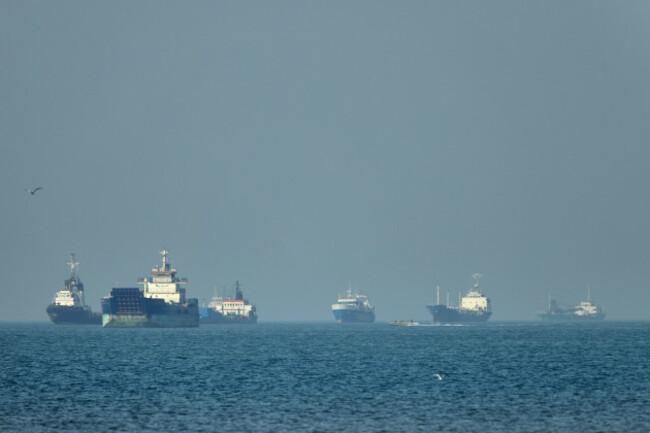
Following the start of the war with US-Israeli attacks on 28 February, Iran largely shuttered the Strait of Hormuz.
Around 1,500 ships and 20,000 international crew are now trapped in the Gulf region because of the conflict, the secretary-general of the UN’s International Maritime Organisation, Arsenio Dominguez, told a Maritime Convention of the Americas meeting in Panama.
He said the sailors were “innocent people who are doing their jobs every day for the benefit of other countries” but had become caught in geopolitical conflict beyond their control.
“Ten sailors have lost their lives” in more than 30 attacks on vessels, Dominguez added.
Before the exchange of fire, the US and its Gulf allies had pressed the UN Security Council to demand that Iran end its blockade of the Strait.
A draft resolution put forward by the US and Bahrain calls on Iran to halt attacks and threats against commercial vessels in the Strait of Hormuz.
The proposal also demands that Tehran stop charging tolls on vessels, disclose the locations of any naval mines and allow the creation of a humanitarian shipping corridor for fertiliser supplies amid fears of global food shortages.
However, diplomatic sources said Russia has warned it may veto the resolution.
US ambassador Mike Waltz said freedom of navigation was essential for global stability.
“We believe in some basic fundamental principles, namely the freedom of navigation for the entire world’s economies,” he said alongside representatives from Bahrain, Saudi Arabia, the UAE, Qatar and Kuwait.
“That’s what’s at stake here, nothing less than a cornerstone of worldwide stability and commerce.”
Iran’s UN ambassador Amir Saeid Iravani condemned the draft as a “flawed, politically motivated” proposal that would legitimise “unlawful actions” by Washington.
Before the conflict erupted, roughly a fifth of the world’s oil and gas supplies passed through the Strait of Hormuz. The disruption has triggered a sharp rise in global energy prices.
Additional reporting from AFP

To embed this post, copy the code below on your site














have your say