We need your help now

Support from readers like you keeps The Journal open.

You are visiting us because we have something you value. Independent, unbiased news that tells the truth. Advertising revenue goes some way to support our mission, but this year it has not been enough.

If you've seen value in our reporting, please contribute what you can, so we can continue to produce accurate and meaningful journalism. For everyone who needs it.

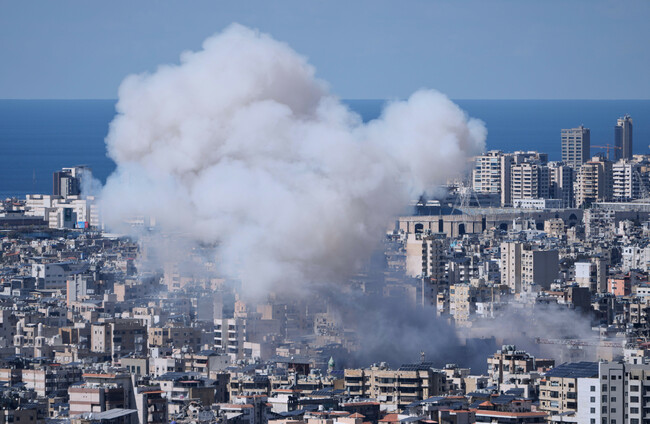
Smoke rises following an Israeli airstrike in Dahiyeh, Beirut's southern suburbs, Lebanon today Alamy Stock Photo

Nato defence systems intercept Iranian ballistic missile over Turkey as US-Israeli war on Iran rages

Iran’s health ministry said at least 1,200 civilians have been killed and around 10,000 wounded.

LAST UPDATE | 9 Mar

NATO AIR DEFENCE systems intercepted a ballistic missile in Turkish airspace today, which the country’s defence ministry said was fired from Iran. 

It is the second time the millitary alliance’s missile defence system has been deployed since the beginning of the US-Israeli war against Iran.

“A ballistic munition launched from Iran and entering Turkish airspace was neutralised by NATO air and missile defence assets in the eastern Mediterranean,” the defence ministry said in a statement.

Some fragments from the weaponry fell in open territory in the southern Gaziantep area, causing no injuries, the ministry added.

“Nato has again intercepted a missile heading to Türkiye,” Nato spokesperson Allison Hart posted on X, using the country’s official name. “Nato stands firm in its readiness to defend all Allies against any threat,” she added.

So far, Turkey appears to have spared the same level of Iranian retaliation visited upon other US allies in the Middle East, despite the fact that American troops are stationed at several of its bases.

One is Incirlik air base, an important NATO facility that has been used by US troops for decades which is located just 10 kilometres outside the city of Adana.

In a post on X, presidential communications chief Burhanettin Duran said Turkey would not hesitate to protect its airspace and border security.

“We once again strongly reiterate our warning to all parties, particularly Iran, to refrain from actions that could endanger regional security and put civilians at risk,” he wrote.

No end in sight

The multi-front war has continued to rage today and, in a sign that the violence is unlikely to abait anytime soon, the United States has now urged its citizens to leave south-eastern Turkey. 

The US embassy in Turkey has also advised non-essential staff and their families to leave its consulate near the southern Turkish city of Adana, close to Incirlik air base. 

In another sign that the US does not expect a quick end to the war, which President Donald Trump initially speculated would last four to five weeks, the US State Department ordered non-emergency staff to leave Saudi Arabia, days after a drone hit the US embassy there.

Trump told the Times of Israel that any decision on when to end hostilities will be a joint one with Israel’s Prime Minister Benjamin Netanyahu.

“I think it’s mutual… a little bit. We’ve been talking. I’ll make a decision at the right time, but everything’s going to be taken into account,” Trump said, in response to a question on whether he alone will decide. 

US justifications and stated war aims have been fluid and inconsitent since the aerial assault on Iran began on 28 February, making it difficult to guage how long the conflict is likely to last.  

New Ayatollah 

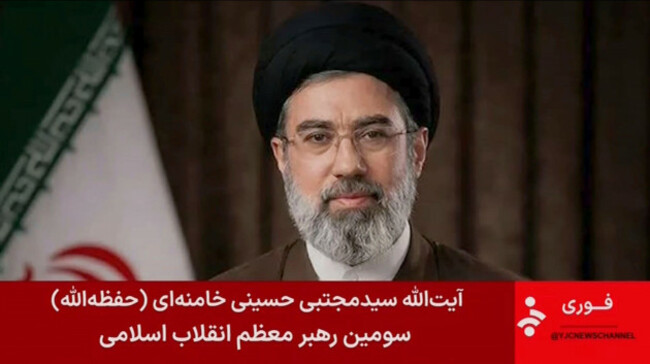
Iran fired more missiles at Israel and Gulf nations today after the Islamic Republic named Mojtaba Khamenei its new leader to succeed his late father, despite threats by the United States and Israel to target him next.

Nine days after US-Israeli strikes killed Ayatollah Ali Khamenei and plunged the Middle East into war, Iranian clerics picked the country’s third supreme leader since the 1979 Islamic Revolution.

Israel launched a new wave of strikes, this time targeting infrastructure in central Iran, as the expanding war sent stocks plunging and crude prices surging 30% on supply disruption fears.

Saudi Arabia intercepted drones headed for an eastern oil field, while the United Arab Emirates and Kuwait reported missile attacks and Bahrain said sirens were activated.

Khamenei’s appointment was announced on Iranian state television, with the presenter solemnly reading a statement from the 88-member Assembly of Experts next to a picture of the new 56-year-old leader.

this-image-taken-from-video-provided-by-iran-state-tv-shows-mojtaba-khamenei-a-son-of-irans-slain-supreme-leader-who-has-been-named-as-the-islamic-republics-next-ruler-authorities-announced-monda Image taken Iran state TV shows Mojtaba Khamenei, who has been named as the Islamic Republic's next ruler Alamy Stock Photo Alamy Stock Photo

The statement said the clerical body “did not hesitate for a minute” in choosing a new leader despite “the brutal aggression of the criminal America and the evil Zionist regime”.

State media then showed a projectile said to be launched at Israel bearing the slogan, “At Your Command, Sayyid Mojtaba”, using an Islamic honorific.

The war came weeks after Iranian security forces crushed nationwide protests against the government, killing thousands. The younger Khamenei is considered a fellow hardliner who will pursue his father’s rejection of dissent.

US President Donald Trump had previously dismissed the Mojtaba Khamenei as a “lightweight”, and insisted again yesterday that he should have a say in appointing a new leader.

“If he doesn’t get approval from us he’s not going to last long,” he told ABC News before the announcement was made.

Israel’s defence minister warned last week that the new supreme leader would become “a target”, while the Israeli military vowed to go after any successor.

Few expect major changes under the younger Khamenei, a trained cleric close to Iran’s powerful military force the Islamic Revolutionary Guard Corps.

The Guards quickly pledged support for the new leader, who comes into the role with far less experience than his father – a former president under the first supreme leader, Ayatollah Ruhollah Khomeini.

The Guards said in a statement they were “ready for complete obedience and self-sacrifice in carrying out the divine commands” of the new leader.

Foreign Minister Abbas Araghchi said the naming of the new leader will “guarantee national sovereignty and territorial integrity” as he led Iranian diplomats in declaring “our allegiance” to Khamenei.

Hezbollah in Lebanon also pledged their allegiance today. 

Oil price spikes

As Iran retaliates against its oil-rich Gulf Arab neighbours, the benchmark price for a barrel of crude soared beyond $100 for the first time since Russia’s invasion of Ukraine four years ago.

Trump dismissed the price spike, a politically sensitive issue in the US, as a “small price to pay” for removing the alleged threat of Iran’s nuclear programme.

But markets across Asia, where key economies Japan and South Korea are heavily dependent on energy imports, plunged today.

A European Commission spokeswoman insisted there was “no imminent oil supply shortage” in Europe.

‘Fierce clashes’

The multi-front war intensified in Lebanon today, with Hezbollah saying they were engaging Israeli forces who landed in eastern Lebanon on 15 helicopters across the Syrian border.

Lebanon was drawn into the Middle East war last week when Hezbollah attacked Israel in response to the killing of Ali Khamenei.

Hezbollah said its fighters “engaged the helicopters and the infiltrating force with appropriate weapons, and the confrontation” was ongoing.

Lebanon’s state-run National News Agency earlier reported “fierce clashes” around the town of Nabi Sheet, where an Israeli operation over the weekend killed 41 people.

Israel struck a hotel in central Beirut yesterday, targeting five commanders of the Revolutionary Guards’ international Qods Force, the patron of Hezbollah.

Lebanon’s health ministry said four people died and 10 others were injured in the Beirut strike.

Lebanon’s health minister said Israeli strikes have killed at least 394 people since the start of the war, including 83 children and 42 women. More than half a million people have been internally displaced by the violence, Lebanon’s minister for social affairs said yesterday. 

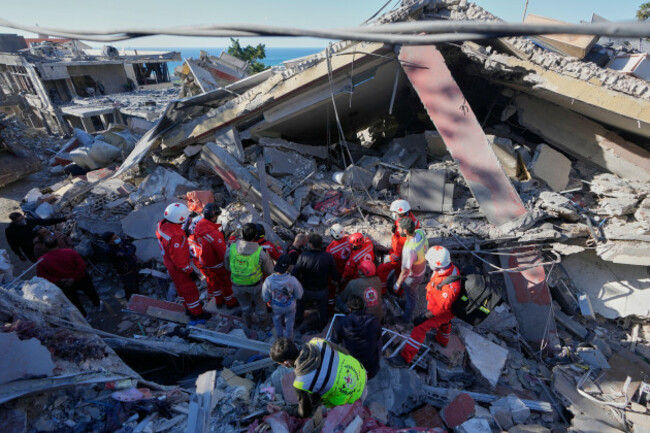
rescue-workers-search-for-victims-at-a-destroyed-building-that-was-hit-by-an-israeli-airstrike-in-ghaziyeh-town-south-lebanon-sunday-march-8-2026-ap-photomohammed-zaatari Rescue workers search for victims at destroyed building hit by Israeli airstrike in Ghaziyeh town, south Lebanon, yesterday Alamy Stock Photo Alamy Stock Photo

In Bahrain, the health ministry reported 32 people wounded overnight by an Iranian drone attack on the island of Sitra.

The wounded include a 17-year-old girl who suffered severe head and eye injuries, and a two-month-old baby, according to the ministry.

Saudi Arabia said yesterday that two people were killed and 12 wounded as a projectile landed in Al-Kharj province.

Iran’s health ministry said yesterday that at least 1,200 civilians had been killed and around 10,000 wounded.

In Israel, Iranian missile attacks have killed 10 people, according to authorities. Two soldiers were killed in Lebanon, the military said.

White phosphorous 

Human Rights Watch has Israeli forces last week fired white phosphorous, a deadly incendiary substance, over a residential area in southern Lebanon.  

“The Israeli military unlawfully used artillery-fired white phosphorus munitions over homes on 3 March 2026, in the southern Lebanese town of Yohmor,” the New York-based rights group said in a report.

White phosphorous can be used legally to create smokescreens or to illuminate battlefields from above. 

When used as a weapon, however, it can result in horrific burn injuries (far worse than normal) as well as the destruction of agricultural land and buildings.  

“The Israeli military’s unlawful use of white phosphorus over residential areas is extremely alarming and will have dire consequences for civilians,” said Ramzi Kaiss, Lebanon researcher at HRW.

“The incendiary effects of white phosphorous can cause death or cruel injuries that result in lifelong suffering.” 

HRW added that it had “verified and geolocated seven images showing airburst white phosphorus munitions being deployed over a residential part of the town and civil defence workers responding to fires in at least two homes and one car in that area”.

In response, the Israeli military said it “is currently unaware and cannot confirm use of shells that contain white phosphorus in Lebanon as claimed.”

The army said its policy was not to use shells containing white phosphorus “in densely populated areas, with certain exceptions.”

With reporting from AFP

Need more clarity and context on what is happening in the Middle East? Check out our FactCheck Knowledge Bank for essential reads and guides to finding good information online.

Readers like you are keeping these stories free for everyone...
A mix of advertising and supporting contributions helps keep paywalls away from valuable information like this article. Over 5,000 readers like you have already stepped up and support us with a monthly payment or a once-off donation.

Close
50 Comments
This is YOUR comments community. Stay civil, stay constructive, stay on topic. Please familiarise yourself with our comments policy here before taking part.
Leave a Comment
    Submit a report
    Please help us understand how this comment violates our community guidelines.
    Thank you for the feedback
    Your feedback has been sent to our team for review.

    Leave a commentcancel

     
    JournalTv
    News in 60 seconds