We need your help now

Support from readers like you keeps The Journal open.

You are visiting us because we have something you value. Independent, unbiased news that tells the truth. Advertising revenue goes some way to support our mission, but this year it has not been enough.

If you've seen value in our reporting, please contribute what you can, so we can continue to produce accurate and meaningful journalism. For everyone who needs it.

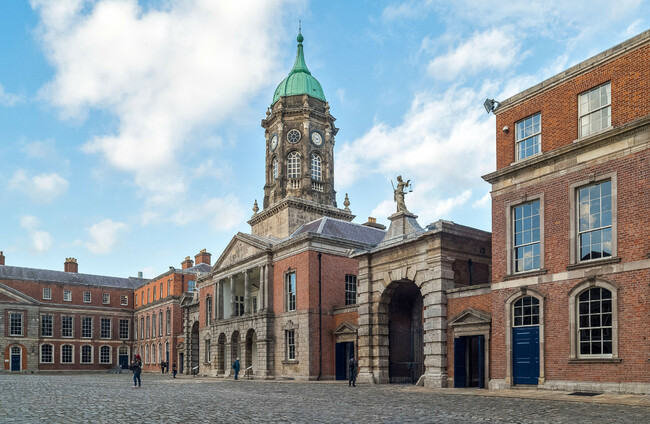
The National Economic Dialogue is taking place at Dublin Castle this morning. Alamy Stock Photo

The Irish Congress of Trade Unions wants the government to move away from corporation tax

The National Economic Dialogue is taking place at Dublin Castle this morning.

THE IRISH CONGRESS of Trade Unions has called on the Government to end the “over-dependence” on corporation tax receipts ahead of the today’s National Economic Dialogue. 

The National Economic Dialogue is taking place at Dublin Castle this morning. 

The congress (ICTU), which represents over 800,000 workers across Ireland, said that the country’s current economic model is “unsustainable” and called on the Government to use Budget 2026 to put the economy on a “firmer footing”.

Last week, the Irish Fiscal Advisory Council echoed similar sentiments. Launching its Fiscal Assessment Report, the Council’s chair warned of the current volatility of Ireland’s longtime reliance on corporation tax as uncertainty arises from mooted tariffs from the US and further trade tensions.

The ICTU urged Cabinet to build a new economic model that can deliver “good jobs, improved living standards, and sustained growth”.

Its General Secretary Owen Reidy said that the government needs to end its reliance on the “sugar rush” of corporation tax windfalls and start serious planning for the longer term. 

Corporation tax is likely to be higher than forecast over the rest of the year, IFAC’s latest report found. This has been put down to BEPS reforms that mean groups with a turnover of over €750m will pay a 15% minimum rate of tax in every jurisdiction in which they operate. However, there is further uncertainty regarding the future of multinationals in Ireland. 

The IFAC has been unable to construct a medium-term forecast due to the department’s failure to turn over spending profiles, as well as the government’s refusal to commit to a fiscal rule, its chair Seamus Coffey told reporters last week. He said that this highlights that there is no medium-term plan or strategy apparent. 

Reidy today said that Ireland is facing “significant wage inequality” alongside “major infrastructure deficits”. 

“Budget 2026 must mark a turning point by giving certainty and security to workers across Ireland. That means good jobs that pay well, a decent standard of living, as well as stronger public services. But it should also mean a shift in our economic model.

“In the coming weeks, the Irish Congress of Trade Unions will be setting out how we believe that can be achieved through a New Economic Model, and today at the National Economic Dialogue we will be bringing that message to Ministers,” he said.

Readers like you are keeping these stories free for everyone...
A mix of advertising and supporting contributions helps keep paywalls away from valuable information like this article. Over 5,000 readers like you have already stepped up and support us with a monthly payment or a once-off donation.

View 39 comments
Close
39 Comments
This is YOUR comments community. Stay civil, stay constructive, stay on topic. Please familiarise yourself with our comments policy here before taking part.
Leave a Comment
    Submit a report
    Please help us understand how this comment violates our community guidelines.
    Thank you for the feedback
    Your feedback has been sent to our team for review.

    Leave a commentcancel

     
    JournalTv
    News in 60 seconds