Sign in. It’s quick, free and it’s up to you.
An account is an optional way to support the work we do. Find out more.
Sign in. It’s quick, free and it’s up to you.
An account is an optional way to support the work we do. Find out more.
LAST UPDATE | 12 May

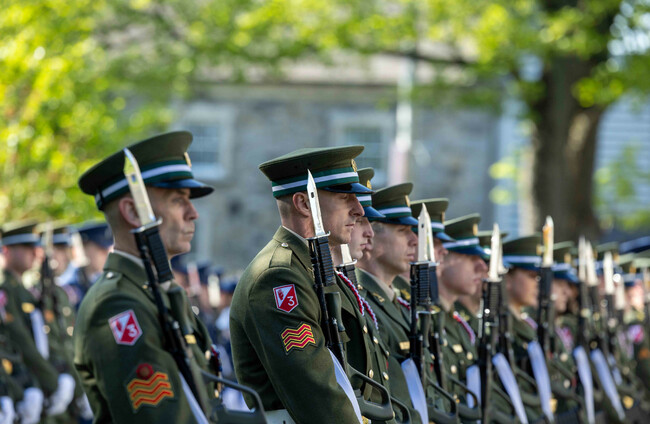
IRISH MILITARY PERSONNEL are “frustrated” by a government refusal to pay them €3.7 million in owed allowances, despite an agreement in negotiations.
The annual delegate conference of PDFORRA, which represents non-commissioned ranks in the Irish Defence Forces, will begin today in Mayo.
The event will see more than 100 delegates from 40 separate districts across the army, navy and Air Corps gather to discuss issues facing military personnel.
Martin Bright, deputy general secretary of the group, said that it impacts 6,369 soldiers, sailors and aircrew and some are owed as much as €5,000 for allowances agreed in negotiations known as “local bargaining”.
He said that PDFORRA has carried out extensive work in submitting claims for these payments but that the Department of Public Expenditure (DPER) has failed to give the go ahead to pay the claims.
“I would have to recognise the assistance from the Department of Defence and military management, but it is very disappointing and impacting on morale in the Defence Forces is that none of these claims have been paid,” he said.
Bright said that the system means that PDFORRA send their requests through military and defence officials. They are then responded to by DPER but that it is proving “extremely slow”.
“It is not only frustrating on our members, it is impacting on morale. I know of one claim, which is a retention claim for members of the Naval Service, and because it hasn’t come I know senior members down there are taking up civilian employment.
“We have lost that corporate knowledge because of these delays,” he said.
Bright said there is no explanation from the government as to why they are delaying making the payments. He said it is time for PDFORRA to join other groups, such as the Garda Representative Association (GRA), in challenging the public expenditure minister, Jack Chambers, directly.
“I have watched with great interest as the GRA and Prison Officers Association have called on Minister Chambers to release those monies. Today there’s overwhelming support from our members here, and we request the same, we want our Minister [Helen McEntee] to engage with Minister Chambers and release these monies.
“It will help in retention, it will keep people in their jobs. Remember we’re in a cost of living crisis and anything that would keep people in their jobs and ease some of the burden has to be positive,” he added.
Araon Kearney, president of PDFORRA, said that while some positives have happened in recent years, the shortfall in numbers in the Irish Defence Forces is still having a profound impact.
“While advances had been made by PDFORRA in recent years regarding the application of the Working Time Directive, pay, contracts and healthcare were more than needed. Years of underinvestment in the Defence Forces has resulted in astronomically high vacancy numbers that are only beginning to be filled now.
“All this is being done against a backdrop of increasing establishments from recommendations in the Commission on the Defence Forces report, which, in real terms, means that numbers are only staying static,” he said.
Establishments are the level of personnel needed to complete a unit’s taskings – these are agreed figures with the Department of Defence. The Irish Defence Forces, if it follows the recommendations of the Commission, needs 11,500 members.
Kearney, who is a soldier based in Collins Barracks in Cork, said that there are more than 70 motions to be discussed.
These include calls for greater implementation of agreements on the Working Time Act, which governs the amount of time employees can work before needing rest periods and leave.
They will also look at special payments for members to compensate them when staffing levels fall below 70%.
PDFORRA is also to call for the implementation of key findings of the European Social Rights Committee (ECSR), which found that Ireland had breached the European Social Charter in regard to the workplace conditions of Irish Defence Forces personnel.
The ECSR published its decision in February on the complaint submitted by the European Organisation of Military Associations and Trade Unions (Euromil). Euromil, a military industrial relations body, took the action following representations by groups here in Ireland – enlisted ranks body PDFORRA and the Representative Association of Commissioned Officers (RACO).
The group alleged that Ireland does not comply with several provisions of the revised European Social Charter, namely the right to just conditions of work and the right to fair remuneration.
The issue centres on the refusal by the State to pay overtime to military personnel and remuneration for work on public holidays and extended duty periods.
Kearney said that Minister for Defence Helen McEntee will speak at the event on Wednesday. He said that there will also be meetings with officials from the Departments of Defence and Public Expenditure.

To embed this post, copy the code below on your site













have your say