Sign in. It’s quick, free and it’s up to you.
An account is an optional way to support the work we do. Find out more.
Sign in. It’s quick, free and it’s up to you.
An account is an optional way to support the work we do. Find out more.
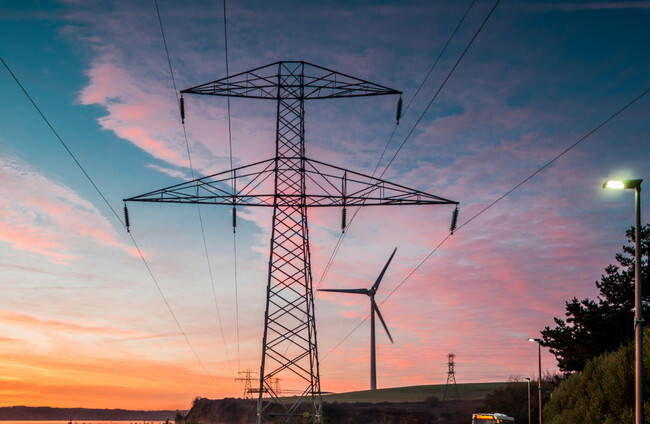
IRISH HOUSEHOLDS ARE currently paying the third-highest costs in Europe for electricity.
A recent Eurostat study found that Irish household customers are paying approximately 30% more (around €347 more) per year for electricity than the average EU home.
For electricity costs, Germany is the costliest, followed by Denmark and then Ireland, according to Eurostat data.
Prices are also much higher in Ireland than those in non-EU countries such as Iceland and Norway.
Estimated annual bills in Ireland remain 61% higher for electricity and 90% higher for gas than they were before the steep rise in energy prices that began in December 2020.
According to comparison site Selectra, the average annual electricity cost for Irish homeowners is €1,556.
Gas prices in Ireland are also elevated, ranking as the sixth highest in the EU, at nearly 10% above the EU average.
This means Irish households are paying around €125 more per year for their gas compared to other EU countries.
Daragh Cassidy, Head of Communications for Bonkers.ie, said that the latest figures “aren’t surprising”.
“We’ve a relatively small and dispersed population with too much one-off housing so the costs for the upkeep of our electricity network are very high on a per capita basis,” Cassidy said.
He added that the rapid growth of the population here and the increase in the number of data centres in recent years also “hasn’t helped”.
According to the latest CSO data, data centres consume over a fifth (21%) of all electricity in Ireland.
“This is putting pressure on the grid. And in recent years we’ve had to procure high cost, high emission, emergency gas generation to plug the gap between electricity demand and supply,” Cassidy explained.
Ireland also has a “weakly connected grid”, according to Cassidy, who said that the country is “quite isolated” – meaning that Ireland can’t import a huge amount of cheaper electricity from abroad.
“Though the interconnector we’re building with France will hopefully improve things when it comes online in 2027 as it will allow us to tap into generally cheaper French electricity,” Cassidy said.

To embed this post, copy the code below on your site













have your say