Sign in. It’s quick, free and it’s up to you.
An account is an optional way to support the work we do. Find out more.
Sign in. It’s quick, free and it’s up to you.
An account is an optional way to support the work we do. Find out more.
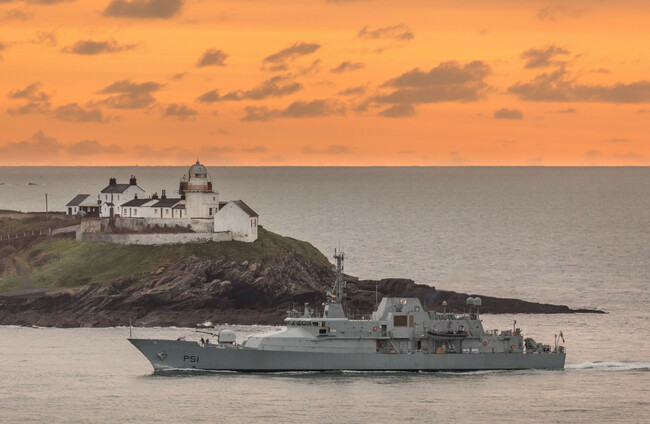
IRISH NEUTRALITY WOULD not be a factor if another country were to target undersea cables off the coast due to their wider international importance, a European hybrid threat body has said.
Hybrid threats are defined as both military and non-military, as well as covert and overt means, including the spreading of disinformation, cyber attacks and economic pressure designed by a foreign actor to threaten a state.
The European Centre of Excellence for Countering Hybrid Threats, of which Ireland has been a member since January, was set up in 2017 and initially had only nine members, who were either EU or NATO members.
Jori Arvonen, head of the Centre’s Steering Group, said that the importance of undersea cables and pipelines was not just to the benefit of Ireland, but that they had international importance
“I believe that the importance of undersea technology is not only important for Ireland, they have a wider international importance,” Arvonen said.
“So from that angle only, neutrality is not relevant.”
It comes after a major operation was launched in the Irish Sea by the Defence Forces last October to protect undersea cables and pipelines, following the attack on the Nord Stream pipeline last year.
Ireland’s undersea cables and pipelines include two natural gas interconnectors that connect Ireland to a supply hub in Scotland. In addition, there is an electricity cable running between the Welsh and Irish coastline.
There are also several undersea internet cables on the west coast of Ireland.
Arvonen told reporters that in Finland, which was previously non-aligned, that the country took all threats to critical infrastructure seriously.
“I come from a country that was for a long time non-allied and before joining NATO, we very much saw threats on our critical infrastructure and on critical infrastructure on other non-allied countries.”
Arvonen said that since the Russian invasion of Georgia in 2008, there had been rising hybrid threat risks from Russia. He added that Russia and China were the primary concern for cyber attacks.
He said that Ireland is now becoming more prepared to deal with cyber attacks, following attacks against the HSE in recent years.
Arvonen added that other European countries would be able to learn from Ireland on countering cyber threats.
Asked about the potential risks due to the high number of tech firms based in Ireland, Arvonen said that this may draw attention from actors seeking to influence Ireland.
“I would say that the presence of technology companies that you have, providing employment and so on, is something that may draw attention by those who want to influence directly Ireland or some other entities.
However, he said that Ireland is becoming more prepared similarly to the rest of Europe but that there may be a lack of public awareness of threats.
“In many countries, we have a situation where the public awareness still needs to be worked on, increased to understand what kind of new threats – if you want to call them new threats – there are and what does it mean.”
Additional reporting by Niall O’Connor

To embed this post, copy the code below on your site















have your say