Sign in. It’s quick, free and it’s up to you.
An account is an optional way to support the work we do. Find out more.
Sign in. It’s quick, free and it’s up to you.
An account is an optional way to support the work we do. Find out more.
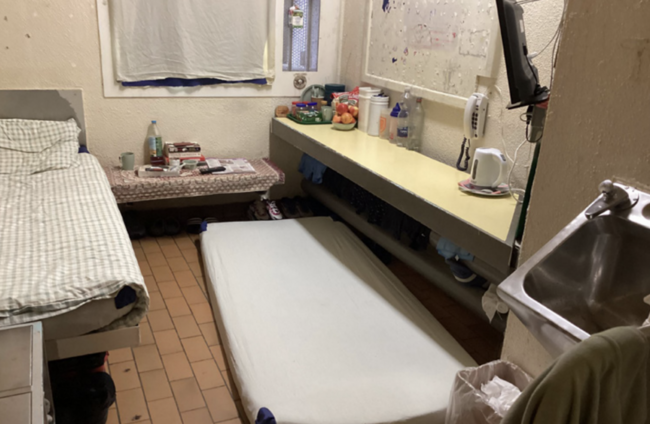
CONDITIONS IN IRISH prisons are a “national disgrace”, the sector’s watchdog said in its annual report today, adding that the Irish Prison Service (IPS) is “marred” by attempts to “impose constraints” during a watchdog inspection near the end of last year.
The Office of the Inspector of Prisons (OIP) released its report for 2025, which examines conditions and deaths in custody in the 13 prisons in Ireland. It also contains actions taken by the OIP at a national and European level.
Its report today highlights the “worsening conditions” that have “triggered national and international concern”.
In comments accompanying the 62-page report, the chief inspector of prisons Mark Kelly said there are 5,817 people in prison today, with 520 sleeping on mattresses on the floor in overcrowded cells, next to unpartitioned toilets.
He described this as a national disgrace.
Kelly also hit out at successive ministers for justice, saying, “we have yet to see a minister grasp the nettle of resolving the crisis engulfing the prison system with the requisite degree of bold political action”.
In the report, it is recorded that the inspectorate “enjoyed the usual excellent level of cooperation” from the IPS during inspections of Mountjoy, Castlerea, and Wheatfield prisons.
“Unfortunately, towards the end of 2025, the unblemished cooperation record of the Irish Prison Service was marred by attempts to impose constraints on the OIP’s operational autonomy during an announced thematic inspection of the treatment of older people living in prison.”
Inspectors attended Midlands Prison, Dóchas Centre, and the Training Unit to carry out the inspection.
In the report, it said: “Following attempts to interfere with the operational autonomy of the inspection team at Midlands Prison on 13 and 14 November 2025, the Chief Inspector of Prisons wrote to the Governor of the Midlands Prison and the Director General of the Irish Prison Service.
“Further attempts were made to interfere with the operational autonomy of the inspection team in the Dóchas Centre on 18 November 2025 resulting in the issuance a Statutory Notice of Concern by the Chief Inspector of Prisons.
“Despite a meeting at IPS Headquarters with the Director General and her team, as well as an extensive exchange of correspondence, this regrettable situation remained unresolved at year end”.
These attempts led to the suspension of that inspection, the OIP said, and Kelly issued a statutory notice of concern to the IPS’ director general.
Kelly said: “Until very recently, my Office has enjoyed excellent cooperation from the Irish Prison Service, as is required by the Prisons Act, including unfettered access to all parts of all prisons.
“I am confident that this little local difficulty will be resolved through mature dialogue with the director general of the IPS in advance of our next unannounced inspection.”
Within the body of the report, Kelly said it is welcome that after a record number of 31 deaths in custody in 2024, this dropped to 14 last year. He noted however that there were eight deaths in the first three months of 2026.
In Mountjoy, the OIP said there were welcome improvements in a number of areas – but flagged concern over record-keeping.
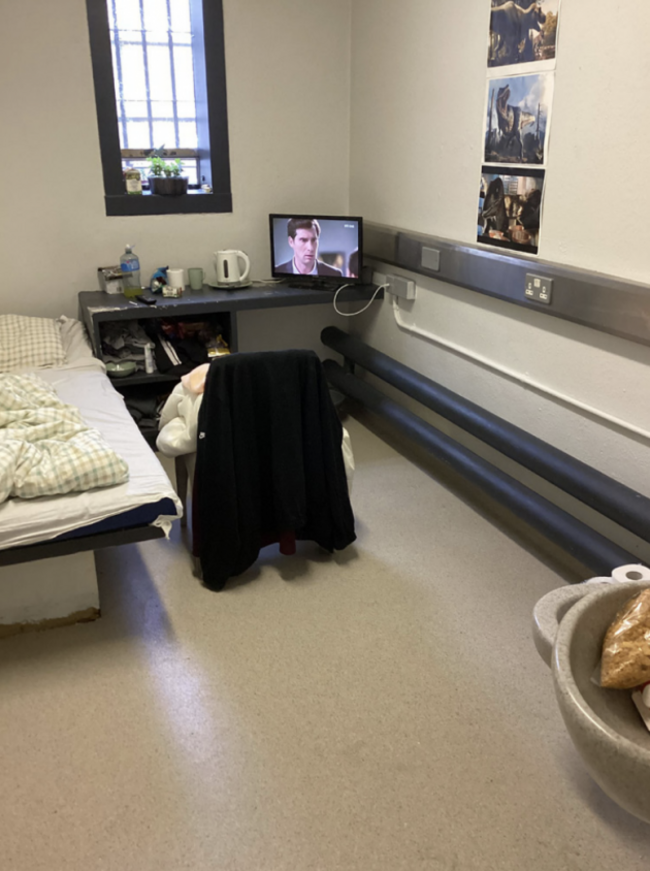
“Incidents in which prisoners had injured each other were being noted; however, incidents in which prisoners allegedly sustained serious injuries requiring hospitalisation at the hands of staff were not,” it said. “The level of detail in use of force and relocation recording required improvement.”
It also had concerns over the level of staffing of nurses at nighttime and addiction counsellors.
In Wheatfield Prison, a medium-security prison in Clondalkin, the level of violence at the prison was a concern to the OIP.
In the previous 12 months, there were 95 recorded prisoner-on-prisoner assaults and 11 recorded prisoner-on-staff assaults. Only 29% of people who took part in the Inspectorate’s survey reported that they felt safe in the prison (68 of 235).
For people living in the old part of the prison, there was very limited access to the prisoner complaints system as complaint boxes and forms were not available on landings.
Confidence in the complaints’ system was extremely low with just 4% (9 of 229) of prisoner respondents reporting that the system worked well.
The OIP noted that it was positive that all cells had in-cell phones, but said the six-minute cap on phone calls was too short, and it would continue to raise the issue with Wheatfield.
Disparity between living conditions in different parts of Castlerea Prison were noted in the report: a newer accommodations unit, the Grove Unit, provided single-occupancy cells, but there was “severe overcrowding” in divisions within the main prison, the OIP said.

There are nine showers to accommodate around 239 men in Division A, and 26 men were sleeping on the floor during the unannounced inspection.
The report noted that protected prisoners – prisoners who are kept isolated from the general population for their own safety – received between 15 and 75 minutes out of their cell daily.
The IPS said in a statement reacting to the report, and claims of interference, that it has engaged extensively and constructively with the OIP regarding safety documentation and operations arrangements on inspections.
It said it sought “clarity and assurance” regarding risk assessments, control measures, and safe systems of work.
“The Irish Prison Service rejects any suggestion that these engagements were intended to impede operational independence or oversight activity.
“At all times during the thematic inspections, Office of the Inspector of Prisons staff were facilitated in accessing prisons, prisoners, staff, operational areas and documentation. The operational arrangements implemented by Governors were intended solely to support safety and did not impede or restrict the Inspectorate in carrying out its statutory functions.”
It said it continues to engage with the OIP on the matter.

To embed this post, copy the code below on your site
















have your say