We need your help now

Support from readers like you keeps The Journal open.

You are visiting us because we have something you value. Independent, unbiased news that tells the truth. Advertising revenue goes some way to support our mission, but this year it has not been enough.

If you've seen value in our reporting, please contribute what you can, so we can continue to produce accurate and meaningful journalism. For everyone who needs it.


Collison on his business interview series 'Cheeky Pints'. Youtube

What Stripe's John Collison gets right - and wrong - about Ireland's infrastructure failures

A 2,500-word analysis by the tech billionaire has caused a stir in Irish political circles.

IT’S NOT EVERY day that a tech billionaire other than Elon Musk wades into Irish politics, so the intervention by Stripe co-founder John Collison has made a lot of people in political circles sit up and take note.

In his 2,500-word weekend essay in the Irish Times, Collison examined Ireland’s failings on housing and infrastructure.

The 35-year-old Co Limerick native, who set up payment technology firm Stripe with his brother Patrick in 2010, argued that over-regulation and a multiplication of State agencies and non-governmental organisations have resulted in crippling constraints on large-scale infrastructure projects.

The piece has stirred debate at the highest levels of Irish politics, with Tánaiste Simon Harris among those who applauded Collison for the “thought-provoking” analysis.

Following on from this, The Journal asked a number of experts in a range of fields what they made of Collison’s piece and whether it captures the problems facing Ireland.

Inertia in planning system

Collison listed off several infrastructure projects facing long delays, including a water supply plan linking Dublin to the Shannon, and the Greater Dublin Drainage Project.

Barra Roantree, Assistant Professor and Director of the MSc in Economic Policy, Department of Economics at Trinity College Dublin, told The Journal he broadly agreed with Collison’s assessment, particularly around the slow pace to get planning approval for largescale works.

While Ireland badly needs new infrastructure for the coming decades, the speed and scale needed is being made “impossible” by regulations that have grown over time, Roantree said.

Roantree cited the example of the Bus Connects rollout in Dublin.

“A key component is the construction of 12 bus corridors. These were initially announced in 2018 but have spent the last seven years crawling through a planning system that demands thousands of pages of reports on the potential environmental impact of each scheme,” he said.

As a result, the first bus corridor is not expected to be completed for another three years – a decade after it was first announced.

Boosting Cabinet to make decisions

One of the most significant calls Collison makes in his piece is about giving ministers more power to get big projects the required approval.  

Collison urged the Government to draw inspiration from Canada’s prime minister Mark Carney, who has introduced legislation granting himself and senior ministers the power to give big infrastructure projects every permit or licence they may need to get over the line.

This would steer big projects past any potential judicial reviews that are taken in the High Court, which add months if not years to a decision.

Emma Howard, an economist and lecturer at TU Dublin, said there is merit to this – but it still would need constraints.

“There are definitely cases where rebalancing individual rights against the greater good could be positive,” she said.

“But what do we want to push through? Is it data centres or the Dublin Metrolink,” she asked, outlining that the latter would help Ireland meet goals of reducing congestion and also emission targets.

“When you’re looking at things that are going to be environmentally damaging or are not going to improve lives beyond a specific sector or cohort, it’s harder to justify,” Howard said.

PastedImage-81505 Design for the Dublin Airport Metrolink station. Metrolink Metrolink

Despite having criticisms of the analysis, Michael Byrne, a lecturer in political economy in University College Dublin who publishes regularly on housing via Substack, also said that this proposal to empower Cabinet should be explored.

As the executive branch of Government, Byrne said it should have “the power to realise policy priorities in a relatively unobstructed” way.

“This is important to get things done, but also for political legitimacy,” Byrne argued.

Centralising decision making

Among Collison’s arguments, which are backed by a think-tank that he supports called Progress Ireland, are that “environmental goals have created stasis” and have stalled the delivery of critical infrastructure.

Concerns were raised by some of those we talked to about proposals to centralise powers, particularly over how they navigate legally binding climate goals.

Orla Hegarty, a lecturer in architecture at UCD, said there is a danger some of the changes being proposed would result in power located “in a few hands”.

“Are we to roll back to a time of quick windfall profits, with the true economic, social, and environmental costs being borne by others, and for decades after,” Hegarty asked.

Hegarty and Howard both pointed to a need to still abide by climate targets in any plans to develop housing and infrastructure.

A recent Climate Advisory Council report warned that Ireland could be looking at a bill of up to €26 billion if it fails to meet EU climate targets in the coming years.

“We can’t ignore our emission targets, economically as well as environmentally,” Howard said.

Opposition to big projects

Where does opposition to infrastructure come from?

Collison asserted that we don’t see big protests against new infrastructure projects or intense debate in council chambers.

Green Party councillor in Dún Laoghaire-Rathdown Lauren Tuite, who previously advised Eamon Ryan as Transport Minister, claimed this ignored how many of the issues that reach “fever pitch” at a local level are entirely about infrastructure.

She cited plans for cycling infrastructure in Deansgrange, Ballyfermot, Bray, Co Wicklow and Salthill, Co Galway that received strong push back by local opposition.

“I imagine it’s easy for tech billionaires to dismiss these local rows, but the manner in which politicians – local and national – respond to them, nurture them, inflame them, join them as co-litigants even, is instructive,” the Killiney-Shankill councillor said.

While Tuite believes Collison missed the mark on where responsibility on this lies, she added that she hopes his analysis will “encourage some reflection among representatives who have distilled a career for themselves out of local fury”.

Do politicians have their hands tied by agencies?

In Saturday’s piece, Collison claimed that politicians have their “hands tied to the mast when it comes to annual budgeting, which justifies the Irish Fiscal Advisory Council”, leaving the state “on auto-pilot” as a result.

Howard, who called the analysis “myopic”, said this failed to account of the many times in recent years that the Government chose to disregard the financial watchdog’s advice around annual budgeting.

She further contested Collison’s point that it’s not delegation of political responsibilities causing people to become disillusioned, but the “short-termism” of government decision-making.

“We are supposed to have five-year budget and spending plans but this has not happened. The updated National Development Plan had a real lack of detail where the Government didn’t talk about what the main priorities are.

Howard said the fear is that this because the final details will “based on horse trading around constituency priorities with Independent TDs supporting the Government.

“So we don’t have that national vision, it’s this patchwork of what’s politically popular and what’s politically viable.”

Struggles in Housing

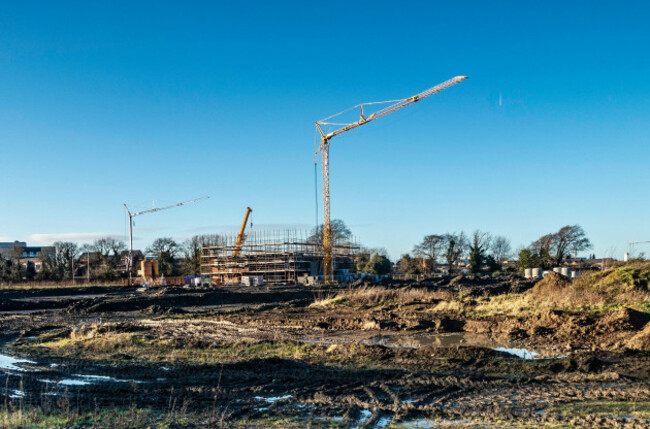
a-building-site-with-in-west-dublin-ireland-with-tower-cranes-and-building-framework-in-early-development-stage A building site with in west Dublin. Alamy Stock Photo Alamy Stock Photo

Collison’s piece discusses the Government’s housing struggles, noting how delays to expansions of Dublin’s water network may further limit future construction.

For Byrne, the lecturer in UCD, the analysis “ignores” critical reasons for the weaknesses in our housing system.

The “most important” of these is that Collison missed the impact of the 2008 financial crash and what that meant for building houses.

Byrne said this left us with insolvent banks, many bankrupt developers and a desperately weakened labour supply due to thousands of construction professionals emigrating.

“The State reduced social housing output by 90%,” Byrne noted as one of the results of the crash.

“In short, if we want to know why it’s hard to get things done, we should look to the consequences of the particularly feral form of financial capitalism which dominated politics and economics from the 1980s until the financial crisis,” Byrne said.

The main cause of weakened state capacity across advanced economies is “not unaccountable agencies, but decades of neoliberalism”, Byrne said, referring to the political viewpoint that prioritises free-market action in many sections of the economy.

Further concerns were raised around the analysis by Paul Davis, strategic procurement lecturer and head of the management school in Dublin City University.

Davis emphasised state intervention and strategic long-term planning as a way of dealing with infrastructure slowdown.

He added that rising costs that hit projects at procurement stage needs to be tackled by the Government in that same long-term manner to make construction more attractive.

“Public procurement creates the marketplace. But procurement requires risk and once I go into the marketplace, I have to have that vision of what I want to achieve in order to give the ability to people to manage that risk,” Davis said, adding that this could help to control costs on ballooning projects.

While Davis agreed with Collison’s view that Ireland has ended up with weak infrastructure despite a period of strong growth, he believes Collison’s view is less radical and instead similar to “what we’ve seen previously”.

“I think it’s reiterating the same institutional messages,” Davis told The Journal.

He should have been braver. What is the country we’re going to be living in by 2050 going to look like? We may or may not have a United Ireland but we’ll probably have a more integrated economic policy.

Davis added Ireland is going to have a highly diverse society due to increased immigration, which he said will be needed to deal with labour shortages affecting parts of the economy.

“That’s setting out a roadmap but these are hard conversations. At least we are discussing it now.”

Political reaction

There have been contrasting reactions from political parties in Ireland.

Eoin Ó Broin, Sinn Féin housing spokesperson and the author of two books about the housing and planning system in Ireland, slammed Collison for the critique.

The Dublin Mid-West TD said it was “heavy on highlighting problems that we all know exist but light on providing credible solutions”.

He added that it was “neo-Tory” in nature and was a “not so thinly veiled clarion call to return to the bad old days of deregulated planning, zoning and development that have caused our country and our communities so much hardship”.

On the other hand, Fianna Fáil Wicklow-Wexford TD Malcolm Byrne is seeking to invite the Stripe boss to address his party’s TDs and senators.

Byrne, who chairs the Oireachtas committee on AI, said Collison’s piece captured his frustration over what he called the “overly bureaucratic nature” of the planning system, combined with a “lack of ambition by some in positions of responsibility in the public service”.

He said that if a relevant State agency is not asking how it can best deliver more affordable homes and critical infrastructure, then “they are part of the problem and we need to remove either the agency or those in charge”.

“John Collison’s intervention is welcome as is that of anyone from any background who wants to roll up their sleeves and suggest ways that we can tackle the big challenges facing our Republic,” Byrne said.

Readers like you are keeping these stories free for everyone...
A mix of advertising and supporting contributions helps keep paywalls away from valuable information like this article. Over 5,000 readers like you have already stepped up and support us with a monthly payment or a once-off donation.

Close
57 Comments
This is YOUR comments community. Stay civil, stay constructive, stay on topic. Please familiarise yourself with our comments policy here before taking part.
Leave a Comment
    Submit a report
    Please help us understand how this comment violates our community guidelines.
    Thank you for the feedback
    Your feedback has been sent to our team for review.

    Leave a commentcancel

     
    JournalTv
    News in 60 seconds