We need your help now

Support from readers like you keeps The Journal open.

You are visiting us because we have something you value. Independent, unbiased news that tells the truth. Advertising revenue goes some way to support our mission, but this year it has not been enough.

If you've seen value in our reporting, please contribute what you can, so we can continue to produce accurate and meaningful journalism. For everyone who needs it.

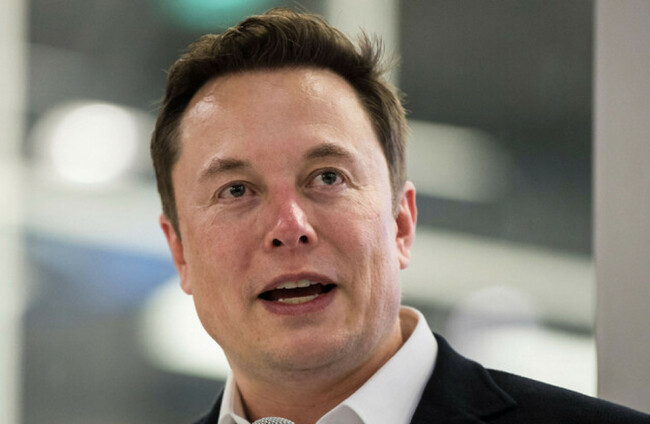
File image of Elon Musk Alamy

Jury rules against Elon Musk and finds he filed lawsuit too late in feud with OpenAI

Musk, the world’s richest man, was a co-founder of OpenAI, the company that launched in 2015 and went on to create ChatGPT.

A FEDERAL JURY has sided with OpenAI and its top executives in a feud with Elon Musk, who accused them of betraying a shared vision for it to guide artificial intelligence’s development as a non-profit dedicated to humanity’s benefit.

Musk, the world’s richest man, was a co-founder of OpenAI, the company that launched in 2015 and went on to create ChatGPT.

After investing $38 million (€32.62 million) in its first years, Musk accused OpenAI chief executive Sam Altman and his top deputy of shifting into a moneymaking mode behind his back.

The nine-person jury found that Musk waited too long to file his lawsuit and missed the deadline for the statute of limitations.

The jury served in an advisory role, but Judge Yvonne Gonzalez Rogers accepted the verdict on Monday as the court’s own and dismissed Musk’s claims. The jury deliberated for two hours before returning its verdict.

The trial that began on 27 April in Oakland, California, shed light on the bitter falling-out between the two Silicon Valley titans and the beginnings of OpenAI.

OpenAI is now a company valued at $852 billion (€731 billion) and moving towards potentially one of the largest initial public offerings in history.

Altman and OpenAI claimed there was never a promise to keep OpenAI a nonprofit forever. In fact, they argued, Musk knew this and filed his lawsuit because he could not have unilateral control over the fast-growing AI developer.

Musk was seeking damages to be paid to the altruistic efforts of OpenAI’s charitable arm as well as Altman’s ousting from OpenAI’s board.

Musk’s decision to stop funding the company contributed to a bitter rift between the former allies.

He said he was responding to deceptive conduct that OpenAI’s board picked up on when it sacked Altman as chief executive in 2023 before he got his job back days later.

The three-week trial heard evidence from Musk, Altman and his top lieutenant Greg Brockman, along with Microsoft boss Satya Nadella and a slew of others in the tech titans’ orbit.

Musk told jurors on his first of three days in the witness box that: “I think they’re going to try to make this lawsuit … very complicated, but it’s actually very simple. Which is that it’s not OK to steal a charity.”

Musk’s lawsuit claimed that, in addition to “breach of charitable trust”, Altman and Brockman unjustly enriched themselves from the windfall as the ChatGPT maker soared in valuation.

Brockman revealed during the trial that his stake in OpenAI is worth about $30 billion (€26 billion).

OpenAI has brushed off Musk’s allegations as an unfounded case of sour grapes aimed at undercutting its rapid growth and bolstering Musk’s own xAI, which he launched in 2023 as a competitor. During cross-examination, Musk was sometimes combative with OpenAI lawyer William Savitt.

“Your questions are not simple,” Musk said at one point. “They are designed to trick me essentially.”

Jurors also heard from witnesses including OpenAI ex-board members Helen Toner and Tasha McCauley, who spoke about the decision to sack Altman in 2023. They were ousted from the board themselves when Altman returned to his role a few days later.

Altman and Musk both vied to be OpenAI’s chief executive in its early years.

In his evidence, Altman said he had concerns about Musk’s attempts to gain more control over OpenAI, which was aiming to safely build a better-than-human form of AI called artificial general intelligence.

“Part of the reason we started OpenAI is we didn’t think AGI could be under the control of any one person, no matter how good their intents are,” Altman said.

Near the end of his evidence, Altman said that before things turned sour, he had thought very highly of Musk.

“I felt like he had abandoned us, not come through on his promises, put the company in a very difficult place, jeopardised the mission, didn’t really care about the things I thought he cared about,” Altman said.

“It’s been an extremely painful thing for me … to have someone that I respected so much not acknowledge that and continue to publicly attack us.”

Close
12 Comments
This is YOUR comments community. Stay civil, stay constructive, stay on topic. Please familiarise yourself with our comments policy here before taking part.
Leave a Comment
    Submit a report
    Please help us understand how this comment violates our community guidelines.
    Thank you for the feedback
    Your feedback has been sent to our team for review.

    Leave a commentcancel

     
    JournalTv
    News in 60 seconds