Take part in our latest brand partnership survey

We need your help now

Support from readers like you keeps The Journal open.

You are visiting us because we have something you value. Independent, unbiased news that tells the truth. Advertising revenue goes some way to support our mission, but this year it has not been enough.

If you've seen value in our reporting, please contribute what you can, so we can continue to produce accurate and meaningful journalism. For everyone who needs it.

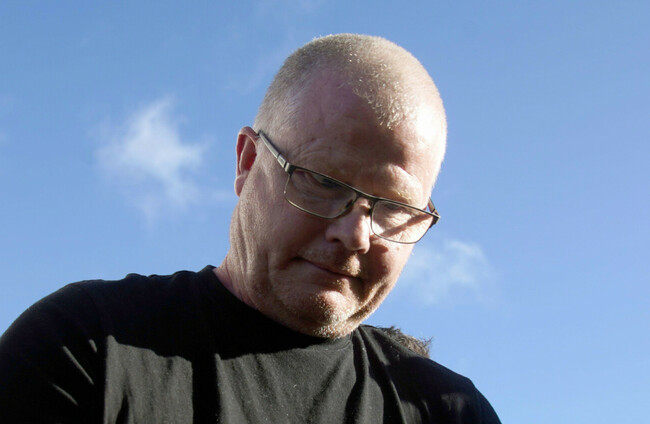
Richard Satchwell is accused of murdering his wife Tina in March 2017.

Jury in Satchwell trial told they can consider self defence

The court previously heard that Richard Satchwell told gardaí that his wife “flew” at him with a chisel and he used the belt of her dressing robe to keep her off him before she went limp.

LAST UPDATE | 26 May

THE JURY IN the trial of Richard Satchwell have been told that they can consider self defence.

Earlier, jurors were advised to approach the case “with an open mind” and “without emotion”.

The judge told the jurors today that they should not think “less” of the accused because he did not take the stand to give evidence.

Richard Satchwell, of Grattan Street in Youghal, is accused of murdering his wife between 19 and 20 March 2017.

The 58-year-old, who is originally from Leicester, England, denies the charge at the Central Criminal Court in Dublin.

Tina Satchwell’s remains were found under the stairs in the living room of their Co Cork home in October 2023, six years after Richard Satchwell reported her missing.

At the Central Criminal Court on Monday, Justice Paul McDermott told the seven women and five men of the jury that aspects of the trial have been “unseemly, perhaps shocking”.

But he said if parts of the trial raised their indignation, “you have to put those things outside the door” and approach it in a “very careful clinical way”.

“You have to approach it with an open mind, with an independent mind, without emotion, without prejudice,” he said.

McDermott said one of the “central” features of the case has been the invitation by the defence to ask the jury to consider self defence.

The court previously heard that Satchwell told gardaí that his wife “flew” at him with a chisel and he used the belt of her dressing robe to keep her off him before she went limp.

The judge said it was for the prosecution to prove beyond a reasonable doubt that Satchwell was not acting in self defence, and the jury should consider whether Satchwell honestly believed at the time of the killing that the existing circumstances permitted him to use force to defend himself.

“It’s his honest belief, it’s his perception you’re concerned with,” the judge told jurors.

McDermott said that they were making their determination based on proof beyond reasonable doubt, which he described as higher than probable, but not “a mathematical certainty”.

He described it as similar to making a major life decision where a lot of aspects are weighed up, and where something may cause them to hesitate in making the decision. He also described reasonable doubt as when something in the evidence presented in court causes them to pause, or if they feel there is “something missing”.

“It’s not a mathematical certainty, it’s not an impossible standard, it’s certainly a high standard.”

McDermott said there was no burden on an accused to prove their innocence, and the presumption of innocence is maintained “unless and until you determine he is guilty of an offence”.

“You know that Mr Satchwell has not given evidence in the case, there is no obligation” to do so, he told the jury.

“He is entitled not to give evidence and you shouldn’t think any less of him because he exercised his right.”

McDermott said he would summarise some of the evidence in the case for the jury.

He said if the jury disagrees with the emphasis he places on certain evidence, or if they feel he left out something “that you think is terribly important”, “that’s fine”.

Close
JournalTv
News in 60 seconds