Sign in. It’s quick, free and it’s up to you.
An account is an optional way to support the work we do. Find out more.
Sign in. It’s quick, free and it’s up to you.
An account is an optional way to support the work we do. Find out more.
(Seo alt ónár bhfoireann Gaeltachta. Is féidir an bunleagan as Gaeilge a léamh anseo)
A POLICY ENACTED in 2011 placed an obligation on the majority of public bodies in Wales not to treat the Welsh language less favourably than they treat English when delivering services to the population.
And, according to Efa Gruffudd Jones, the Welsh Language Commissioner, that approach has brought about a transformative change in the delivery of services through Welsh, and more than that, public servants now have a more positive attitude towards providing services through Welsh.
Gruffudd Jones was speaking to The Journal for one of a series of interviews of key figures in the Welsh language examining the lessons that can be learned in Ireland from the Welsh experience.
In Ireland at present, the services that public bodies and government departments provide through Irish are based on language schemes agreed between each public body and government department and the Minister for the Gaeltacht. This approach has been criticised and it is intended that every public body and government department would provide a minimum level of services through Irish, depending on the sector.
To that end the Government has set a target that 20% of new recruits to the public service will be fluent in Irish.
Earlier this year, in February, while giving evidence to the Oireachtas Joint Committee on Irish, the Gaeltacht and the Irish-Speaking Community, the director of Irish at the Department of the Gaeltacht, Aodán Mac Cormaic, said that draft language standards were “ready” and due to be put before the Minister the following month.
Commissioner Gruffudd Jones said that more than 130 public bodies were now included in the obligation to provide services through Welsh on a par with those available through English, and that the number would rise to as many as 170 by the end of the year when housing service bodies were added to the list.
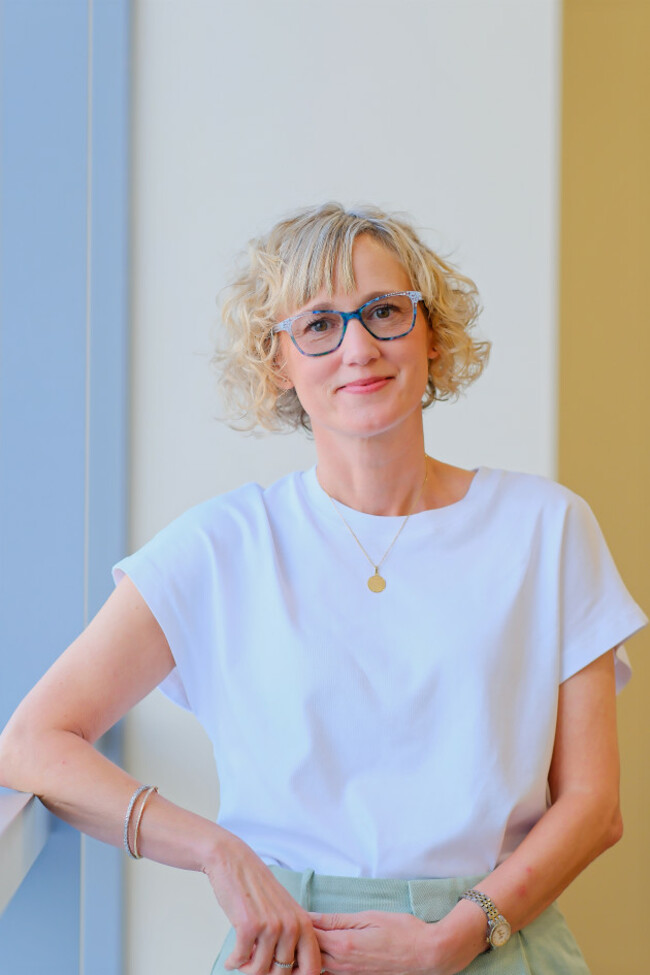
“It is my view and my experience that there has been a fundamental change regarding the standards – not only in terms of the services available in Welsh but in the attitude of public bodies towards Welsh.
“As a result of that, the people of Wales have a more positive attitude towards Welsh.”
She acknowledged that there were people – and always would be – who question why anyone would support Welsh, but she said they were only a minority.
“Every survey says the population as a whole supports Welsh, and part of that is that Welsh is far more visible, and Welsh-medium services of a consistent standard are available across the country.
“There has also been a change in attitude among leaders in the public sector in Britain and there is more demand for Welsh classes in the workplace.”
She said she wanted more public services to come within the scope of the standards – among them the driving licence system, the revenue commissioners and the prison service.
She said Welsh speakers are positively affected by public bodies being subject to language standards and, as a result, she is seeking to expand the range of services to be provided in accordance with those standards.
She had one word of caution, however, and that is that while she welcomes the increase and expansion of Welsh-medium services now available in Wales, she recognises the importance of people actually using those services.
“This is a critically important question, because one of the standards we have set is that public bodies providing services through Welsh have a duty to advertise and publicise those services.”
She said it was important to recognise that this would take time, as the community had a long-established habit of dealing with the authorities through English and was familiar with English-language terminology.
She said that bodies that had recently come under the standards – such as Welsh Water/Dŵr Cymru – were very active in publicising the services they provide. “The public is responding to that and they are very happy,” said Gruffudd Jones.
Young people are the Commissioner’s primary target community and she places particular emphasis on encouraging companies providing services to promote the use of Welsh on social media. In addition, research they have carried out shows that it is in the area of sport where young people are most often seeking services, and now, arising from the Commissioner’s intervention, sports governing bodies must provide Welsh-medium services as a condition of receiving a grant from the Sports Council.
Gruffudd Jones is optimistic about the future with the Plaid Cymru Government in Cardiff since May, but she recognises that much work remains to be done if the ambition previously stated by the Welsh Government – that there would be 1 million Welsh speakers in the country by 2030 – is to be achieved.
At present, according to the most recent Census (2021), approximately 538,000 out of a total population of 3.1 million say they are able to speak Welsh, but an annual language use survey indicates that around 830,000 say they are able to speak Welsh.
Gruffudd Jones acknowledges, however, that people are at varying levels of ability.
The difficult question is whether we want 1 million speakers who say Bore Da(Maidin mhaith) or whether we want 1 million Welsh speakers who use it every day?
She is able to live her entire life through Welsh – both her family life and her working life – but she recognises that the same is not true for everyone.
She said that community work, developing opportunities for people to be able to use their Welsh, was extremely important.
Gruffudd Jones is halfway through her seven-year term and this is a single-term role. The commisioner describes the single term limit as a guarantee of her independence.
A great deal has been achieved by her and by the commissioners who came before her – but there is still more work to be done, she acknowledges.
The Journal’s Gaeltacht initiative is supported by the Local Democracy Reporting Scheme
This article was originally written in the reporter’s native Irish and has been translated to English here. AI was used as part of the translation process before final edits.

To embed this post, copy the code below on your site















have your say