Sign in. It’s quick, free and it’s up to you.
An account is an optional way to support the work we do. Find out more.
Sign in. It’s quick, free and it’s up to you.
An account is an optional way to support the work we do. Find out more.
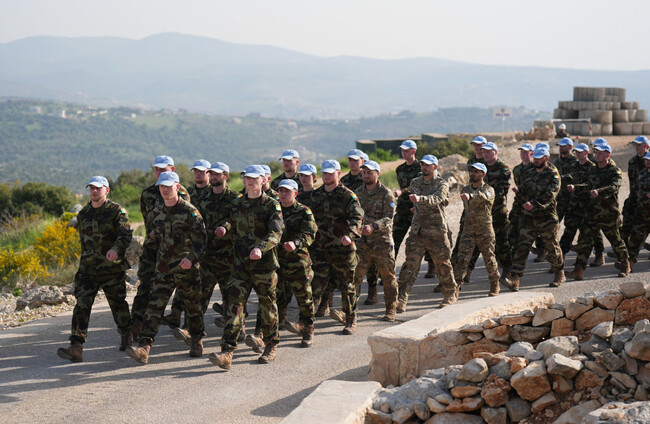

AN IRISH GENERAL at the centre of planning for an EU mission to take the place of the UN peacekeeping mission in Lebanon said it will involve civilian assistance to the beleaguered government, border security and military personnel.
General Seán Clancy, who is chair of the European Union Military Committee, said that planning is advancing for a major military and civil support operation.
It is understood that Ireland along with France, Spain and Austria are involved in the behind-the-scenes work, but it will be for Clancy to work on proposals for the mission.
The United Nations Interim Force in Lebanon (UNIFIL) is coming to an end in December after 48 years in the troubled Middle Eastern country.
The UN Security Council did not renew the mandate after the Netanyahu government in Israel pressured the United States to not support continuing the peacekeeping mission.
Currently, more than 300 Irish soldiers are deployed with a multinational force on the ground across locations on the contested Lebanon/Israel border.
Clancy said that he believes UNIFIL will not get a last-minute reprieve and there will be a drawdown of the more than 7,400 troops from 46 countries.
At present Israel is engaged in a bombing campaign and ground force occupation in the south of the country under the guise of targeting Hezbollah.
The expansionist move by the Israeli military has established a buffer zone in which they have levelled towns and villages leaving thousands homeless, including areas such as Bint Jbeil and At Tiri near the Irish base UNP 2-45.
Criticism has been levelled at UNIFIL for not having the required mandate from the UN Security Council to confront the situation on the ground.
The argument on the other side is that UNIFIL plays a critical role in observing Israeli and Hezbollah breaches of the fractured peace agreement.
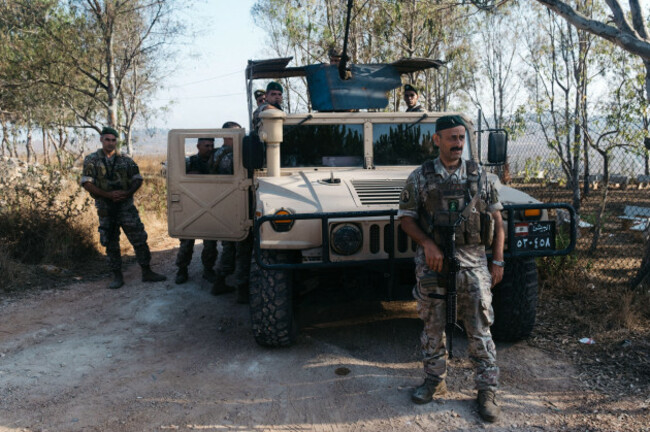
Clancy, who is the former chief of staff of the Irish Defence Forces, is now drawing up plans to deploy civilian advisers and soldiers.
Speaking to The Journal in Druids Glen at the defence ministers’ informal meeting, Clancy would not say specifically what the mission will look like but did lay some details out in broad strokes.
“It will be a combination of a civil and military approach from the EU. It will start off relatively modest with the opportunities, as I said, to evolve and grow.
“The military side will be to support the Lebanese Armed Forces to free up the internal security forces to do their job and vice versa, and the border area support will also help in all of those areas.
“It’s really about the totality, a holistic approach in terms of the crisis management concept which involves both the civil and the military sides approach from the EU as a whole, and that’s where we’ll see the main benefits coming,” he said.
While Clancy believes there will be a mission, he said it is for the member states to decide politically the final shape of the operation. He added it is his sense that there is agreement across the bloc and is confident there will be a deployment of European civilian and military forces.
The General said there will be EU “financial instruments” in the Common Security and Defence Policy to fund the mission.
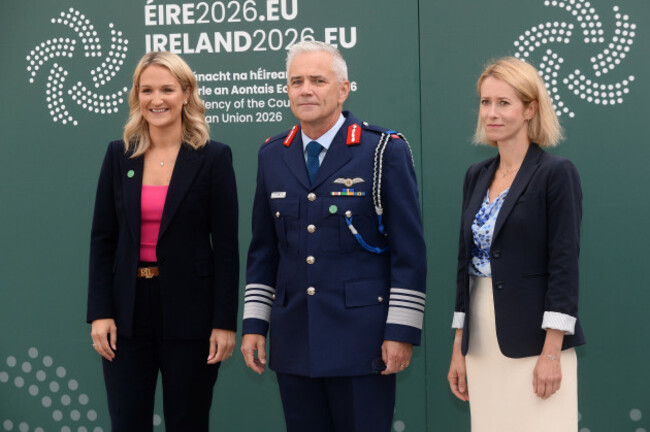
Frontex, the EU’s border security agency, is expected to be involved along with countries who will provide civilian officials and military to protect those working on the ground.
At a press conference in Druids Glen the EU’s Foreign Affairs chief Kaja Kalas said about the plan is not designed “to replace UNIFIL”.
“The idea is to really strengthen the Lebanese Armed Forces and also the Lebanese government to [get] Lebanon under control, which means also training, which means also supporting their, border control, their internal forces to actually establish order so it’s remaining with the Lebanese government what is happening in Lebanon,” he added.
Kallas said that the EU has been liaising with the Lebanese government. The discussions are focused on finding out exactly what President Joseph Aoun’s government needs.
Inside the EU there are also talks with member states to determine what countries are willing to contribute.
Kallas said 10 countries have come forward and said they will contribute resources but also personnel.
“It’s easy to open a mission, but then it’s also what we will fill this mission with,” she added.
Defence and Foreign Affairs Minister Helen McEntee, speaking at the same press conference, said that there must be agreement on the mission soon.
Earlier, The Journal asked the minister if Ireland will be able to contribute troops to the mission without a UN mandate. As the triple lock on troop deployments is still in place, the lack of a UN Security Council agreement means that Ireland cannot send soldiers.
“It is essential that the Irish troops are in a position and that the Irish government are in a position to make a decision ourselves as to where we place our peacekeeping troops.
“It is not for any country, in any part of the world, to decide where we put our troops. We have for many, many years a proud tradition of peacekeeping, of force protection of training missions on the ground and I hope that continues,” she added.
The EU Presidency events at Druids Glen continue today with an informal meeting of foreign affairs ministers.
Ed Miliband, British foreign secretary, and Anita Anand, Canadian foreign minister, will also attend the meeting.

To embed this post, copy the code below on your site





have your say