We need your help now

Support from readers like you keeps The Journal open.

You are visiting us because we have something you value. Independent, unbiased news that tells the truth. Advertising revenue goes some way to support our mission, but this year it has not been enough.

If you've seen value in our reporting, please contribute what you can, so we can continue to produce accurate and meaningful journalism. For everyone who needs it.

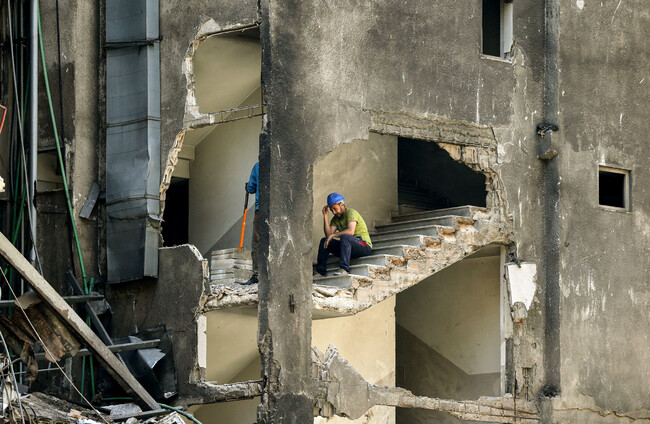
Labourers work on reconstructing part of a devastated building that was heavily damaged in a massive Israeli air strike in Beirut, 8 April. ZUMA Press, Inc./Alamy Live News

Israel and Lebanon (without Hezbollah) will meet in Washington for talks on ending war

Lebanon was pulled into the region-wide Iran war on 2 March, after Hezbollah attacked Israel to avenge the killing of Iran’s leader.

LEBANESE AND ISRAELI representatives are scheduled to meet in Washington today for US-mediated talks on ending the war in Lebanon, but the prospects of an agreement appear slim.

Naim Qassem – the leader of pro-Iran Hezbollah, which is battling Israel – called for the talks to be scrapped before they even began, describing them as “futile.”

Lebanon was pulled into the region-wide Iran war on 2 March after Hezbollah attacked Israel.

Since then Israeli strikes – including an extremely heavy attack on Beirut on 8 April – have killed more than 2,000 people and displaced more than one million, despite international calls for a ceasefire. Israeli ground forces have invaded south Lebanon.

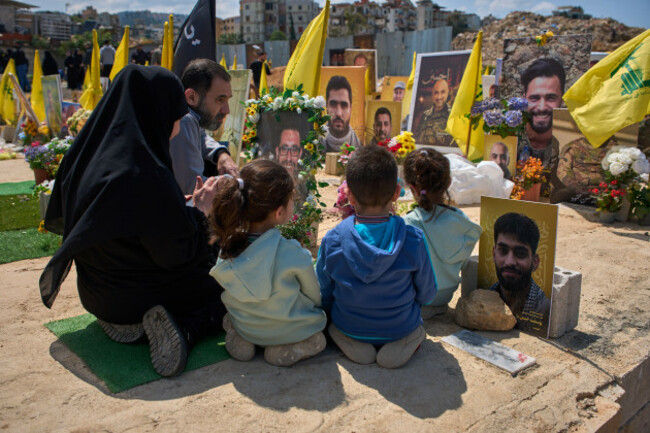
family-members-pray-at-the-grave-of-a-relative-buried-alongside-hezbollah-fighters-killed-in-israeli-strikes-in-a-cemetery-in-choueifat-lebanon-monday-april-13-2026-ap-photoemilio-morenatti Family members pray at the grave of a relative buried alongside Hezbollah fighters killed in Israeli strikes, in a cemetery in Choueifat, Lebanon yesterday. AP Photo / Emilio Morenatti AP Photo / Emilio Morenatti / Emilio Morenatti

The meeting mediated by Secretary of State Marco Rubio will include the Israeli and Lebanese ambassadors to Washington and the US ambassador to Beirut.

“The Israeli and Lebanese governments are engaging in open, direct, high-level diplomatic talks – the first such talks since 1993 – brokered by the United States,” a State Department official said on condition of anonymity.

“This conversation will scope the ongoing dialogue about how to ensure the long-term security of Israel’s northern border and to support the government of Lebanon’s determination to reclaim full sovereignty over its territory,” the official added.

But the two sides remain diametrically opposed.

“This dialogue between Israel and Lebanon… is aimed at disarming the Hezbollah terrorist organisation, removing them from Lebanon, and establishing peaceful relations between our two countries,” Israeli government spokeswoman Shosh Bedrosian told journalists on Monday.

“We will not discuss a ceasefire with Hezbollah, which continues to carry out indiscriminate attacks against Israel and our civilians,” Bedrosian said.

‘Expectations are low’

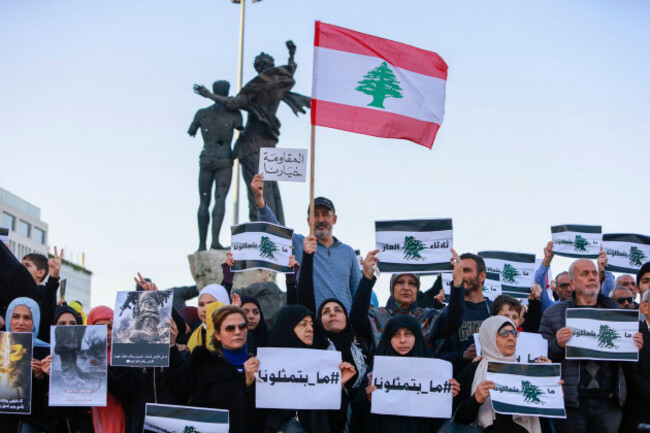
beirut-beirut-lebanon-13th-apr-2026-lebanese-protesters-gather-in-martyrs-square-in-central-beirut-to-reject-direct-negotiations-with-israel-demonstrators-express-firm-opposition-to-any-form-of Lebanese protesters gather in Martyrs' Square in central Beirut to reject direct negotiations with Israel. © Abdul Kader Al Bay / ZUMA Press Wire © Abdul Kader Al Bay / ZUMA Press Wire / ZUMA Press Wire

Israeli Prime Minister Benjamin Netanyahu said on Saturday that “we want the dismantling of Hezbollah’s weapons, and we want a real peace agreement that will last for generations.”

On the Lebanese side, President Joseph Aoun said on Monday he hoped the Washington talks will yield “an agreement… on a ceasefire in Lebanon, with the aim of starting direct negotiations between Lebanon and Israel.”

US diplomats have meanwhile found themselves in a difficult position in recent days regarding the Lebanon conflict, fearing that it might hinder talks with Iran, which failed to achieve a breakthrough on Sunday in Pakistan.

President Donald Trump’s administration insists on the disarmament of Hezbollah, but also respect for Lebanon’s territorial integrity and sovereignty, while simultaneously upholding Israel’s rights – positions that appear difficult to reconcile.

It would take “a lot of imagination and optimism to think” that the issues between Israel and Lebanon can be solved in Washington today, a former Israeli defence official told journalists on condition of anonymity, adding that “expectations are low.”

“It will be very difficult to reach any agreement, and Israel will create a buffer zone in the north very similar to what we have in Gaza,” the former official added.

According to a poll by the Israel Democracy Institute, the results of which were published on Monday, 80% of Jewish Israelis “think that Israel should continue the fighting in Lebanon against Hezbollah, regardless of developments vis-a-vis Iran, even if this results in friction with the US administration.”

Hezbollah entered the Middle East war on 2 March to avenge the death of Iranian supreme leader Ali Khamenei, who was killed on the first day of the Israeli-American attack on Iran on 28 February.

Israel hit back with large-scale, deadly air strikes across Lebanon, and invaded the south of the country.

Author
View 10 comments
Close
10 Comments
This is YOUR comments community. Stay civil, stay constructive, stay on topic. Please familiarise yourself with our comments policy here before taking part.
Leave a Comment
    Submit a report
    Please help us understand how this comment violates our community guidelines.
    Thank you for the feedback
    Your feedback has been sent to our team for review.

    Leave a commentcancel

     
    JournalTv
    News in 60 seconds