Support from readers like you keeps The Journal open.
You are visiting us because we have something you value. Independent, unbiased news that tells the truth. Advertising revenue goes some way to support our mission, but this year it has not been enough.
If you've seen value in our reporting, please contribute what you can, so we can continue to produce accurate and meaningful journalism. For everyone who needs it.
“OUR IDENTITY IS a fundamental part of who we are – whether it’s your nationality, your race, your religion, or your gender.” – Sara Phillips, TENI.
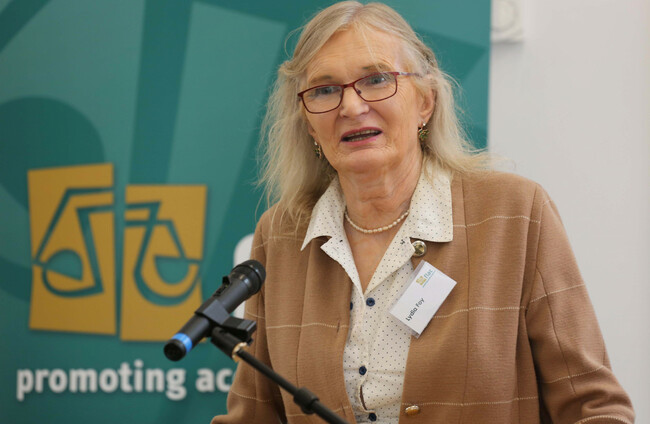
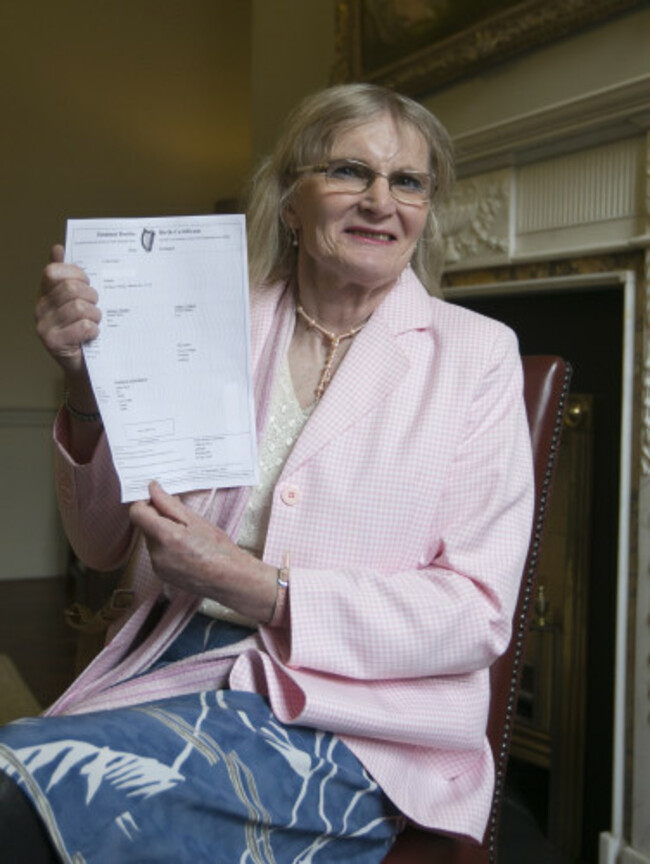
Irish transgender woman Lydia Foy spent 20 years of her life involved in a difficult and complex litigation to have her gender legally recognised in the Irish State.
Her battle has since resulted in a radical reform of the law on gender recognition – the Gender Recognition Act.
Flac (Free Legal Advice Centres) has produced a comprehensive history of Foy’s right for justice – ‘A story of great human proportions’: Lydia Foy and the struggle for transgender rights in Ireland.
Foy was born in Westmeath in 1947 and was registered male at birth. In 1992, she had gender reassignment surgery in the UK and from then on she has lived as a woman.
The legal battles
As Teni details in its timeline of Foy’s story, and as is detailed in the new report, in March 1993, Foy’s legal battles began when she applied to the office of the Registrar General for a new birth certificate to accurately reflect her correct gender.
In 1997, Foy began High Court proceedings, with the help of Flac, to request that the Registrar provide her with a new birth certificate.
The case was heard in the High Court before Justice Liam McKechnie in 2002. On 9 July 2002, Foy’s request was rejected and Kechnie stated there was no authority under the Registration Acts to change the gender registered at birth except for purely clerical errors.
McKechnie called on the government to take urgent action to assist transgender people.
Foy then appealed to the Supreme Court. However, before the appeal was heard, the European Convention on Human Rights Act 2003 was enacted. The report outlines that the Act required public bodies to carry out their functions, as far as possible, in compliance with the ECHR and required the courts to interpret legislation, also as far as possible, in line with it also.
Because of this, and as noted in the TENI timeline, Foy made a new application to the Registrar General in November 2005, citing the obligation under the Act to comply with the requirements of the European Convention.
The Registrar General refused her case again under grounds that he had no power under the Registration Act to do what was requested. Foy again began a new High Court case, seeking a declaration under the ECHR Act that Irish legislation was not compatible with the European Convention in relation to the registration and issue of birth certificates.
In 2007, Foy returned to the High Court and Justice McKechnie again heard her case. As noted in the report, Judge McKechnie repeated that there was nothing in Irish law on the Constitution that would require or allow for Foy’s birth record to be amended or to allow for a new birth certificate.
Advertisement
Lydia Foy being honoured by the European Parliament with the European Citizens Prize Sam Boal
Sam Boal
Recent progress
In May 2010, the government set up the Gender Recognition Advisory Group (GRAG) to advise on the legislation to recognise transgender people as their preferred gender.
Flac (having taken on Foy’s case), the Transgender Equality Network Ireland (TENI) and other bodies made recommendations to the group. In July 2011, the group published its recommendations and proposed gender recognition legislation, the TENI timeline and report outline.
In January 2013, Foy issued new proceedings in the High Court, seeking a declaration that the Irish government was under a legal duty to make provision for issuing her with a new birth certificate. She also sought damages for the continued breach of her rights following the High Court decision in 2007.
The case was settled in November 2014.
The Gender Recognition Act was passed on 15 July 2015. It meant that a person can apply for a Gender Recognition Certificate to the Department of Social Protection in order to have their preferred gender recognised by the State.
In November 2017, Minister Regina Doherty appointed a review group chaired by Moninne Griffith (executive director of BeLonG To) which includes members from TENI, Flac, other independent experts in the field and government bodies.
The group has said it will review the following areas:
Arrangements for children aged 16 to 17 years
Arrangements for children under 16 years
Arrangements for persons who identify as neither male nor female (e.g. non-binary)
Arrangements for intersex people
Any other relevant issues, including issues relating to the operation of the current legislative provisions (i.e the Gender Recognition Act 2015)
It will submit its report to the Minister in May this year.
‘Thank you’
Speaking at the launch of Flac’s report, and addressing the impact Lydia Foy has had on transgender rights in Ireland, chairperson of TENI Sara Phillips thanked Flac and Foy.
“Without this case, without her struggle and without her unyielding and forthright commitment to make sure she kept going, I think the trans community wouldn’t be where they are today,” Phillips said.
“As we step forward, the trans community, from the shadows, with pride now, we can be confident that there are allies who will support and stand behind us within that struggle.
So, let’s be clear, there is still a need to ensure that the social causes and heroes like Lydia are documented and remembered.
“For the trans community, we must pledge for keeping this story alive in the minds of everyone, in the minds of society, but also in the minds of our own community.”
Readers like you are keeping these stories free for everyone...
A mix of advertising and supporting contributions helps keep paywalls away from valuable information like this article.
Over 5,000 readers like you have already stepped up and support us with a monthly payment or a once-off donation.
It really is a futile gesture to change a birth certificate to reflect anything that happens later. Yes, you should be allowed to identify whatever way you wish, but your historical record should never be tampered with. Surely Ms Foy’s life is completely defined by the fact that she was born male, and will die male, but society has progressed that we don’t care that she identified as a women and provides her passports, recognition certs and haven’t prevented her from living life in the opposite sex.
@Gulliver Foyle:
I would have to agree that an existing birth cert is a historical document and should not be changed. She was determined as female at birth, and that’s what the document says. Removing the requirement to record the determined gender from the birth cert would solve the problem for the future. In the meantime, the Gender Recognition Certificate determines her “official” gender.
I don’t know why you think she “will die male”
@Dermot Dinan: Yes. Gender is “determined” at birth. Google “gender assignment”. Or “s.e.x assignment” (obviously without the dots) The journal won’t allow me to post the links for some strange reason
@CrabaRev: just to clarify that last point, it’s that the genetics that determine she was born male are still there when she dies, like everyone else, and are a part of her identity. The certificates and recognition for self affirmation are only valuable in life, and if they dig up my bones and her bones in 10,000 years, they will both be male.
@Gulliver Foyle: agree completely. By all accounts do & identify as whatever is your true persona, but tampering with ones birth certs is not an accurate or appropriate step forward in this issue.
Does this not have huge implications for the future for say, adoption and the like. How will someone be able to find their birth mother if she has changed to a he in the birth cert… Please don’t just assume im being intolerant, I am genuinely concerned about how this will people going forward. I think it’s wrong to change the birth certificate. How can we hope to be able to trace our family records back of there are false birth certs in the past…?
Gender is not a social construct. Your gender is determined by your chromosomes, XX and XY. What’s with all the pseudo science that’s spreading around this issue? Facts matter. I’m perfectly happy for a man, who wants to be a woman, to dress like a woman and get any surgery they like. Everyone has the right to control their body.
@Daniel Donovan: We must also note that as things stand it is impossible to change your gender as you can’t alter your genetic makeup in such a way. I’m more than happy to call someone who wants to be called a female name such but under no circumstances must this be unforced by law, especially given the scientific premise which I stated. As an atheist I value science and its contribution to our development but if we’re going to allow ourselves to get wrapped in nonsense like this, we will do nothing but regress.
@Daniel Donovan: What about people who have a different set of chromosomes than XX and XY, maybe you should educate yourself before talking about gender in absolutes
@Larissa Caroline Nikolaus: These people are intersex and an make up less than 1% of the population. Transgender people do not fall under this category and share no comparison.
@Daniel Donovan: as I posted earlier in this article, gender assignment is not an exact science, there are some links in that post if you wish for more information. . While gender assignment is not completely a social construct, there are so many artificial social constructs around gender that the argument is valid. Why do we distinguish children by dividing them into boy/girl? Why do children wear different clothes based on their gender? Why do we segregate learning based on gender? Why do we have different toys based on gender. Why do we have different names based on gender e.g. Paul/ Paula. Gender is in all practical terms a social construct.
@Daniel Donovan: The journal removed the links I posted. Google “gender assignment” or use the more common three letter word for gender, that the journal has determined is too rude to post :)
@Daniel Donovan: So, without any qualifications or experience in this area you wish to proceed in making pronouncements about gender and sexual identification that directly impacts some people but has no impact on you, including spreading false information that directly contradicts those who are actually qualified in this area.
Whilst I am sympathetic to the plight if any transgender person in this particular case I feel the individuals priorities were misplaced. There was no consideration for his children who were teenagers when the media circus started. When you become a parent your number 1 priority should be your children but there seemed to be zero consideration for them in this case.
@mike scott: part of the problem with all this gender stuff is the lack of agreement as to whether we are discussing biological sex or a characteristic – we obviously have masculine females and feminine males (which one could class as gender, I guess) – but you still have an X or y chromosome at the end of the sequence.
My understanding is that sex and gender are different things. Birth certificates record sex which is usually (but not always) easy to determine from genitalia. A person’s gender usually (but not always) corresponds to their sex (i.e. most males identify as men, most females as women).
Changing a birth certificate seems to me to be tampering with historical medical data. I’m not sure why it is necessary or advisable. Ms Foyle not only changed her appearance but also her name. Has her birth certificate been altered to reflect that?
I’d appreciate someone more woke than I am explaining where I’m going wrong (while recognising their right to merely tell me to Google it).
Ireland's long-promised plan to regulate commercial drones to be published today
Christina Finn
2 hrs ago
736
Syria
Syrian and Israeli diplomats reportedly hold rare meeting in Paris to discuss 'de-escalation'
3 hrs ago
1.3k
Dublin
Luas bridge left in ruins after major fire brought under control in Dublin
Updated
3 hrs ago
80.9k
Your Cookies. Your Choice.
Cookies help provide our news service while also enabling the advertising needed to fund this work.
We categorise cookies as Necessary, Performance (used to analyse the site performance) and Targeting (used to target advertising which helps us keep this service free).
We and our 222 partners store and access personal data, like browsing data or unique identifiers, on your device. Selecting Accept All enables tracking technologies to support the purposes shown under we and our partners process data to provide. If trackers are disabled, some content and ads you see may not be as relevant to you. You can resurface this menu to change your choices or withdraw consent at any time by clicking the Cookie Preferences link on the bottom of the webpage . Your choices will have effect within our Website. For more details, refer to our Privacy Policy.
We and our vendors process data for the following purposes:
Use precise geolocation data. Actively scan device characteristics for identification. Store and/or access information on a device. Personalised advertising and content, advertising and content measurement, audience research and services development.
Cookies Preference Centre
We process your data to deliver content or advertisements and measure the delivery of such content or advertisements to extract insights about our website. We share this information with our partners on the basis of consent. You may exercise your right to consent, based on a specific purpose below or at a partner level in the link under each purpose. Some vendors may process your data based on their legitimate interests, which does not require your consent. You cannot object to tracking technologies placed to ensure security, prevent fraud, fix errors, or deliver and present advertising and content, and precise geolocation data and active scanning of device characteristics for identification may be used to support this purpose. This exception does not apply to targeted advertising. These choices will be signaled to our vendors participating in the Transparency and Consent Framework. The choices you make regarding the purposes and vendors listed in this notice are saved and stored locally on your device for a maximum duration of 1 year.
Manage Consent Preferences
Necessary Cookies
Always Active
These cookies are necessary for the website to function and cannot be switched off in our systems. They are usually only set in response to actions made by you which amount to a request for services, such as setting your privacy preferences, logging in or filling in forms. You can set your browser to block or alert you about these cookies, but some parts of the site will not then work.
Social Media Cookies
These cookies are set by a range of social media services that we have added to the site to enable you to share our content with your friends and networks. They are capable of tracking your browser across other sites and building up a profile of your interests. This may impact the content and messages you see on other websites you visit. If you do not allow these cookies you may not be able to use or see these sharing tools.
Targeting Cookies
These cookies may be set through our site by our advertising partners. They may be used by those companies to build a profile of your interests and show you relevant adverts on other sites. They do not store directly personal information, but are based on uniquely identifying your browser and internet device. If you do not allow these cookies, you will experience less targeted advertising.
Functional Cookies
These cookies enable the website to provide enhanced functionality and personalisation. They may be set by us or by third party providers whose services we have added to our pages. If you do not allow these cookies then these services may not function properly.
Performance Cookies
These cookies allow us to count visits and traffic sources so we can measure and improve the performance of our site. They help us to know which pages are the most and least popular and see how visitors move around the site. All information these cookies collect is aggregated and therefore anonymous. If you do not allow these cookies we will not be able to monitor our performance.
Store and/or access information on a device 155 partners can use this purpose
Cookies, device or similar online identifiers (e.g. login-based identifiers, randomly assigned identifiers, network based identifiers) together with other information (e.g. browser type and information, language, screen size, supported technologies etc.) can be stored or read on your device to recognise it each time it connects to an app or to a website, for one or several of the purposes presented here.
Personalised advertising and content, advertising and content measurement, audience research and services development 202 partners can use this purpose
Use limited data to select advertising 162 partners can use this purpose
Advertising presented to you on this service can be based on limited data, such as the website or app you are using, your non-precise location, your device type or which content you are (or have been) interacting with (for example, to limit the number of times an ad is presented to you).
Create profiles for personalised advertising 125 partners can use this purpose
Information about your activity on this service (such as forms you submit, content you look at) can be stored and combined with other information about you (for example, information from your previous activity on this service and other websites or apps) or similar users. This is then used to build or improve a profile about you (that might include possible interests and personal aspects). Your profile can be used (also later) to present advertising that appears more relevant based on your possible interests by this and other entities.
Use profiles to select personalised advertising 126 partners can use this purpose
Advertising presented to you on this service can be based on your advertising profiles, which can reflect your activity on this service or other websites or apps (like the forms you submit, content you look at), possible interests and personal aspects.
Create profiles to personalise content 54 partners can use this purpose
Information about your activity on this service (for instance, forms you submit, non-advertising content you look at) can be stored and combined with other information about you (such as your previous activity on this service or other websites or apps) or similar users. This is then used to build or improve a profile about you (which might for example include possible interests and personal aspects). Your profile can be used (also later) to present content that appears more relevant based on your possible interests, such as by adapting the order in which content is shown to you, so that it is even easier for you to find content that matches your interests.
Use profiles to select personalised content 51 partners can use this purpose
Content presented to you on this service can be based on your content personalisation profiles, which can reflect your activity on this or other services (for instance, the forms you submit, content you look at), possible interests and personal aspects. This can for example be used to adapt the order in which content is shown to you, so that it is even easier for you to find (non-advertising) content that matches your interests.
Measure advertising performance 181 partners can use this purpose
Information regarding which advertising is presented to you and how you interact with it can be used to determine how well an advert has worked for you or other users and whether the goals of the advertising were reached. For instance, whether you saw an ad, whether you clicked on it, whether it led you to buy a product or visit a website, etc. This is very helpful to understand the relevance of advertising campaigns.
Measure content performance 80 partners can use this purpose
Information regarding which content is presented to you and how you interact with it can be used to determine whether the (non-advertising) content e.g. reached its intended audience and matched your interests. For instance, whether you read an article, watch a video, listen to a podcast or look at a product description, how long you spent on this service and the web pages you visit etc. This is very helpful to understand the relevance of (non-advertising) content that is shown to you.
Understand audiences through statistics or combinations of data from different sources 114 partners can use this purpose
Reports can be generated based on the combination of data sets (like user profiles, statistics, market research, analytics data) regarding your interactions and those of other users with advertising or (non-advertising) content to identify common characteristics (for instance, to determine which target audiences are more receptive to an ad campaign or to certain contents).
Develop and improve services 120 partners can use this purpose
Information about your activity on this service, such as your interaction with ads or content, can be very helpful to improve products and services and to build new products and services based on user interactions, the type of audience, etc. This specific purpose does not include the development or improvement of user profiles and identifiers.
Use limited data to select content 53 partners can use this purpose
Content presented to you on this service can be based on limited data, such as the website or app you are using, your non-precise location, your device type, or which content you are (or have been) interacting with (for example, to limit the number of times a video or an article is presented to you).
Use precise geolocation data 67 partners can use this special feature
With your acceptance, your precise location (within a radius of less than 500 metres) may be used in support of the purposes explained in this notice.
Actively scan device characteristics for identification 38 partners can use this special feature
With your acceptance, certain characteristics specific to your device might be requested and used to distinguish it from other devices (such as the installed fonts or plugins, the resolution of your screen) in support of the purposes explained in this notice.
Ensure security, prevent and detect fraud, and fix errors 126 partners can use this special purpose
Always Active
Your data can be used to monitor for and prevent unusual and possibly fraudulent activity (for example, regarding advertising, ad clicks by bots), and ensure systems and processes work properly and securely. It can also be used to correct any problems you, the publisher or the advertiser may encounter in the delivery of content and ads and in your interaction with them.
Deliver and present advertising and content 129 partners can use this special purpose
Always Active
Certain information (like an IP address or device capabilities) is used to ensure the technical compatibility of the content or advertising, and to facilitate the transmission of the content or ad to your device.
Match and combine data from other data sources 98 partners can use this feature
Always Active
Information about your activity on this service may be matched and combined with other information relating to you and originating from various sources (for instance your activity on a separate online service, your use of a loyalty card in-store, or your answers to a survey), in support of the purposes explained in this notice.
Link different devices 70 partners can use this feature
Always Active
In support of the purposes explained in this notice, your device might be considered as likely linked to other devices that belong to you or your household (for instance because you are logged in to the same service on both your phone and your computer, or because you may use the same Internet connection on both devices).
Identify devices based on information transmitted automatically 122 partners can use this feature
Always Active
Your device might be distinguished from other devices based on information it automatically sends when accessing the Internet (for instance, the IP address of your Internet connection or the type of browser you are using) in support of the purposes exposed in this notice.
Save and communicate privacy choices 109 partners can use this special purpose
Always Active
The choices you make regarding the purposes and entities listed in this notice are saved and made available to those entities in the form of digital signals (such as a string of characters). This is necessary in order to enable both this service and those entities to respect such choices.
have your say