Sign in. It’s quick, free and it’s up to you.
An account is an optional way to support the work we do. Find out more.
Sign in. It’s quick, free and it’s up to you.
An account is an optional way to support the work we do. Find out more.
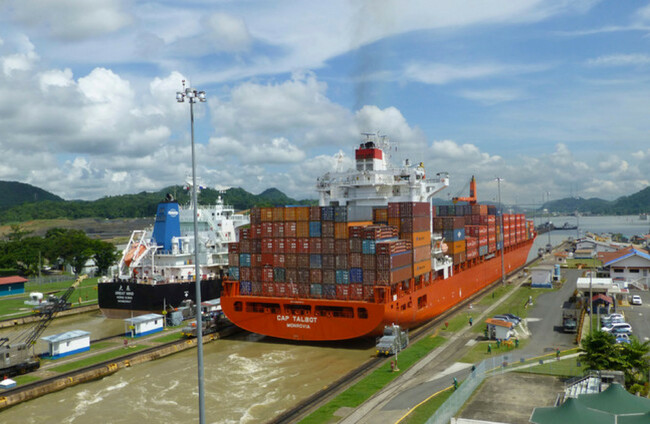
INCOMING FOREIGN AFFAIRS chief of the United States Marco Rubio has said that China’s alleged involvement at the Panama Canal is a “very legitimate” security issue that he will seek to review in his new role.
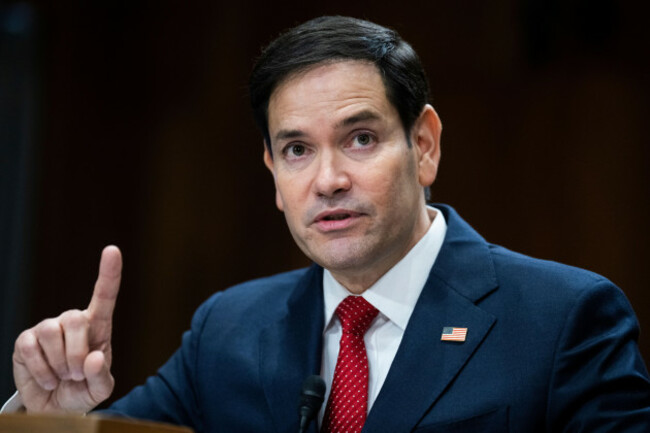
Rubio, a incumbent Senator for the state of Florida, appeared before members of the lower parlour of the US government, the House of Representatives, in Washington DC today ahead of his appointment as Secretary of State.
US President-elect Donald Trump, who will be sworn into office on 20 January, threatened last month to seize back control of the US-built Panama Canal over concerns relating to China’s influence in the area since region was given back to Panama in 1977.
The agreement does not permit Panama to hand over the port’s control to another nation. A number of Chinese-backed construction firms have recently completed projects in the area – sparking concern over Beijing’s involvement at the shipping port.
During the hours-long grilling of Rubio today, the Florida representative was asked about what he would do in his new role to address ongoing concerns that the incoming Trump administration has about the Panama Canal.
He committed to conducting a review of the 1977 agreement, and subsequent deals, in order to determine if the development of Chinese, or foreign, infrastructure in the area was prohibited under the deal.
He claimed that the companies who developed the projects are linked to the Chinese government. He said, for that reason, concerns about the canal’s security are entirely legitimate.
Rubio also defended the, seemingly, sudden interest the Trump administration has taken in the Panama Canal, which caused a diplomatic row with the Panamanian president last month, and claimed it was not a new issue.
He said that he had visited and discussed similar developments in the region in 2016 – when Trump was last in the White House – and quoted reports from US diplomats that cited concerns over the infrastructure built in the region by China.
“This thing with Panama and the canal is not new,” he said. “I visited there in 2016 and I’ve consistently seen people express concern about it.”
Two reports – one by a former US ambassador to Panama, who served under President Obama, and another the former head of US Military’s Southern Command General Laura Richardson – have cited concerns with the infrastructure, he said.
Rubio offered to lodge the reports with the hearing committee, which include eye-witness statements that claim the infrastructure along the canal looks like port equipment that could quickly be changed into military defensive systems.
He said be believes the terms of the agreement have been violated due to the alleged links that the Chinese government has to the companies who constructed the developments near the canal.
“The concerns about Panama have been expressed by those on both sides of the aisle for at least the entire time that I’ve been in the United States’ senate – and they’ve only accelerated further. It is a very legitimate issue,” he said.
Rubio added that the reports are evidence that the infrastructure is a “direct threat” to the United States and that China could make the canal – a major shipping route – a “chokepoint at a moment’s notice” in times of conflict.
“Panama is a great partner on a lot of other issues. I hope we can resolve these issues on the canal but also work with them cooperatively on the host of issues we have in common, including what to do on migration,” he said.

To embed this post, copy the code below on your site












have your say